
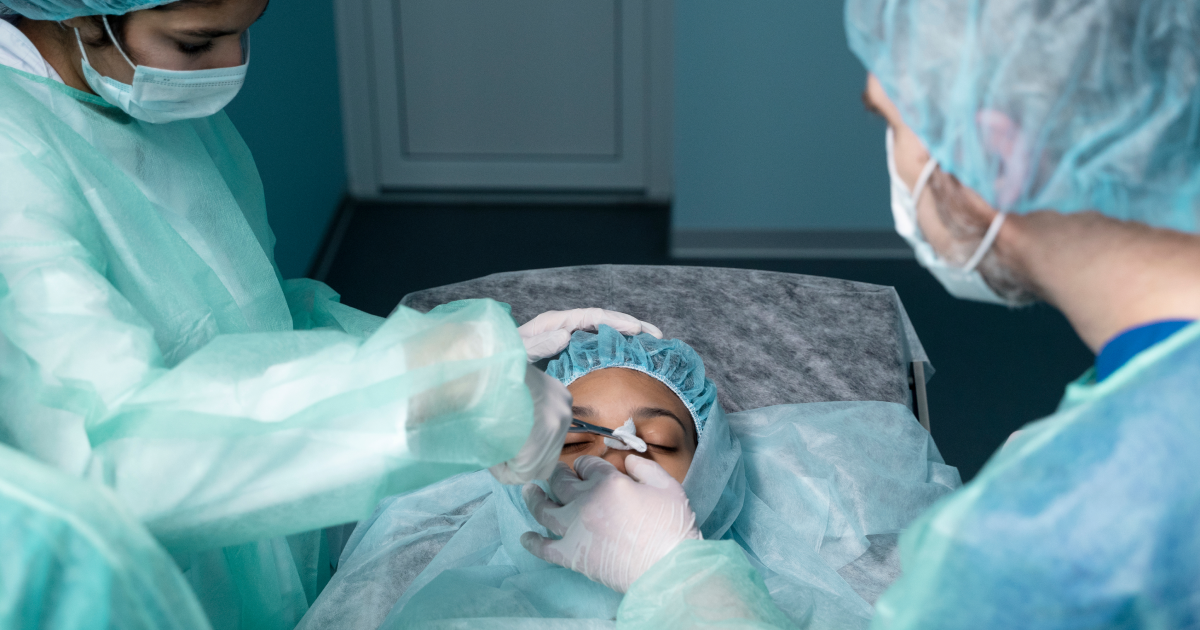
A healthy cornea is clear and of smooth curve which in turn allows light to enter the eye and focus properly. With infection, injury, inherited disease or progressive thinning the cornea may become cloudy, scarred or irregular. When damage is to the full thickness of the cornea and simple repairs will not restore useful vision an ophthalmologist may recommend penetrating keratoplasty.
Patients report that they look up information on what is PKP surgery as the name sounds very technical. What they may not know is that it is a full thickness corneal transplant which sees a round piece of the affected cornea removed and replaced with healthy donor tissue. Among the available types of corneal transplants, PKP is the option we turn to when many or all layers of the cornea are affected.
This guide gives the reasons for which PKP may be recommended, details of the procedure itself, what to expect during the recovery period and which warning signs require emergency care. It is for informational purposes only and does not in any way substitute a consultation with a cornea specialist.
Penetrating Keratoplasty?
When people query what PKP surgery is, we may as well present that it’s a cornea transplant which we do in the central area of the eye’s damaged cornea. The surgeon takes out a perfect round piece out of the affected cornea and in is put a matching donor piece which is held in place with very fine sutures.
The National Eye Institute reports that in penetrating keratoplasty we do a full thickness transplant, also we do partial thickness which is Lamellar keratoplasty in case of damage to certain corneal layers. The choice which is right for you depends on what layers of the cornea are affected, that is why it is important to know the different types of corneal transplants. For cataract surgery which is the procedure that targets the natural lens within the eye, we do corneal transplant which is a treatment for the transparent front surface. It is to improve vision, restore structure, remove very sick tissue or in some cases to relieve pain.
Why Is PKP Surgery Performed?
Comprehension of what is PKP surgery also includes the issues which play into a total graft decision. For advanced penetrating keratoplasty with deep scarring, dense scars from infection or injury, full thickness opacity, inherited corneal disease, a failed prior graft or a threatened corneal perforation the ophthalmologist may put forward penetrating keratoplasty.
A serious infection at times requires an emergency therapeutic procedure which includes removal of the infected tissue and protection of the eye. Also we see that a prior ulcer may leave a dense central scar even after we have had successful corneal ulcer treatment. The eye must be free of active infection before we go ahead with a corneal transplant.
The decision depends on the depth of the scar, corneal thickness, the location of the damage, visual potential, and the condition of the retina, optic nerve, and other eye structures. Corneal Transplants
Several types of corneal transplants are performed and it isn’t true that the whole cornea always has to be replaced. Layer specific surgery may be done when disease is present in the front, middle or back layers.
| Procedure | Tissue replaced | Common use |
| Penetrating keratoplasty | Full thickness of the central cornea | Deep scars, full-thickness disease, trauma or complex damage |
| DALK | Front and middle layers while retaining healthy endothelium | Keratoconus or stromal disease |
| DSAEK/DSEK | Endothelium with a thin layer of donor stroma | Selected endothelial failure |
| DMEK | Descemet membrane and endothelium | Selected endothelial disorders |
| Therapeutic transplant | Tissue needed to remove infection or close a weak cornea | Severe infection or perforation risk |
When comparing the types of corneal transplants, the best procedure is the one that safely replaces the diseased layer. PKP remains important when the damage is too deep or widespread for a layer-selective operation. Decide Whether PKP Is Suitable
Before we recommend a full-thickness graft we have the patient undergo a slit lamp exam which in turn allows us to look at the depth, density and location of the opacity. We may also use corneal topography or tomography to determine the shape, pachymetry to measure thickness and endothelial testing to see the condition of the inner corneal cells.
When a person puts forth the question what PKP surgery does the answer is that it is the whole eye which that procedure affects. Thus the doctor will look at the lens, retina, optic nerve, eye pressure, tear film and eyelids. We may talk of glasses, contact lenses, medicines, corneal cross linking or a partial transplant before we get to full thickness surgery.
Review of the transplant choices which in turn helps the patient to see the reason behind the choice of a particular procedure and what level of visual improvement is realistic.
What Happens Before PKP Surgery?
Before penetrating keratoplasty, patients go in for a thorough eye exam and a go over of health issues, allergies and present medications. The surgical team gives out instructions on fasting, pre op medication and discharge. Do not stop meds without your doctor’s say so.
Donor tissue is from eye banks and is put through safety and quality processes. MedlinePlus reports that donor corneas are processed and tested by eye banks before transplant. also take time to ask what PKP surgery is, what benefits to expect, what risks apply to the individual eye and whether further vision correction will be needed. Recovery from a full graft is usually slower than from some other types of corneal transplants.
How Is Penetrating Keratoplasty Performed?
During penetrating keratoplasty, the eye may be anesthetized with local anesthetic and sedative medications or may be put to sleep with general anesthesia at the discretion of the patient and surgical team. The surgeon will remove the affected central tissue with a specialized circular tool.
A donor graft which is a match is put in and secured with microsurgery. This may be done with single stitches, a continuous suture or a mix of both. Suture tension plays a role in corneal shape which is why regular follow up is very important.
For anyone wondering what PKP surgery is like on the day, it is generally performed as day-care surgery, though admission practices can vary. The National Eye Institute describes corneal transplantation as an outpatient procedure in which damaged tissue is replaced with donor tissue. After penetrating keratoplasty
Recovery from penetrating keratoplasty is a gradual process. At first vision may be blurred and is variable as the graft heals and sutures are adjusted or removed. Also at this time it is common for patients to require glasses or contacts because of postoperative astigmatism.
| Recovery stage | What may be expected | Main care focus |
| First few days | Blurred vision, watering, mild irritation or light sensitivity | Eye protection, prescribed drops and early review |
| First few weeks | Gradual surface healing with changing vision | Avoid rubbing, dust, injury and strenuous activity |
| Following months | Continued healing and possible suture adjustment | Graft, pressure and vision checks |
| Later recovery | Refraction or further vision correction may be considered | Long-term graft monitoring |
The National Eye Institute reports that full recovery from corneal transplantation may take a year which varies by transplant type, also NHS info notes that full thickness grafts may sometimes take longer. In terms of what to expect from what is PKP surgery you should think in terms of a process not an types of corneal transplants, penetrating keratoplasty which affect all layers of the cornea generally require more time to heal in comparison to other layer specific corneal transplants which may see faster results.
Care After PKP Surgery
After surgery, patients will have to use antibiotic and steroidal eye drops as prescribed. Steroids play a role in reducing inflammation and in decreasing rejection risk. Do not change or stop them without first consulting with your medical provider.
The operated eye do not put pressure on or rub. Protective glasses or a shield may be recommended, especially during sleep in the early stages of recovery. Engage in heavy lifting, contact sports, go to dusty environments and do avoid activities which put your eye at risk until your surgeon gives you the ok.
Follow-up visits check graft clarity, sutures, wound stability, eye pressure, and changes in vision. They are still needed even if the eye feels comfortable. All corneal grafts require follow-up, though the timing varies. Warning Signs
Penetrating keratoplasty is also reported to have complications like graft rejection, infection, elevated eye pressure which in turn may cause glaucoma, development of cataract, wound leakage, significant astigmatism, retinal issues and graft failure. In case of a failed graft sometimes another transplant is required.
Rejection occurs when the immune system attacks donor tissue. Warning signs may include redness, pain, sensitivity to light, and newly cloudy or reduced vision. The National Eye Institute advises contacting an eye doctor immediately if these symptoms develop after a transplant.
What is PKP surgery?
It varies according to the diagnosis, inflammation, previous operations, corneal blood vessels, eye pressure, and adherence to treatment. Risk also differs between types of corneal transplants , so the procedure must be selected for the individual.
Vision post penetrating keratoplasty is usually not clear right away. The graft requires time to heal which in turn may cause suture tension to change corneal curvature and produce astigmatism. At times we see that despite the graft’s clarity other corrective procedures like glasses or rigid contact lenses may be necessary.
When estimating how much vision might improve, the surgeon examines the retina, optic nerve, and lens. Even a clear graft cannot fully restore sight if substantial disease affects another part of the eye, making realistic counselling essential. a Corneal Ulcer
At vasaneye under eye treatments for corneal services and transplant prices which do fluctuate based on the cause of injury, what tests are run, what medicines are prescribed, type of donor tissue used, eye hospital they are in, surgery complexity and follow up care. For an accurate estimate a personal evaluation is required.
Patients looking into eye treatment in India may look at Vasan Eye Care’s corneal services and transplant info before they come in for an assessment. The treatment plan is to always base on clinical findings.
Choosing the Right Corneal Transplant
Which types of corneal transplants to perform is based on which layer is affected. DALK may preserve the healthy endothelium when disease is present in the front and middle cornea, while DMEK or DSAEK will do the replacement of the inner layer when the front layers are in good condition.
By way of contrast, in penetrating keratoplasty the full tissue thickness is replaced which may be put forward for in depth, complex or multi-layer damage. As to what PKP surgery is as opposed to DALK or DMEK the patient should know that these procedures are not interchangeable.
Penetrating keratoplasty is full thickness corneal transplant which we use when disease or damage has affected the entire cornea and partial layer procedures are not enough. It does improve vision, restore integrity of the eye or is used to manage very serious cases of disease but what we see is that recovery is slow and at any rate very long term follow up is required.
For those who still put out what is PKP surgery, it is better described as a procedure in which we remove the damaged center of the cornea and put in screened donor tissue. A cornea specialist will go over the types of corneal transplants, go into the expected benefits and risks, and put forth the best option.
Frequently Asked Questions
Anesthetists see to it that you are free of pain during surgery. Post op you may have some mild discomfort, but should you have severe or increasing pain it is a matter which requires urgent review.
The time it takes varies according to the type of surgery and health of the eye.
Vision progressively improves over a period of a few months also as graft heals.
Yes. Swelling, pain, light sensitivity or reduced vision require prompt exam.
Yes. Fine threads are used to secure the donor cornea which may stay in for a few months.
Glasses and contacts are options for astigmatism and residual refractive error.
No. DALK, DMEK and DSAEK are layer-selective alternatives for suitable conditions.
A repeat graft may be considered if the first transplant fails after individual assessment.
References
- National Eye Institute, “Corneal Transplants”:
https://www.nei.nih.gov/eye-health-information/eye-conditions-and-diseases/corneal-conditions/corneal-transplants/ - MedlinePlus Medical Encyclopedia, “Corneal Transplant”:
https://medlineplus.gov/ency/article/003008.htm - Cambridge University Hospitals NHS Foundation Trust, “Corneal Transplantation”:
https://www.cuh.nhs.uk/patient-information/corneal-transplantation/ - Moorfields Eye Hospital NHS Foundation Trust, “Penetrating Keratoplasty”:
https://www.moorfields.nhs.uk/for-patients/information-hub/corneal-transplantation-penetrating-keratoplasty