
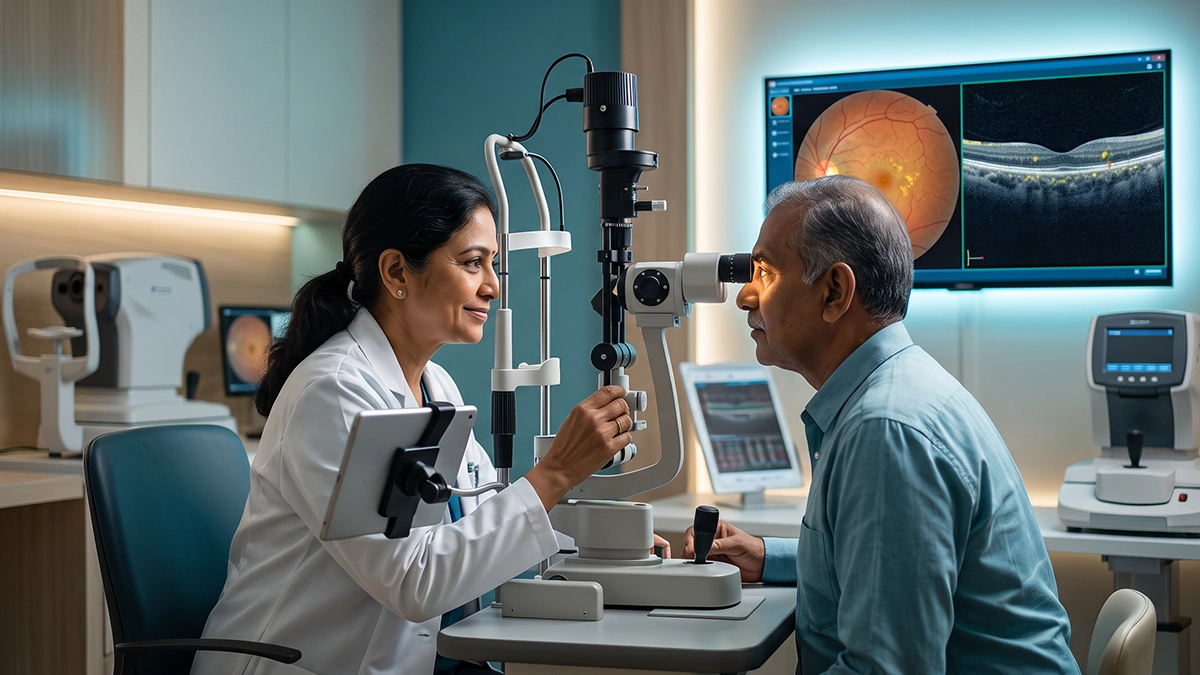
The retina is the light sensitive tissue at the back of the eye which transmits light into signals for the brain. Retinal degeneration is a term which includes conditions that cause retinal cells or layers to become damaged or to gradually stop functioning. Some forms progress very slowly and may be noted at a routine eye exam, while others can affect central, peripheral or night vision.
A scan will display retinal thinning, which itself is not a diagnosis. Terms like weak spots in retina, retinal atrophy, foveal thinning, scleral thinning, weak retina and thin eye may describe what we see. Their importance depends on the area affected, symptoms presented and test results.
Early Signs of Retinal Degeneration
Symptoms of retinal degeneration will present differently based on which part of the retina is affected. A person may report in which they have blurry or distorted central vision, have trouble with reading, poor night vision or have loss of side vision. Sudden flashes, an increase in floaters, a “curtain” coming down over the vision or sudden loss of vision should be seen by a medical professional as soon as possible. Also per the NIH MedlinePlus site which reports that retinal disorders can cause blurry or distorted vision, loss of central or peripheral vision, flashes of light and seeing more floaters.
| Change noticed | Why it matters |
| Blurred or distorted central vision | May suggest macular involvement |
| Poor night vision | Can occur when retinal function is affected |
| New flashes or floaters | May require urgent retinal examination |
| Reduced side vision | May suggest peripheral involvement |
What Causes Retinal Degeneration?
Retinal degeneration is a result of many conditions which include aging, inherited diseases, diabetes, high blood pressure, severe myopia, disease that affects the retinal blood vessels, or eye trauma. The National Eye Institute reports that in the dry form of age related macular degeneration the macula gradually thins with age and the disease usually progresses slowly over the course of several years.
Because the condition varies, treatment can not be determined from a scan report alone. For instance a person who has an inherited disease may require a different approach from one in which retinal changes are due to aging, diabetes or myopia.
Tests for Retinal Degeneration
Evaluation of retinal degeneration usually begins with a dilated retinal exam. We use Optical Coherence Tomography (OCT) which produces cross sectional images of retinal layers and is also able to identify retinal thinning or retinal atrophy Fundus photography which is of the bottom of the back of the eye notes visible changes, and visual field testing which measures peripheral vision is also used. Fluorescein angiography may be ordered when we need a closer look at the retinal blood vessels.
At Vasan Eye Care we may combine dilation with OCT or fundus photography in a retina test as is clinical need. We compare scans over time which in turn helps to determine if the condition is stable or is progressing. Vasan Eye Care Retina Test.
| Test | What it helps assess |
| Dilated examination | Retina, macula and peripheral changes |
| OCT | Retinal layers and thickness |
| Fundus photography | Visible changes over time |
| Visual field test | Peripheral vision |
| Angiography | Retinal vessels and leakage |
Treatment for Retinal Degeneration
Treatment of retinal degeneration is based on the cause, location and severity. At present we do not have a single cure for all types. Some patients may only need routine monitoring, some will require laser procedures, eye injections, surgery or a better management of their diabetes and high blood pressure.
When retinal degeneration is related to a tear, abnormal blood vessels or any other treatable issue prompt care may reduce further damage. At Vasan Eye Care we present retinal laser photocoagulation Vasan Eye Care Retinal Laser Photocoagulation and surgical retina treatment Vasan Eye Care surgical retina treatment for certain retinal conditions post specialist assessment.
It is a must to not confuse what we see in the sclera with retinal degeneration. The sclera is the outer layer of the eye which in turn protects the inner components including the retina which is at the back of the eye. In general it is also true that we can’t determine a course of treatment based on reports of eye wall thickness without first having a proper diagnosis.
When to See a Retina Specialist
People with retinal degeneration should follow up as recommended by your ophthalmologist. Also if you have diabetes, high myopia, a family history of retinal disease or past retinal issues routine check ups are very important. To report new distortion, flashes, floaters or sudden vision loss do not ignore it.
At Vasan Eye Care we have specialists that study retinal degeneration, look at scans and determine which of the options of watchful waiting, medication, laser or surgery is the best. While we can’t go back in time to fix all cases of retinal degeneration, early diagnosis may help us to identify treatable issues and to preserve what usable vision we have.
Frequently Asked Questions
1. Is retinal degeneration the same as thinning of the retina?
No. The issue reports retinal damage and loss of function which in turn presents as retinal thinning that may have multiple causes.
2. Can this condition be cured?
Some causes of retinal degeneration respond to treatment and/or are amenable to control. Others may require a lifetime of monitoring and vision preserving care.
3. Can it cause blindness?
No single case is the same. Retinal degeneration is a variable condition which also affects the extent of the disease’s type, severity and area affected.
4. Why are regular eye tests important?
Eye tests are able to detect retinal degeneration before main symptoms present and also to identify changes which may require treatment.