
When people look up what retinopathy is, they are usually trying to tell the difference between a vision change that is a result of normal eye strain and one which is a medical issue that needs attention. In other terms, retinopathy means damage or a disease of the retina, the light sensitive tissue that lines the back of the eye, which is responsible for clear vision. At the first sign of issues a timely retinopathy test will allow a specialist to have a close look at the retina, identify early changes, and also to see if the issue is stable or getting worse.
The main type is of diabetic retinopathy results from high blood sugar over a long time, which in turn damages the small blood vessels in the retina. According to the National Eye Institute in the early stages of diabetic retinopathy there may be no symptoms at all, but in the later stages you may see blurred vision, floaters, and in severe cases lose your vision. That is why it is important to understand retinopathy even when your eyesight seems normal.
What Is Retinopathy?
To answer what is retinopathy clearly, it is not one single eye problem. It is a wide term that we use for when the retina is affected by diabetes, high blood pressure, blood vessel damage, prematurity, and other retinal diseases. The exact meaning of retinopathy depends on the cause, the severity and which part of the retina is involved.
In many cases retinopathy symptoms present no issue at first. People can go on to read, drive, and work normally as retinal changes which are in the early stages are developing. That is why if you suffer from diabetes, high blood pressure, kidney disease, pregnancy related diabetes, or have a background of retinal eye disease, you should not wait for your vision to leave you before you seek out an eye care professional.
Why Retinopathy Should Not Be Ignored
The retina functions as the eye’s camera sensor. It is when the blood vessels in it leak, swell, bleed, or grow abnormally that vision may start to slowly blur out, distort, or go black. The CDC reports that early diagnosis is also very important, which in turn is true because at the point in time that the disease is diagnosed before it causes serious vision loss, that is when treatments for diabetic retinopathy work best.
For patients, retinopathy meaning should not create fear. It should create awareness. Many retinal changes we see are of what may be monitored, controlled or treated if brought to notice at the right time. At Vasan Eye Care, patients can consult eye specialists for evaluation of retinal diseases, detailed diagnosis, and guidance on suitable retinal disease treatment based on the stage and cause.
Common Retinopathy Symptoms Patients May Notice
The challenging part about retinopathy symptoms is that they may not appear in the early stage. When symptoms do appear they may present as very common vision issues. Some folks report blurry vision, night time vision issues, floaters, large dark areas, colors which appear faded, or difficulty with reading. Also it may note that straight lines appear wavy or that there is a section of vision which is missing.
| Retinopathy symptom | What it may feel like | Why an eye checkup matters |
| Blurry vision | Words, faces, or objects look unclear | It may indicate swelling or leakage in the retina |
| Floaters or dark spots | Small dots, threads, or shadows move in vision | It may be linked to bleeding or vitreous changes |
| Distorted vision | Straight lines may look bent or wavy | It can happen when the macula is affected |
| Poor night vision | Driving or walking in low light becomes difficult | It may suggest reduced retinal function |
| Sudden vision drop | Vision becomes cloudy, dark, or blocked | It needs urgent retinal examination |
A person should not wait for strong retinopathy symptoms before going in for an eye exam. In diabetic eye disease the retina may show signs of the disease before the patient is aware of any issue. Also the NHS diabetic eye screening program reports that they are able to see signs of retinopathy before there are changes in the field of vision.
Retinopathy Test: How Doctors Diagnose the Condition
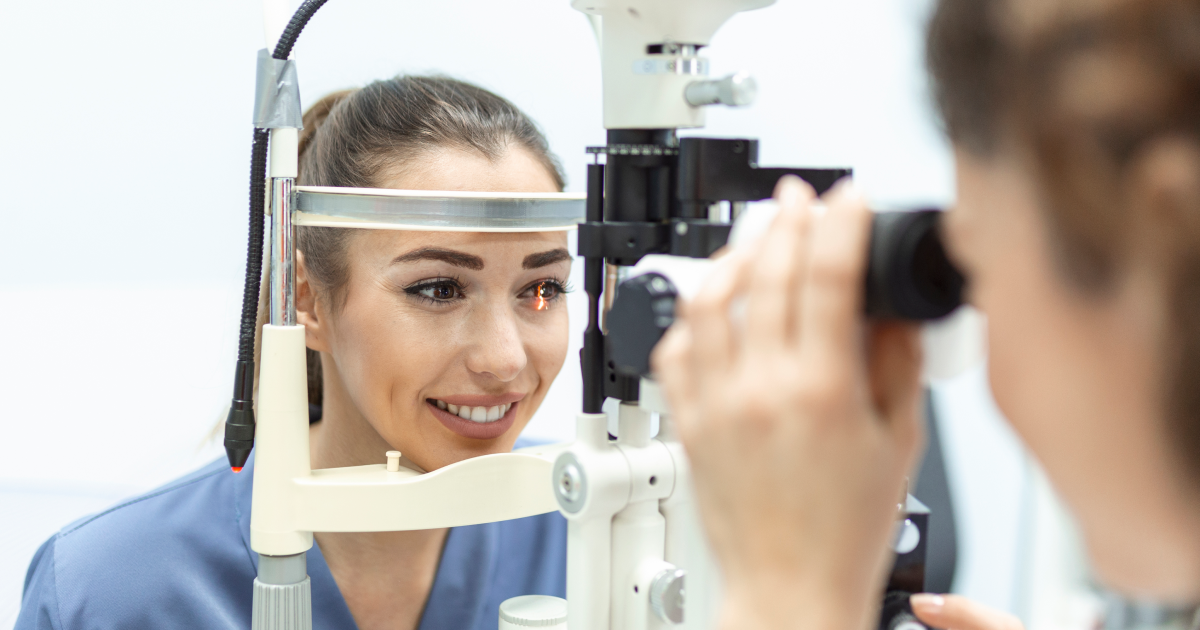
A retinopathy test does not include a single exam. Rather it is a set of eye exams and imaging which allows the ophthalmologist to see into the detail of the retina. Usually the process begins with visual acuity test, after which the pupils are dilated which in turn allows for better view of the eye’s bottom.
During the course of a dilated eye exam which uses drops to open up the pupil, doctors are able to see into the eye for signs of bleeding, swelling, leaking blood vessels, abnormal new vessel growth, or macular changes. MedlinePlus reports that in addition to dilation which is the main event of the exam which also includes assessment of vision and measurement of eye pressure.
This is to note that a retinopathy test is different from a routine spectacle power check. A power check mainly determines if you need glasses while a retinopathy test looks into the retina which is a place of many silent eye changes.
Important Tests Used to Track Retinopathy Progression
Once a doctor explains what is retinopathy, the next step is to see how far it has gone. We may have different tests put to us based on your symptoms, diabetes history, retinal view, and past reports.
| Test name | Purpose of the test | How it helps track progression |
| Dilated retinal examination | Allows the doctor to inspect the retina directly | Detects bleeding, swelling, deposits, and abnormal vessels |
| Fundus photography | Captures detailed photos of the retina | Helps compare retinal changes over time |
| Optical Coherence Tomography | Gives a layered scan of the retina | Useful for checking macular swelling and retinal thickness |
| Fluorescein angiography | Uses dye to study retinal blood flow | Shows leaking or blocked blood vessels |
| Ultrasound B-scan | Images the eye when the retina is not clearly visible | Helpful when bleeding or cataract blocks the retinal view |
A retinopathy test is what eye doctors use to determine which of the following is required: observation, lifestyle change, medicine, laser, injection, or surgery. We also use fundus photos and OCT scans which serve to create a record that we bring back out at follow up visits. This makes retinopathy a very practical diagnosis for patients as it is not just in the name of the disease we are interested in, we are also looking at if it is improving, stable, or getting worse.
What Is Retinopathy in Diabetic Patients?
When asked what retinopathy is in the context of diabetes, what they are in fact referring is to diabetic retinopathy. This occurs as a result of high blood sugar over time which takes a toll on small retinal blood vessels. Some of these vessels may begin to leak out fluid or blood into the eye, also in advanced stages very fragile new blood vessels may grow. If there is macular swelling which is the central part of the retina, what results is that reading and fine detail vision are affected.
For diabetic patients retinopathy meaning is related to long term sugar control, blood pressure, cholesterol levels, kidney health, and regular eye follow up. The CDC reports to get an eye exam at the time of type 2 diabetes diagnosis and at the five year mark of type 1 diabetes diagnosis.
Understanding Retinopathy Test Results
After a retinopathy test which may include no retinopathy, mild nonproliferative changes, moderate changes, severe Non-proliferative diabetic retinopathy, proliferative diabetic retinopathy, macular edema, hemorrhages, exudates, or ischemic changes. While these terms may sound alarming they are used by the retina specialist to determine the best approach.
The practical retinopathy meaning of a report depends on three things: the stage of disease, whether the macula is involved, and whether the condition is progressing. Mild cases may be put on watch and improved control of the system is recommended, more advanced cases may require retinal disease treatment. It is for patients’ benefit that they see an ophthalmologist to go over reports which they may try to interpret online.
What Is the 4-2-1 Rule in Diabetic Retinopathy?
The 4-2-1 rule is used by ophthalmologists to diagnose severe non-proliferative diabetic retinopathy. It is a case of very severe retinal hemorrhages or microaneurysms in each of the four retinal quadrants and venous beading in two or more quadrants or intraretinal microvascular abnormalities in at least one quadrant. The American Academy of Ophthalmology puts forth this as a tool in diabetic retinopathy grading.
For patients, the simple retinopathy meaning of the 4-2-1 rule is that the retina needs closer monitoring because the disease may move toward a more serious stage.. Also we see that a in depth retinopathy test which includes the use of retinal examination and imaging should be done by a trained eye care professional.
Who Should Get a Retinopathy Test?
People at risk of diabetes related retinopathy should not wait until they notice symptoms to get an eye exam. Also get a retinopathy test if you have had high blood pressure for a while, kidney disease, pregnancy related diabetes, prior retinal problems, sudden floaters, unexplained blurry vision, or a history of retinal eye disease.
Regular screening is of value as early changes may not be noticed by the patient. A person may think their vision is fine, but the retina may have only mild issues of bleed or swelling. Understanding what retinopathy is at this stage can help patients protect their sight through timely follow-up and systemic control.
How Doctors Track Retinopathy Progression
Tracking progress is done by comparing present retinal results with past reports. The doctor may look at visual acuity, retinal photos, OCT thickness graphs, angiography results, and clinical notes. If swelling goes down, bleeding stops, or abnormal blood vessels improve we may see that noted in the report. If there is new bleeding, macular edema, or abnormal vessels we may see a change in the treatment plan.
This is where retinopathy meaning becomes a long-term eye care concept. It is not a single diagnosis. It is regular monitoring, treatment at the right time, and coordination between the retina specialist, diabetologist, physician and patient. With proper follow up many people may reduce the risk of serious vision complications.
When Retinopathy Needs Urgent Attention
Some forms of retinopathy are very serious. Sudden appearance of floaters, sudden vision loss, a curtain like shadow, severe distortion, or rapid change in vision which requires emergency eye care. These may be signs of bleeding, retinal traction, retinal detachment, or severe macular issue.
People with diabetes, high blood pressure, or retinal diseases in the past should pay attention to sudden vision changes. A quick retinopathy test is a tool which will help identify the issue and put you on the best treatment path at the right time.
Retinopathy Care at Vasan Eye Care
Vasan Eye Care that does eye exams and has diagnosis for many eye issues including retinopathy. If patients are looking for info on what is retinopathy, evaluation of retinopathy symptoms, or a follow up for retinal disease treatment they can see an eye specialist which will create a personalized care plan.
The issue is to get beyond the what of retinopathy and to instead have patients included in the discussion of their reports, risk factors, treatment options, and follow up schedule. As for diabetic retinopathy, hypertensive changes, or any other retinal eye disease, what we see in terms of diagnosis is that timely is by far the most important.
FAQs
The main tool for diagnosis is the dilated retinal exam which the ophthalmologist does after use of eye drops which widen the pupil. As per the case in point, we may recommend fundus photography, OCT, fluorescein angiography, or ultrasound. A complete retinopathy test helps detect early retinal changes and track progression.
The 4-2-1 rule is a tool which doctors use to identify severe non-proliferative diabetic retinopathy. This may present as severe retinal hemorrhages or microaneurysms in four quadrants, venous beading in two or more quadrants, or intraretinal microvascular abnormalities in one or more quadrants. In simple retinopathy meaning, it indicates a stage that needs closer monitoring.
The best method is to have a comprehensive dilated eye exam from an eye specialist which in turn may require retinal imaging. We use OCT, fundus photography, and fluorescence angiography to document swelling, leakage, and disease progress. Early diagnosis is important because retinopathy symptoms may not appear at first.
The first signs may present as no symptoms at all which is common in diabetic retinopathy. When symptoms do present they may include blurry vision, floaters, dark spots, night time vision difficulty, or distorted vision. Any new retinopathy symptoms should be checked promptly by an ophthalmologist.
Not all cases can be completely prevented but the risk and progress can often be lessened by way of routine eye exams, and well managed diabetes, blood pressure, cholesterol and also prompt treatment. Understanding retinopathy meaning early helps patients take eye care seriously before vision is affected.
Treatment is based on what is causing the disease and the stage. In the early stages some changes may be monitored, in advanced disease we may use laser, injections, surgery or other retina care. The aim of retinal disease treatment is to control progression, preserve vision, and reduce complications.
Reference Links
- Government of India – Operational Guidelines for Primary Eye Care at Health and Wellness Centres
https://aam.mohfw.gov.in/download/document/Operational_Guidelines_for_Primary_Eye_Care_at_HWCs.pdf - National Eye Institute – Diabetic Retinopathy
https://www.nei.nih.gov/eye-health-information/eye-conditions-and-diseases/diabetic-retinopathy - Centers for Disease Control and Prevention – Diabetes and Vision Loss
https://www.cdc.gov/diabetes/diabetes-complications/diabetes-and-vision-loss.html