
Eye irritation which is not a common issue but very frustrating. We see redness, burning, itchiness, tearing, dryness, and also that gritty sensation which puts a damper on screen use, going out in dust, contact lens wear or even sleep. Many are on the look out for home remedies to reduce eye irritation at which time the cause is identified to be dust, pollen, dryness, pollution or seasonal allergies.
The good thing is that mild irritation may be treated with basic care if there is no pain, injury, vision loss, thick discharge or severe redness. Also according to MedlinePlus allergic conjunctivitis may present with itchy, red, watery eyes and in those cases supportive steps like use of lubricating eye drops and cool compresses may bring relief. At the same time it is also true that not all red or itchy eyes are a result of a minor allergy.When symptoms keep returning, professional eye treatments at Vasan Eye Care can help identify the exact cause and prevent the condition from getting worse.
Why Do Eyes Get Irritated So Easily?
Before getting into how to reduce eye irritation it is useful to know what causes the eyes to react so quickly. The eye’s surface is exposed to air, light, dust, allergens, smoke, makeup particles, contact lenses, screen strain, and weather which in turn cause irritation. Even the smallest of these elements may affect the tear film and cause the eyes to become dry, itchy, watery, or uncomfortable.
In many issues seasonal allergies, dry eyes, pollution, prolonged screen use, rubbing of the eyes, poor eyelid hygiene, or old eye make up are the causes of irritation. The CDC reports that eye diseases are from infections, allergens, or irritants and that symptoms of them may at times be treated at home based on the cause. This is why the safest first step in how to reduce eye irritation is to avoid random eye drops and focus on gentle, hygienic care.
| Common Cause | How It May Feel | Safe First Step |
| Dust or pollen allergy | Itching, watering, redness | Wash hands, avoid rubbing, use a cool compress |
| Dry eyes | Burning, heaviness, gritty feeling | Use lubricating drops after medical guidance |
| Screen strain | Tired eyes, dryness, mild headache | Take screen breaks and blink often |
| Contact lens irritation | Redness, discomfort, watering | Stop wearing lenses and consult an eye doctor |
| Smoke or pollution | Burning, watering, redness | Rinse the face, stay away from the trigger |
| Eye infection possibility | Redness with discharge or pain | Visit an eye hospital for diagnosis |
How to Reduce Eye Irritation at Home Naturally
The most practical answer to how to reduce eye irritation is to start with simple habits that calm the eyes without harming them. We do not put in practice that which may bring relief for a few seconds but in fact makes things worse; we are talking of eye rub which may decrease for a few seconds the itch but in the long run causes more redness and does pass along germs from the hands to the eyes. Also as per the CDC we are to avoid eye hand contact and to keep our hands clean in order to reduce the spread of eye infections.
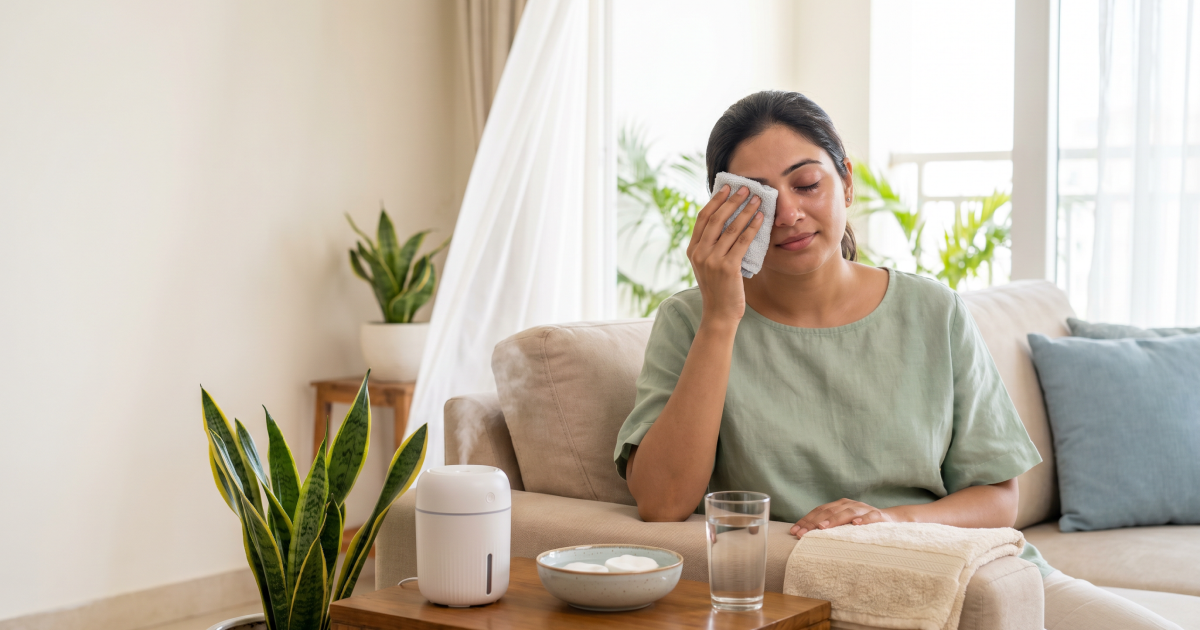
A cold compress also is a very safe home eye irritation remedy which you will see is related to allergies and mild swelling. Take a clean cloth, wet it in cool water, press out extra water and gently place it over your closed eyes for a few minutes. Do not apply pressure to the eyes.This simple method may help calm the burning or itchy feeling. When people ask how to reduce eye irritation naturally, a clean cold compress is often a good starting point.
Another helpful step is to keep the eye area clean. Wash your hands before touching your face, remove eye makeup before sleeping, and avoid sharing towels, kajal, eyeliner, or eye drops. These basic home remedies for eye irritation are not complicated, but they make a real difference, especially for people who get irritation again and again during dusty or allergy-prone seasons.
Use Lubrication Carefully
Dryness is one of the common reasons people search for how to reduce eye irritation.If the tear film is unstable the eyes may burn, water too much, or feel as if there is a foreign body in them. Per the National Eye Institute, we see that artificial tears are the go to for mild cases of dry eye and also are made available over the counter at many retail locations. Also not all drops are created equal and what’s more some medical grade drops which may be used for more severe cases, may do more harm than good when used without an eye care professional’s advice.
If you have issues like dry eyes, allergies, contact lens discomfort, or recurring redness it is best to talk to an eye doctor before using eye drops regularly. At Vasan Eye Care we have an eye specialist hospital which will do a proper evaluation for you to determine what type of care you need that may include lubricating drops, allergy drops, dry eye treatment or other eye care solutions based on the cause of your irritation.
Best Eye Irritation Remedies You Can Try Safely
Some eye irritation remedies are simple lifestyle habits rather than medicines. Drink plenty of water, stay away from smoky areas, keep your room free of dust, wash pillow cases often, and reduce time in front of fans or air conditioners. If pollen is your trigger, wear sunglasses when you are out of the home which will reduce exposure. For the folks that work long hours on computers, remember to blink often and take regular breaks which in turn will support eye comfort.
When thinking about how to reduce eye irritation, remember that your environment matters. Dust on curtains, bedsheets, fans, carpets, and work desks can keep triggering the eyes. Cleaning these areas often may reduce allergy flare-ups. These home remedies for eye irritation work best when done consistently instead of only after symptoms become severe.
| Remedy | How It Helps | Important Safety Note |
| Cold compress | May reduce itching, swelling, and burning | Use only clean cloth and cool water |
| Hand washing | Reduces germ transfer to the eyes | Wash before touching face or using drops |
| Avoid rubbing | Prevents worsening redness and irritation | Use compress instead of rubbing |
| Clean bedding | Reduces dust and allergen exposure | Wash pillow covers regularly |
| Screen breaks | Helps reduce dryness and strain | Follow regular blinking and rest breaks |
| Sunglasses outdoors | Helps limit dust and pollen exposure | Choose clean, comfortable eyewear |
What to Avoid When Your Eyes Are Irritated
Knowing how to reduce eye irritation also means knowing what not to do. Do not use up old eye drops, steroid drops, antibiotic drops, or redness remove drops without first seeking medical advice. Also do not apply rose water, lemon water, honey, saliva, or home made mixtures into the eyes.These are often promoted as home remedies for eye irritation, but they can irritate the eye surface and may increase the risk of infection.
Also avoid wearing contacts when your eyes are red, painful, watery, or itchy. CDC says to stop wearing contact lenses till you go to an eye doctor which gives the OK to put them back in when you have signs of conjunctivitis. If symptoms improve by taking out the lenses but return when you do put them in again, see an eye hospital for a full lens and cornea exam.
When Should You Visit an Eye Doctor?
Home care is a good option for mild symptoms but at the first sign of serious issues seek out professional care at Vasan Eye Care we recommend you come in if you have eye pain, blurred vision, light sensitivity, swelling, injury, chemical exposure, thick discharge, redness which doesn’t go away. Also we ask that you see us if you are having repeat allergy issues, dry eyes, discomfort with contact lenses or irritation after eye surgery.
The proper solution to how to reduce eye irritation is dependent on the cause. Allergies, dryness, infections, eyelid inflammation, contact lens issues, and corneal problems may present in a like manner at first but require different care. At Vasan Eye Care we have doctors which will recommend the appropriate eye treatments after a full check of the eye surface, tear film, eyelids and total eye health.
Vasan Eye Care Approach to Eye Irritation and Allergies
Vasan Eye Care is known for patient friendly diagnosis and personalized care for eye issues which include allergies, dry eyes and related conditions. If you are looking for how to reduce eye irritation which is a recurring issue for you and current treatments aren’t working we recommend you visit an eye specialist hospital to get to the bottom of the issue instead of just temporary solutions.
From simple care to advanced eye treatments we aim at protecting your comfort, your vision and your long term eye health. If you are dealing with seasonal allergies, dryness related to screen use, eyelid issues, or discomfort from contact lenses our team at the eye hospital will provide you safe and suitable options.
FAQs
The best method to determine how to reduce eye irritation is to begin with clean hands, do not rub, use a cold compress, stay away from dust or smoke, and rest your eyes. If symptoms include pain, vision changes, or discharge, go to an eye hospital.
Some at home remedies for eye irritation like cold compresses, hand washing, clean linen, and avoidance of allergens are usually safe. Also it is not recommended to put homemade solutions, herbal mixtures, rose water, or honey to the eyes without medical advice.
Helpful eye irritation remedies for allergic reactions include the avoidance of irritants, the use of clean cold compresses, that the eye area be kept clean, and when necessary to see an eye doctor for proper drops. Also from MedlinePlus we are told that in supportive care for allergic conjunctivitis are artificial tears and cool compresses.
Yes for a fact long screen hours may cause dryness, tiredness, burning, and heaviness which is a result of us blinking less as we use digital devices. If you are wondering how to reduce eye irritation from screens, take breaks, blink often, adjust the brightness, and see an eye care professional if symptoms persist.
You should visit Vasan Eye Care if you have severe, lasting eye issues which include vision trouble, pain, also when there is discharge, swelling, and light sensitivity. An eye specialist hospital can identify whether you need allergy care, dry eye care, infection care, or other eye treatments.
Mild eye irritation from dust, tiredness, or temporary dryness may improve with rest and proper care. However, if you are repeatedly searching for how to reduce eye irritation, it may be time to consult an eye doctor and find the exact reason.
Reference
- National Eye Institute – Dry Eye
https://www.nei.nih.gov/eye-health-information/eye-conditions-and-diseases/dry-eye - NHS – Dry Eyes
https://www.nhs.uk/symptoms/dry-eyes/
- CDC – Causes of Conjunctivitis
https://www.cdc.gov/conjunctivitis/causes/index.html
- MedlinePlus – Allergic Conjunctivitis