
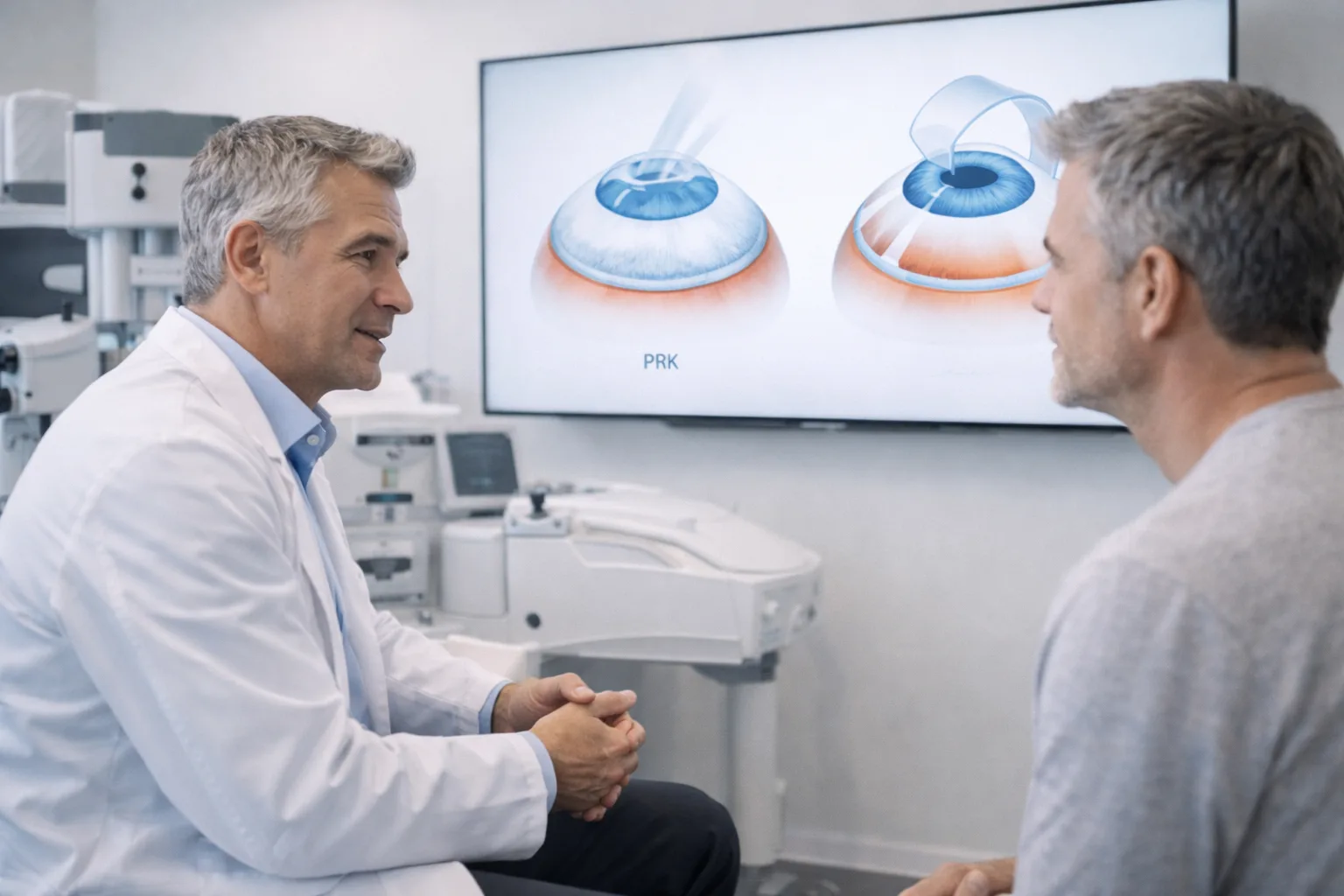
The development of vision correction procedures has produced safe and effective methods which serve as alternatives to glasses and contact lenses. The most commonly used treatment options include PRK and LASIK. The process of choosing between LASIK and PRK requires understanding their differences because they affect clinical suitability and recovery expectations and cost requirements.
The two procedures exist to correct refractive errors which include myopia and hyperopia and astigmatism. The two methods show different approaches to surgery which affect how long patients take to recover and who can undergo the treatment.
This blog provides an explanation of LASIK and PRK execution methods while showing their respective results and essential information about PRK versus LASIK expenses which will assist patients in selecting the best treatment option.
Understanding PRK and LASIK
What is PRK?
Photorefractive Keratectomy stands as the first laser vision correction method. The PRK procedure removes the corneal surface and uses laser treatment to reshape the corneal tissue underneath.
PRK serves as a suitable option for patients who have thinner corneas or who cannot undergo procedures that require flap creation.
What is LASIK?
LASIK (Laser-Assisted In Situ Keratomileusis) stands as a frequently executed refractive surgical procedure. The process begins with the creation of a corneal flap which allows surgeons to reshape corneal tissue through laser treatment before they restore the flap to its original position. The procedure delivers three benefits which include quick execution and exact results and fast visual recovery.
Patients often prefer LASIK eye surgery because the procedure causes them less pain and delivers results to them more quickly. The treatment procedure serves as a standard recommendation for patients who possess sufficient thickness in their corneas.
Difference Between LASIK and PRK
Understanding the difference between LASIK and PRK is critical before choosing a procedure.
- Surgical Technique
- LASIK involves creating a corneal flap.
- PRK removes the epithelial layer entirely.
This is the primary difference between LASIK and PRK, influencing recovery and comfort.
The time needed for LASIK patients to recover from their procedure takes between 24 and 48 hours. The healing process for PRK takes several days which extends to multiple weeks. The procedure creates minimal discomfort for patients who undergo LASIK. During their initial healing phase, PRK patients experience mild to moderate discomfort. Patients who have thicker corneas are eligible for LASIK. People who have thin corneas or active lifestyles should choose PRK as their better option. The procedure of LASIK involves flap creation which introduces specific risks to patients. The procedure of PRK requires no flap creation which results in decreased risk for specific medical situations.
The assessment of PRK safety in comparison to LASIK requires this distinction.
Also Read: 9 Crucial Things You Must Know Before LASIK Eye Surgery
PRK or LASIK – Which is Better?
The question of which is better PRK or LASIK depends on individual eye conditions and lifestyle factors.
The advantages of LASIK include –
- The procedure enables
- The patient experiences
- The procedure provides
- The patient receives
The assessment of which procedure is better requires clinical evaluation as evidence for evaluating PRK and LASIK. The two procedures provide effective vision correction but there is no single solution which works for all patients.
Is PRK Better than LASIK?
The question is PRK better than LASIK arises frequently among patients evaluating long-term outcomes. PRK may be considered better in specific scenarios:
- Patients with thin corneas
- Individuals engaged in contact sports
- Cases where flap creation poses risks
Patients tend to select LASIK because it offers them simpler treatment and faster healing time. The determination of which procedure is better between PRK and LASIK depends on the specific medical requirements of each patient.
Also Read: An Overview of LASIK, PRK, SMILE & ICL
Is PRK Safer than LASIK?
Safety is a primary concern when choosing a vision correction procedure.
PRK Safety Considerations
- The procedure permits removal of corneal flaps without creating any surgical hazards.
- The procedure protects patients during high-risk situations. The procedure maintains its results throughout extended periods. LASIK Safety Considerations
- The procedure offers exact surgical results which medical professionals use in their daily work.
The advanced technology solution creates decreased risk levels. The body needs less time for recovery which results in decreased risk of infections.
The evaluation of PRK versus LASIK safety establishes PRK as the safer option for particular situations. The two procedures become safe when doctors with extensive experience perform them.
PRK vs LASIK Cost
The cost comparison between PRK and LASIK treatment needs to be understood because it helps with treatment planning. The cost of surgery depends on multiple factors which include the following elements. The expenses of treatment will increase because LASIK requires more advanced technology to create flaps. The expenses of PRK treatment make it accessible for most people. The LASIK vs photorefractive keratectomy cost difference is not always significant but patients should evaluate value rather than price alone. The availability of top-quality affordable treatment options with discount offers will differ between different healthcare providers.
Key Considerations Before Choosing
Before deciding between PRK and LASIK, patients must know the following:
- Eye Health Assessment – A comprehensive eye examination determines eligibility and ensures safety.
- Lifestyle Factors – Individuals involved in physically demanding activities may benefit from PRK.
- Recovery Expectations – Those seeking immediate results may prefer LASIK.
- Budget Planning – Evaluating PRK vs LASIK cost helps align treatment with financial planning.
Why Expertise Matters?
The success of both procedures depends significantly on the surgeon’s skill and experience. Choosing a centre known for decades of excellence and highly experienced expert doctors ensures precision and safety.
Patients must know that advanced technology alone is not sufficient; clinical judgment plays a critical role in achieving optimal outcomes.
Conclusion
PRK and LASIK provide eye surgery solutions which successfully correct vision problems. The two procedures of LASIK and PRK differ through their surgical methods and the time patients take to heal and the types of patients who can undergo each procedure.
The choice between PRK and LASIK requires evaluation of personal requirements because no single standard exists. The query of whether PRK surpasses LASIK in effectiveness and whether PRK provides greater safety than LASIK requires comprehensive examination during medical consultation.
The financial aspects of PRK and LASIK expenses require assessment alongside the evaluation of treatment results which include safety and effectiveness over time. Patients must realize that the process of choosing an appropriate treatment method needs thorough assessment instead of relying on their initial beliefs.
Do not miss the opportunity to achieve clear vision with the right guidance. Act now and consult a qualified specialist to determine the most suitable option.
Frequently Asked Questions (FAQs)
The primary difference between LASIK and PRK is that LASIK creates a corneal flap, while PRK removes the outer layer of the cornea before reshaping.
When considering which is better PRK or LASIK, both offer stable long-term results. The choice depends on corneal thickness and lifestyle.
The question of whether PRK is safer than LASIK depends on individual conditions. PRK avoids flap-related risks, making it safer in certain cases.
Yes, in many cases, PRK is recommended. When asking if PRK is better than LASIK, it is often preferred for patients with thin corneas.
The PRK vs LASIK cost difference varies by provider, but PRK is generally considered more affordable compared to LASIK.
LASIK recovery is typically quick, while PRK requires more time. This is a key aspect in the difference between LASIK and PRK.
Find Eye Treatments in Your City: LASIK Eye Surgery in Hyderabad | LASIK Eye Surgery in Bangalore | LASIK Eye Surgery in Chennai