
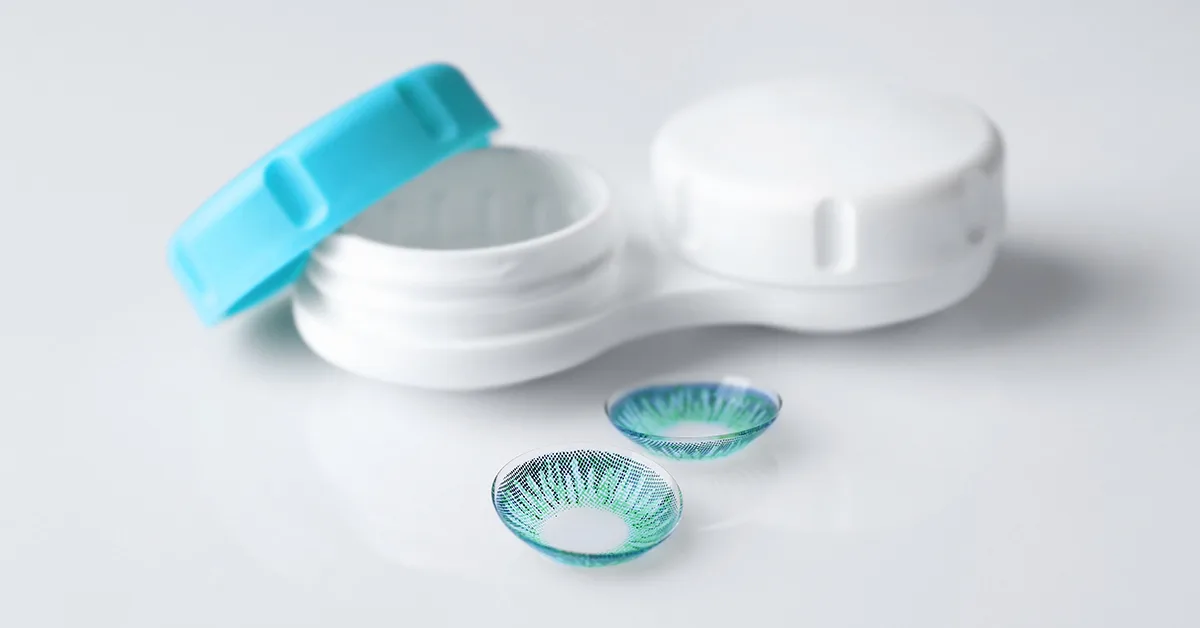
Children asking for contact lenses has become quite common. It often starts with small reasons, sports, school activities, or simply not wanting to wear glasses all the time. During a visit to an eye hospital, this usually turns into a longer conversation than expected.
Most parents assume the decision depends on age. In reality, it often comes down to habits, how careful the child is with daily routines.
What Are Contact Lenses and Why Do Children Use Them?
To keep it simple, what are contact lenses? They are thin lenses that sit directly on the eye to correct vision.
Unlike glasses, they move along with eye movements and don’t get in the way during activities like sports or dance. That’s one reason children ask for them early.
They are commonly used for:
- Nearsightedness
- Farsightedness
- Astigmatism
Some children also use them for conditions where glasses don’t provide clear vision.
A question that often comes up is: Are lenses really necessary, or just a preference? In many cases, it’s about convenience rather than need.
At What Age Can a Child Wear Contact Lenses?
The question at what age can a child wear contact lenses doesn’t have a fixed answer.
Some children manage them well at 9 or 10, while others may struggle even in their teens. The deciding factor is usually how responsible they are.
Doctors typically look at:
- Whether the child follows instructions
- How comfortable they are touching their eyes
- Their consistency with routines
There’s something noticeable during consultations, children who genuinely want lenses tend to learn faster than those who are unsure.
Another common concern is: What if my child forgets basic steps? That’s where supervision becomes part of the process.
Types of Contact Lenses for Children
There are different types of contact lenses, but not all are ideal for children.
The usual options include:
- Daily disposable lenses
- Monthly replacement lenses
- Rigid lenses for specific eye conditions
Most children start with daily disposables. They’re simpler, no cleaning, no storage, and less chance of mistakes.
In certain cases, rigid lenses are recommended, especially when sharper vision correction is needed.
Choosing the right type often depends more on lifestyle than anything else.
Safety and Daily Habits That Matter
Safety with contact lenses is less about the lens itself and more about how it’s used.
Some basic habits make a difference:
- Washing hands before handling lenses
- Removing them before sleep unless advised otherwise
- Avoiding water exposure while wearing lenses
- Replacing lenses on time
A question parents often ask is: Can lenses harm the eyes? Problems usually happen when these basic steps are skipped.
There’s also a pattern seen quite often, children who treat lenses like part of their daily routine tend to have fewer issues.
When It Might Be Better to Wait
Not every child is ready, even if they’re interested.
Lenses may not be suitable if:
- There are frequent eye infections
- Hygiene habits are inconsistent
- The child avoids routines
- There’s dryness or discomfort
In such cases, continuing with glasses is usually the safer choice for the time being.
Parents sometimes wonder: Should we just try and see? Trying without readiness can lead to avoidable problems.
Role of Eye Hospitals in Deciding Readiness
A visit to an eye hospital usually includes more than just a vision test when contact lenses are considered.
The process often involves:
- Checking eye health
- Measuring tear film stability
- Trying a trial lens
- Teaching how to wear and remove them
At Vasan Eye Care, children are usually guided step by step rather than rushed into using lenses. This helps them understand responsibility, not just the benefit.
There’s a noticeable difference when the child is part of the learning process. They tend to follow instructions more carefully.
Balancing Independence and Supervision
Contact lenses can make daily life easier for children, especially during activities. At the same time, they require a certain level of discipline.
Parents often notice a shift, children who manage lenses well tend to become more careful overall.
A question that comes up frequently is: Should I monitor every step? In the beginning, yes. Over time, children usually take over the routine themselves.
Also Read: Signs You Need an Eye Checkup: Don’t Ignore These Warning Signs
Frequently Asked Questions (FAQs)
They are thin lenses placed on the eye to correct vision.
There is no fixed age. It depends on the child’s maturity and habits.
Yes, when used properly with good hygiene.
Daily disposable lenses are often preferred for ease and safety.
It depends on lifestyle and eye doctor advice. Regular follow-ups help guide usage.
Treatments We Offer
Eye Treatments | Cataract Surgery | LASIK Eye Surgery | Squint Eye Treatment | Retinal Diseases | EPI LASIK | Corneal Services | Refractive Surgery | Oculoplasty Surgery | Dry Eye Treatment | Contoura Vision Surgery | Anti VEGF Agents Treatment | Photorefractive Keratectomy | Vitrectomy Surgery | Epi Contoura Eye Surgery | Customised LASIK Surgery | Retinal Laser Photocoagulation Treatment | Implantable Collamer Lens |Cataract Surgery in Bangalore | Cataract Surgery in Hyderabad | Cataract Surgery Chennai | LASIK Eye Surgery in Hyderabad | LASIK Eye Surgery in Bangalore | LASIK Eye Surgery in Chennai | Retina Services in Hyderabad | Retina Services Chennai | Squint Eye Treatment in Bangalore | Squint Eye Treatment in Hyderabad | Squint Eye Treatment in Chennai | Glaucoma Treatment in Bangalore | Glaucoma Treatment in Chennai | Glaucoma Treatment in Hyderabad
Eye Conditions We Treat
Glaucoma Treatment | Orbital Trauma | Macular Hole | Retinopathy of Prematurity | Uveitis | Traumatic Treatment | Retinal Detachment | Cataract Diseases | Posterior Subcapsular Cataract | Diabetic Retinopathy | Rosette Cataract Surgery | Squint Eye Disease