
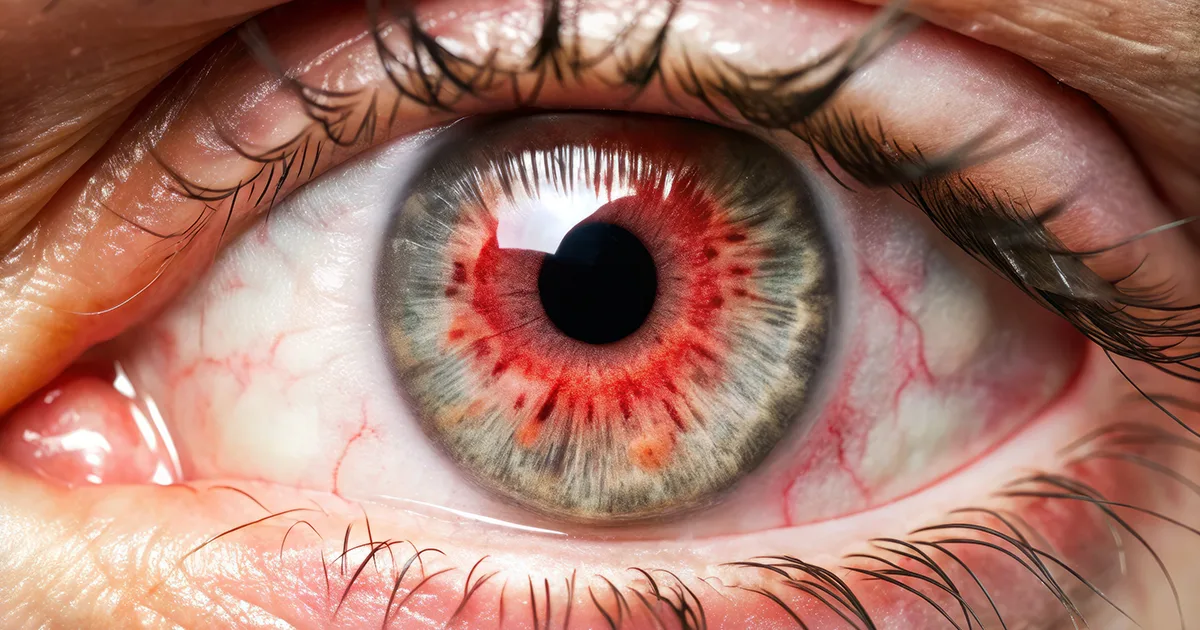
The optic disc is the point where the optic nerve leaves the back of the eye and travels into the brain. When pressure inside the skull rises, that pressure transmits to the optic nerve sheath and pushes against the optic disc, causing it to swell. This swelling is called papilledema. It is a serious finding, almost always pointing to a condition affecting the brain or spinal cord.
This guide walks you through what papilledema is, the stages of its progression, the conditions that cause it, and how it is treated.
What Is Papilledema?
Papilledema specifically refers to optic disc swelling from raised intracranial pressure. When optic disc swelling comes from a local eye cause (e.g. optic neuritis, diabetic papillopathy), the term “disc oedema” or “optic disc swelling” is preferred.
Important features of true papilledema:
- Nearly always bilateral
- Vision is usually preserved early
- Often comes with other neurological symptoms
- Needs urgent systemic investigation
What Are the Stages of Papilledema?
A commonly used grading is the Frisén scale.
Stage 0 (normal)
- Optic disc looks normal
- No blurring of margins
Stage 1 (very early)
- Subtle blurring of the nasal disc margin
- Slight elevation
- Small “halo” around the disc
Stage 2 (early)
- All disc borders are blurred
- Elevation of the disc
- Fuller “halo” around the disc
Stage 3 (moderate)
- Disc elevation is clear
- Retinal vessels are partially obscured as they leave the disc
- Haemorrhages and cotton-wool spots may appear
Stage 4 (marked)
- Complete obscuration of the vessels emerging from the disc
- Significant elevation
- Haemorrhages and exudates more obvious
Stage 5 (severe)
- Dome-shaped, severely elevated disc
- Vessels obscured across the disc surface
- Significant retinal involvement
- Risk of permanent optic nerve damage
What Causes Papilledema?
Papilledema reflects raised intracranial pressure. Common causes include:
1. Intracranial tumours
Brain tumours, primary or metastatic.
2. Idiopathic intracranial hypertension (IIH)
Raised pressure without an identifiable cause; often in young, overweight women.
3. Cerebral venous sinus thrombosis
Blockage of venous drainage from the brain.
4. Meningitis and encephalitis
Inflammation or infection of the brain and meninges.
5. Intracranial haemorrhage
Bleeding inside the skull.
6. Hydrocephalus
Build-up of cerebrospinal fluid.
7. Severe hypertension
Malignant hypertension can cause raised brain pressure.
8. Medications
Excess vitamin A, tetracyclines, lithium, certain steroids, and oral contraceptives in select cases.
9. Obstructive sleep apnoea
Contributes to pressure fluctuations.
10. Endocrine conditions
Cushing’s syndrome, thyroid disease, and certain hormonal disorders.
What Are the Symptoms of Papilledema?
The swelling itself is usually painless. Symptoms come from the underlying raised intracranial pressure.
- Headache, often worse in the morning or with coughing and straining
- Nausea and vomiting
- Transient visual obscurations (brief greying out of vision, often with position change)
- Double vision
- Pulsatile tinnitus (ringing in the ears matching the heartbeat)
- Neck stiffness in meningitis
- Neurological signs such as weakness or seizures in severe cases
- Blurred or patchy vision
- Enlargement of the blind spot on visual field testing
- Significant visual loss in advanced or untreated cases
How Is Papilledema Diagnosed?
A multidisciplinary work-up is essential.
- Detailed history and neurological review
- Eye examination with dilated fundus
- Visual acuity, visual field testing, colour vision
- OCT of the optic disc
- Fundus photography
- Ultrasound of the optic nerve
- Magnetic Resonance Imaging (MRI) and venography of the brain
- Lumbar puncture with opening pressure measurement and CSF analysis
- Blood tests to rule out infections and autoimmune conditions
A combined effort between ophthalmology and neurology at an eye specialist hospital and a neurology department gives the most accurate assessment.
How Is Papilledema Treated?
Treatment targets the underlying cause.
1. Tumours
- Surgery
- Radiotherapy
- Chemotherapy
- CSF diversion procedures
2. Idiopathic intracranial hypertension
- Weight loss
- Acetazolamide (mainstay medication)
- Topiramate in selected cases
- Diuretics
- Serial lumbar punctures
- Optic nerve sheath fenestration or CSF shunting in severe cases
- Close ophthalmic monitoring
3. Cerebral venous sinus thrombosis
- Anticoagulation
- Treating the underlying cause
4. Infections
- Appropriate antibiotics or antivirals
- Supportive care
5. Haemorrhage
- Neurosurgical care
- Blood pressure control
6. Hydrocephalus
- Shunt placement
- Endoscopic procedures
7. Medications
- Review and withdrawal of offending drugs
8. Supportive ophthalmic care
- Monitoring optic nerve fibre thickness with OCT
- Visual field testing
- Protecting residual vision through structured follow-up
Supportive eye treatments such as lubricating drops support comfort during long treatment courses.
How Long Does Papilledema Take to Settle?
- Mild papilledema may begin to improve within weeks of lowering intracranial pressure
- Moderate cases usually settle over 1-3 months
- Severe or long-standing papilledema may take longer
- Some patients have residual changes on examination even after resolution of pressure
- In cases where optic nerve damage has already occurred, some deficits can be permanent
Regular follow-up and repeat imaging guide timing.
How to Prevent Papilledema
Prevention overlaps with prevention of the underlying causes.
- Manage blood pressure
- Treat obstructive sleep apnoea
- Maintain healthy weight (particularly for IIH prevention)
- Review medicines that can raise intracranial pressure
- Manage thyroid and hormonal conditions
- Avoid excessive vitamin A supplementation
- Prompt treatment of infections
- Protect against head injury with appropriate safety measures
- Regular eye checks in at-risk individuals
Papilledema in Special Groups
Children
Common causes include hydrocephalus, tumours, infections. Paediatric neurology and ophthalmology coordination is essential.
Young overweight women
Idiopathic intracranial hypertension is a common cause. Weight loss and acetazolamide are cornerstones.
Pregnant women
Possible in IIH or pre-eclampsia-related hypertension. Careful multidisciplinary care.
Older adults
Tumours and cerebrovascular events become more likely; rapid imaging is important.
Prognosis
- Depends heavily on cause and treatment timing
- Many patients recover well with prompt treatment
- Severe chronic cases risk permanent optic nerve damage
- Early diagnosis matters
- Regular follow-up is essential throughout treatment
When Should You See a Doctor?
Urgent review if you notice:
- Severe new headache
- Morning headaches with vomiting
- Transient visual obscurations with position change
- Double vision
- Pulsatile tinnitus
- Drooping eyelid or facial weakness
- Confusion, drowsiness, seizures
- Any visual field loss
A rapid evaluation at an eye hospital combined with a neurology team usually identifies the cause.
Papilledema Care at Vasan Eye Care
Vasan Eye Care has been looking after patients across India since 2002, now as part of ASG Enterprises. With more than 150 super-speciality centres, 500+ ophthalmologists, and over 5,000 trained eye care staff, the team evaluates and manages papilledema through detailed optic nerve imaging, visual field testing, and coordinated neurology referral.
Key Takeaways
- Papilledema is bilateral optic disc swelling caused by raised intracranial pressure.
- The Frisén scale grades it from stage 0 (normal) to stage 5 (severe).
- Common causes include brain tumours, IIH, venous sinus thrombosis, and severe hypertension.
- Symptoms include headache, visual obscurations, double vision, and pulsatile tinnitus.
- Treatment targets the underlying cause; optic nerve damage is the main vision risk.
- Urgent diagnosis and coordinated care offer strong outcomes.
Frequently Asked Questions (FAQs)
Treatment targets the underlying cause. Brain tumours may need surgery, radiotherapy, or chemotherapy. Idiopathic intracranial hypertension responds to weight loss, acetazolamide, and selective surgical procedures. Venous sinus thrombosis needs anticoagulation. Infections need antibiotics or antivirals. Supportive optic nerve monitoring with OCT and visual fields guides treatment and protects vision throughout.
Prevention involves managing conditions that raise intracranial pressure. Control blood pressure, treat obstructive sleep apnoea, manage weight, review medications that may raise ICP, avoid excessive vitamin A supplementation, treat hormonal conditions, and promptly address infections. Regular eye checks in at-risk individuals catch changes early.
Mild papilledema may begin to improve within weeks of lowering intracranial pressure. Moderate cases usually settle over 1-3 months. Severe or long-standing papilledema may take longer, and some patients retain residual changes on examination. Early treatment gives a strong chance of full recovery and preserving vision.
The Frisén scale grades papilledema from stage 0 (normal disc) through stage 1 (very early blurring of margins), stage 2 (early swelling with halo), stage 3 (moderate with partial vessel obscuration), stage 4 (marked with complete obscuration of emerging vessels), to stage 5 (severe with dome-shaped swelling and potential vision loss). The stage guides the urgency of treatment.
References
- American Academy of Ophthalmology. Papilledema. https://www.aao.org/eye-health/diseases/what-is-papilledema
- National Center for Biotechnology Information. Papilledema. https://www.ncbi.nlm.nih.gov/books/NBK538247/
- National Eye Institute. Optic Nerve Disorders. https://www.nei.nih.gov/learn-about-eye-health
- WebMD. Papilledema. https://www.webmd.com/eye-health/papilledema