
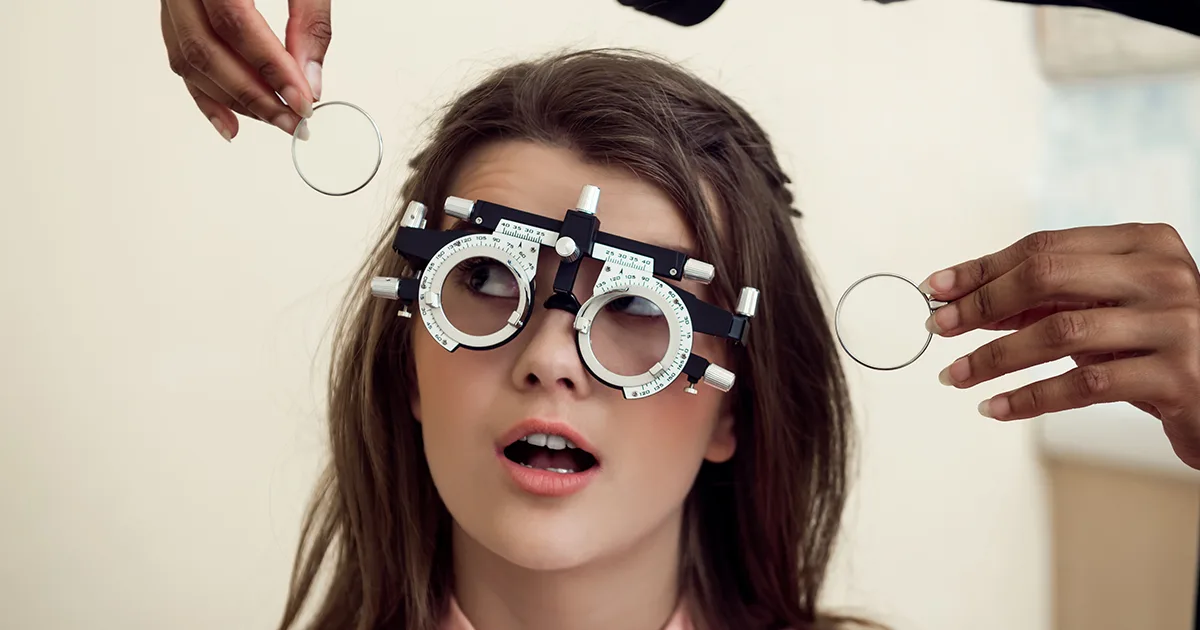
For people living with low vision, daily tasks that most of us take for granted, reading a letter, seeing faces across a room, navigating a familiar kitchen, can feel challenging. Low vision aids are designed to bridge that gap. They do not restore sight in the medical sense, but they magnify, enhance, and support what vision remains, making daily life more independent and less stressful.
This guide walks you through what low vision is, the main types of aids available, and who benefits most from them.
What Is Low Vision?
Low vision is usually defined as visual acuity of 6/18 or worse in the better eye, or visual field loss that affects daily function, even with optimal correction. It is not full blindness; some usable vision remains. Common causes include:
- Age-related macular degeneration
- Diabetic retinopathy
- Glaucoma
- Retinitis pigmentosa
- Optic nerve disease
- Cataract in advanced cases
- Severe myopia
- Post-stroke vision loss
- Congenital conditions
Why Low Vision Aids Matter
- Restore some independence
- Reduce dependence on family
- Support reading and writing
- Help with technology use
- Support career and education
- Improve psychological wellbeing
- Reduce falls and injuries
- Ease participation in hobbies
Supportive eye treatments for underlying disease often sit alongside low vision aids to maximise the usable vision.
Types of Low Vision Aids
Optical aids
1. Hand magnifiers
Classic handheld magnifying glasses; simple and portable.
2. Stand magnifiers
Sit on the reading surface; useful for prolonged reading.
3. Spectacle magnifiers
Built into eyeglasses; leave hands free.
4. Telescopic lenses (monocular/binocular)
Magnify distant objects; useful for boards, signs, and TV.
5. Prismatic glasses
Shift images to working areas of the retina in selected cases.
6. High-power reading glasses
For patients with moderate near vision loss.
7. Bifocal and multifocal low vision lenses
Combine near and distance aids.
Electronic aids
8. Video magnifiers (CCTV)
Camera with a screen for large-text display; useful for reading books, newspapers, and handwriting.
9. Portable electronic magnifiers
Pocket-sized screens for menus, bills, price tags.
10. Smartphone and tablet apps
Magnifier, text-to-speech, colour contrast, and AI-based scene description.
11. Wearable devices
Smart glasses and head-mounted displays with magnification, contrast enhancement, and navigation support.
12. Screen readers
Built-in software on phones and computers that reads text aloud.
13. OCR tools
Scan text and convert to speech or large text.
Non-optical aids
14. Large-print books and materials
Books, magazines, calendars, and phone dials in larger print.
15. High-contrast items
Coloured bowls, mats, keyboards, clocks, and doorframes.
16. Lighting
Task lamps, natural lighting, and anti-glare features.
17. Talking clocks and watches
18. Labelling systems
Bright labels, bump dots, and braille stickers.
19. Mobility aids
White canes, guide dogs, GPS-based navigation apps.
20. Writing guides
Templates that help position writing on cheques, forms, and envelopes.
Environmental modifications
- Consistent room layout
- Non-slip flooring
- Good even lighting
- Bright tape on stair edges
- Reduced clutter
- Colour-coded kitchen tools
How to Choose the Right Low Vision Aid
Choice depends on:
- Level of vision loss
- Type of vision loss (central versus peripheral)
- Tasks the user wants help with (reading, writing, mobility)
- Age and dexterity
- Technology comfort
- Budget
- Availability in the user’s location
- Lighting conditions at home or work
A structured low vision assessment at an eye hospital matches the right tool to the right task.
Low Vision Assessment
A specialist low vision assessment includes:
- Detailed history and goals
- Refraction
- Contrast sensitivity testing
- Reading acuity with different magnification levels
- Visual field testing
- Trial of various magnifiers and electronic devices
- Task-based evaluation
- Counselling for the patient and family
- Training on device use
- Follow-up to refine the plan
Training and Rehabilitation
Simply providing an aid is not enough; training matters.
- Learning to hold the device correctly
- Adjusting lighting
- Practising reading with magnifiers
- Using smartphone features effectively
- Using OCR and screen readers
- Mobility training
- Adaptive writing techniques
- Counselling for emotional adjustment
Low Vision Aids for Specific Conditions
Macular degeneration (central vision loss)
- Video magnifiers
- Stand magnifiers
- Prismatic glasses
- Eccentric viewing training
- Good task lighting
Glaucoma (peripheral vision loss)
- White cane for mobility
- Smart navigation apps
- Reverse telescopes in some cases
- Non-slip home modifications
Diabetic retinopathy
- Magnifiers
- Electronic aids
- Good lighting
- Proper systemic control
Retinitis pigmentosa
- Mobility training
- Night-specific lighting aids
- Electronic magnifiers
- Filter lenses for glare
Cortical visual impairment
- Bright high-contrast materials
- Simplified environments
- Structured therapy
Low Vision Aids in India
Availability is rising, particularly in larger cities and specialised clinics. Many Indian eye hospitals run dedicated low vision clinics. National and charitable programmes provide subsidised or free aids for eligible patients. Ask your eye doctor about local resources, government schemes, and certified dispensaries.
Cost Considerations
- Hand magnifiers are inexpensive
- Electronic magnifiers and CCTVs cost more
- Wearable smart devices are at the higher end
- Smartphones the patient already owns can act as effective low-cost aids
- Some insurance or corporate schemes cover low vision aids
- Charitable foundations support eligible patients
Psychological and Social Support
Vision loss carries emotional weight. Support includes:
- Counselling
- Peer support groups
- Family education
- Workplace adjustments
- Educational support for children
- Social welfare schemes for severe disability
Tips for Effective Use
- Use the device in good lighting
- Keep a consistent routine
- Practice in familiar environments first
- Combine multiple aids where needed
- Update devices as vision changes
- Reassess every 6-12 months
- Pair technology use with good hygiene
- Keep batteries charged and spare magnifiers handy
When Should You See a Doctor?
Book a visit if:
- You have been diagnosed with a condition that may cause low vision
- Your reading and daily tasks have become difficult despite glasses
- You have already reduced vision and want to explore aids
- A family member has severe vision loss
- You need a fitness-to-work assessment
- You are struggling emotionally with vision change
A specialist low vision clinic at an eye specialist hospital can build a structured plan.
Low Vision Aid Support at Vasan Eye Care
Vasan Eye Care has been looking after patients across India since 2002, now as part of ASG Enterprises. With more than 150 super-speciality centres, 500+ ophthalmologists, and over 5,000 trained eye care staff, the team supports patients with low vision through careful examination, aid selection, training, and long-term follow-up. Coordination with rehabilitation and community resources supports overall quality of life.
Key Takeaways
- Low vision aids help people with significant vision loss use their remaining sight.
- Types include optical, electronic, non-optical, and environmental aids.
- Choice depends on the type and degree of vision loss, tasks, and lifestyle.
- A structured low vision assessment ensures the right device and training.
- Rehabilitation, counselling, and environmental changes support lasting benefit.
- Indian specialist centres increasingly offer dedicated low vision services.
Frequently Asked Questions (FAQs)
Low vision aids include optical aids (hand, stand, spectacle magnifiers, telescopic lenses), electronic aids (video magnifiers, CCTVs, portable electronic magnifiers, smart apps, wearable devices, screen readers, OCR tools), and non-optical aids (large-print books, high-contrast items, task lighting, talking clocks, labels, mobility aids, writing guides, and environmental modifications). The combination depends on the individual’s vision and tasks.
People with visual acuity of 6/18 or worse in the better eye, or significant visual field loss, even with optimal correction, often benefit from low vision aids. Conditions like age-related macular degeneration, glaucoma, diabetic retinopathy, retinitis pigmentosa, optic nerve disease, and certain congenital conditions commonly qualify. A specialist low vision assessment determines which aids suit each patient.
They help with reading, writing, mobility, technology use, hobbies, and work. Magnifiers enlarge print, electronic aids enhance contrast and convert text to speech, telescopic lenses help see distant objects, and environmental changes reduce fall and injury risk. Together, these supports help maintain independence and improve quality of life.
Availability has grown, particularly in larger cities and specialist eye hospitals. Many centres run dedicated low vision clinics. National and charitable programmes also provide subsidised or free aids to eligible patients. Your eye doctor can guide you on local resources, assistance schemes, and training services in your region.
References
- American Academy of Ophthalmology. Low Vision Aids. https://www.aao.org/eye-health/diseases/low-vision-aids
- National Eye Institute. Low Vision. https://www.nei.nih.gov/learn-about-eye-health/eye-conditions-and-diseases/low-vision
- National Center for Biotechnology Information. Low Vision Rehabilitation. https://www.ncbi.nlm.nih.gov/books/NBK585030/
- WebMD. Low Vision. https://www.webmd.com/eye-health/low-vision