Clear vision is a result of accurate entry and focus of light into the eye which in turn focuses on the retina. When this focus does not happen properly a person may present with refractive errors of eye which include blurred distance vision, difficulty in reading, eye strain, or frequent headaches. At Vasan Eye Care we see many patients in for a routine power check which reports that their daily discomfort is due to refractive errors of eye. The good news is that these conditions are very common, measurable and usually very manageable with the right diagnosis and treatment.
What Is Refraction in the Eye?
Refraction is the bending of light that takes place as it goes through the cornea and natural lens of the eye. In a normal eye this light focuses clearly on the retina. Eye refraction also is the clinical procedure used to determine if the eye requires correction for clear vision.
In some cases the eye may be very long or short, and the cornea may be irregularly shaped. In these issues light may focus in front of the retina, behind it or at multiple points. This is what causes refractive errors of eye. A full eye refraction exam will determine the exact lens strength required to improve vision.
What Is Refractive Error?
A frequent question from patients is what is refractive error in easy terms. A refractive error is a focus issue that the eye does not do well which causes images to not appear clearly on the retina.
Understanding the what of refractive error gets patients to take blurred vision seriously. In kids left with an untreated refractive error of the eye may affect learning and confidence. In adults it may cause tired eyes, screen discomfort, and night time driving difficulty.
Common Types of Refractive Error
The main types of refractive error are myopia, hyperopia, astigmatism, and presbyopia. They affect vision differently, but all can make daily tasks uncomfortable when left uncorrected.
| Type | What happens | Common sign |
| Myopia | Light focuses in front of the retina | Distant objects look blurred |
| Hyperopia | Light focuses behind the retina | Near work feels tiring or unclear |
| Astigmatism | Light focuses unevenly | Vision looks blurred or distorted |
| Presbyopia | Near focusing reduces with age | Reading small print becomes difficult |
Myopia which is also known as short sightedness causes distant objects to appear unclear. Hyperopia may cause eye strain during reading or with close work. Astigmatism will blur both near and far vision as a result of an irregular curvature of the cornea or lens. Presbyopia sets in at about 40 years of age when the eye’s focus for near objects starts to weaken.
Symptoms of Refractive Errors of Eye
The most common symptom of refractive errors of eye is blurred vision but symptoms can vary. Some report headaches post reading, screen related strain, watery eyes, frequent blinking, double vision around letters, and trouble with focus.
Children may sit very near the TV, put out poor effort at copying from the board, report often to have tired eyes or that they prefer not to read. Adults may require more illumination, a larger point size of text, or to put in more effort at reading which in turn does not always yield clear results. If these signs are a repeated issue an eye refraction test should not be put off.
Why Eye Refraction Test Matters
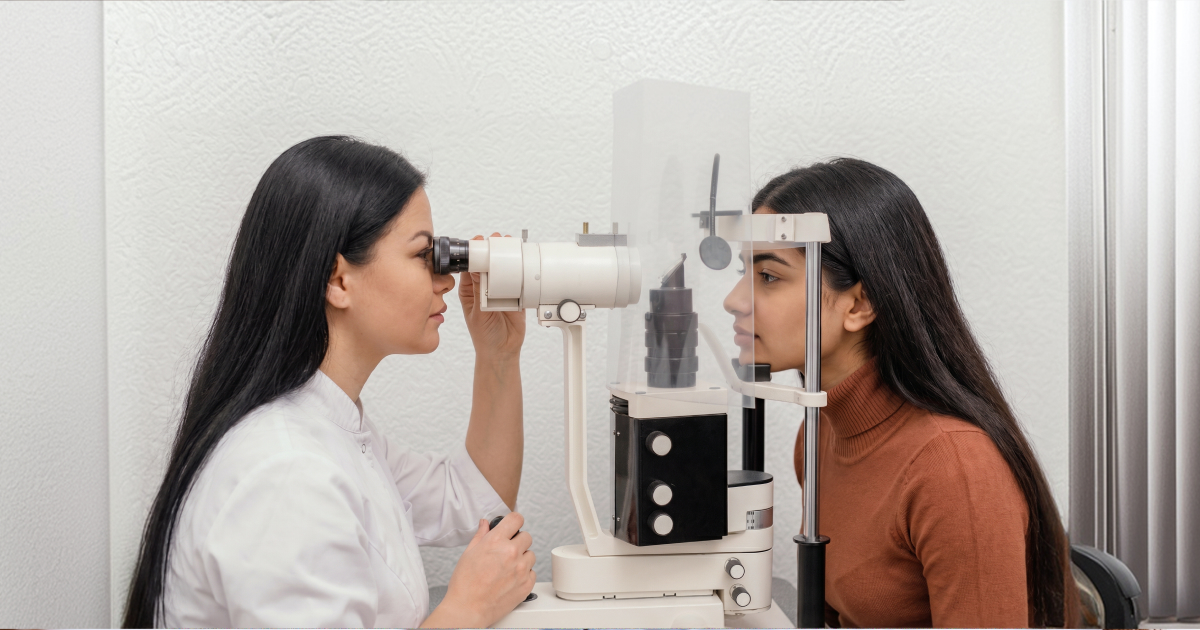
An eye refraction does more than determine a spectacle number. It checks out how well each eye sees and what change in power will improve that which is presented. During the test we put in different lenses which we use to see which one improves vision the most.
For kids and some adults the doctor may use dilating drops to relax the focus muscles before the test which in turn may bring to light previously hidden power issues and give a more accurate result. Regular eye refraction is helpful when refractive errors of eye are changing.
Causes and Risk Factors
Refractive errors in the eye are a very personal thing. Family history, eye shape, corneal curvature, and age related lens changes play into it. Also what we do for the most part of the day, low time spent outdoors which is an issue, and constant screen use may put strain on the eyes especially in kids and young adults. A proper exam is required to determine the types of refractive error and to rule out other eye problems.
Diagnosis at Vasan Eye Care
At Vasan Eye Care we see that evaluation for refractive errors of eye usually begins with a discussion of symptoms, past spectacle power, lifestyle requirements, screen time habits, and family history. We then do a visual acuity test, eye refraction, and an eye health exam. In many cases we also will check the cornea, retina, eye pressure, or tear film. This full scale approach is important to note as it is possible for two patients to have the same power yet require very different correction plans.
Treatment Options for Refractive Errors of Eye
Treatment of refractive errors of eye is based on age, eye power, what is comfortable, lifestyle, and eye health. We see that glasses are the easiest and safest option for most patients. They are simple to use and grow with your child as well as the adult. Contact lenses do better for people that want freedom from wearing glasses for sports, work, or a different look.
They do require good care and follow up. For eligible adults with stable power, options such as refractive surgery, lasik eye surgery, PRK, SMILE, ICL, or other refractive eye surgery procedures may be discussed after detailed screening.
| Treatment option | Usually suitable for | Important note |
| Glasses | Children and adults | Safe, simple, and easy to update |
| Contact lenses | Active patients and selected teenagers | Hygiene and correct use are essential |
| LASIK or laser correction | Eligible adults with stable power | Requires corneal and retinal screening |
| ICL or lens-based correction | Selected patients unsuitable for LASIK | Needs specialist evaluation |
LASIK, RLE, and Other Surgical Choices
Many of the patients that we see are interested in whether LASIK eye surgery is the best option for refractive errors of eye. For eligible adults with stable power in their eyes, healthy corneas and no large scale eye disease, LASIK may be a good choice. At the time of refractive surgery evaluation we check the thickness of the cornea, power stability, tear film, pupil size, and retinal health.
RLE, that is refractive lens exchange, is a different procedure from LASIK which is that it removes the natural lens and puts in an artificial one. It may be a solution for older patients of which there are many, very high prescriptions, early signs of lens degeneration, or presbyopia related issues. A young person with healthy corneas may be a candidate for LASIK eye surgery, also another may do better with ICL or a different refractive eye surgery. There is no one best procedure for all. What is the safest and best for you depends on your age, degree of prescription, cornea health, lens condition and what you want out of your vision correction.
Can Refractive Errors Be Prevented?
Not all refractive errors of eye can be prevented because eye shape and age-related focusing changes are partly natural. While we can’t stop that which is natural, we can adopt healthy habits which in turn will support early detection and reduce strain. Get your kids out to play and in for an eye check up.
Also for those that use screens which is a large group we have the 10-10-10 rule which may help. It is a practice of every 10 minutes looking away from what you are viewing on the screen to something at a distance of 10 feet for 10 seconds. This habit does not cure refractive errors of eye, but it may reduce digital eye strain.
When Should You Visit an Eye Doctor?
You will want to see an eye specialist if you have blurry vision, pain in your head, strained eyes, have to squint often, have trouble with night time driving, or experience sudden change in your glasses prescription. A timely eye refraction test can detect refractive errors of eye and help rule out other conditions. Also if your kids do not like to sit far away from the book or screen that they are reading, report problems seeing boards or blackboards, or rub their eyes a lot, it’s a good idea for them to get an eye check up. Early correction of refractive errors of eye can improve comfort and confidence.
Final Takeaway
Refractive errors of eye are also very common, but they shouldn’t be put off. As for the types of refractive errors of eye which may present myopia, hyperopia, astigmatism, or presbyopia, an accurate diagnosis is key to restoring clearer, more comfortable vision. With proper eye refraction, glasses, contact lenses, refractive surgery, lasik eye surgery, or refractive eye surgery, treatment can be planned according to each patient’s needs. If you are still wondering what is refractive error or which of the types of refractive error may be affecting your vision, book a comprehensive eye examination at Vasan Eye Care.
Frequently Asked Questions
The primary four types of refractive error are myopia, hyperopia, astigmatism, and presbyopia. Myopia in distance vision, hyperopia in near focus, astigmatism in even or distorted vision, and presbyopia in near reading as we age.These are common refractive errors of eye and can usually be corrected with glasses, contact lenses, or suitable treatment.
Every 10 minutes look at something at a distance of 10 feet for 10 seconds. It does not change spectacle power or cure refractive errors of eye, but it may help reduce digital eye strain.
RLE and lasik eye surgery are used for different needs. LASIK changes the cornea and is for appropriate adults with stable power and health of the cornea. RLE which replaces the natural lens may be put forth for right age groups, high powers, or lens related focusing issues. The best option depends on the patient’s suitability for refractive eye surgery.
We may use glasses, contact lenses, or surgery after we do the tests. Many do well with glasses. Contact lenses may be what you want if you are very active. Eligible adults may consider refractive surgery options after complete screening. A detailed eye refraction and eye examination help decide the safest treatment.
Reference Links
- National Eye Institute, NIH — Refractive Errors
https://www.nei.nih.gov/eye-health-information/eye-conditions-and-diseases/refractive-errors - National Eye Institute, NIH — Types of Refractive Errors
https://www.nei.nih.gov/eye-health-information/eye-conditions-and-diseases/refractive-errors/types-refractive-errors - MedlinePlus, NIH/National Library of Medicine — Refractive Errors
https://medlineplus.gov/refractiveerrors.html - MedlinePlus Medical Encyclopedia — Refraction Test
https://medlineplus.gov/ency/article/003844.htm - CDC — Common Eye Disorders and Diseases
https://www.cdc.gov/vision-health/about-eye-disorders/index.html - CDC — Keep an Eye on Your Child’s Vision
https://www.cdc.gov/vision-health/prevention/youth-vision-problems.html