
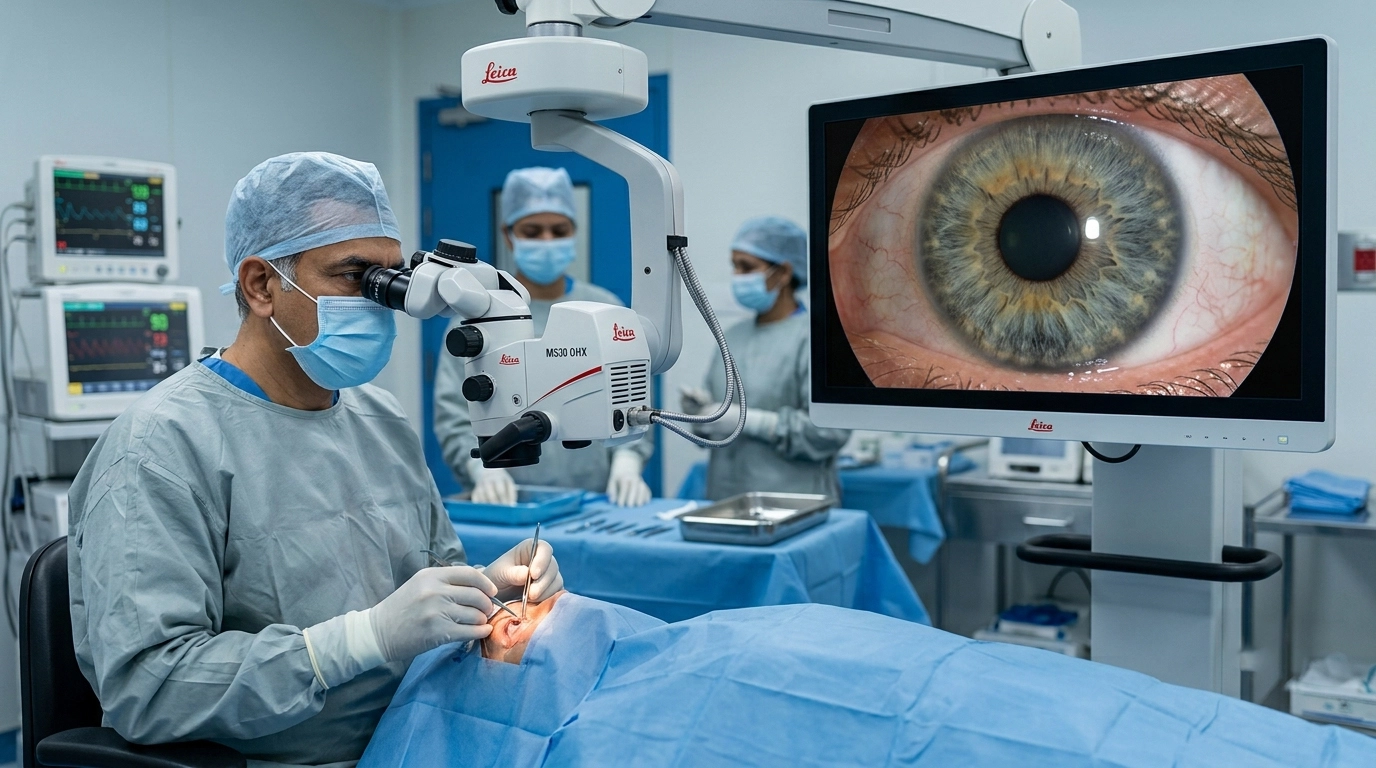
Glaucoma can slowly erode the optic nerve with at times little to no signs in the early stage of the disease for a large number of patients. For most people a solution is presented in the form of eye drops or laser therapy to bring down the intraocular pressure. However we see that when these are insufficient other options present themselves like the surgical route of Trabeculectomy which is designed to reduce intraocular pressure and in that way preserve what is left of the vision.
Trabeculectomy surgery is a well known surgical procedure for glaucoma. It does not bring back vision which has already degenerated from damage to the optic nerve. Instead its main aim is to reduce intraocular pressure and to decrease the risk of the disease’s progression.
Understanding what to expect from the trabeculectomy procedure recovery process, what the benefits are and which trabeculectomy complications to look out for will help patients prepare better before they go in for glaucoma surgery.
What Is Trabeculectomy?
Trabeculectomy is a procedure for glaucoma which creates a new path for aqueous humour, the clear fluid in the eye’s front chamber, to leave.
In most cases the aqueous humor leaves the eye via the natural drain. In many forms of glaucoma what happens is the drain stops working properly and pressure in the eye may rise. Persistent or uncontrolled pressure can damage the nerve which is at the back of the eye.
During the course of a trabeculectomy procedure an ophthalmologist creates a precise opening in the white of the eye which is the sclera. Fluid which is meant to pass through this new drain accumulates under the conjunctiva and forms a small reservoir which we know as a filtering bleb.
In most cases the bleb is located beneath the upper eyelid and may not present itself during routine daily activities.
Some patients also use the terms trab surgery or trab eye surgery, which is not the proper medical term; the correct term is trabeculectomy.
Why Is Trabeculectomy Surgery Recommended?
An ophthalmologist may perform a procedure called trabeculectomy when glaucoma has progressed past the stage which responds to conventional treatments.
The issue is that the diagnosis is not based upon a single eye pressure reading. At your glaucoma consultation we look at your present intraocular pressure, target pressure, optic nerve health, visual field issues, age, glaucoma type, past treatment history and also the chance of further vision loss.
The aim of trabeculectomy is in fact to not report a specific pressure figure. Instead the goal is to achieve a pressure which is safe for that particular eye.
| Situation | Why Trabeculectomy May Be Considered |
| Glaucoma progressing despite medicines | Additional pressure reduction may be necessary |
| Eye pressure remains above the target level | Surgery may provide stronger pressure control |
| Laser treatment has not provided sufficient control | A filtering procedure may be considered |
| Advanced optic nerve damage | Lower target pressure may be necessary to protect remaining vision |
| Difficulty achieving control with multiple medicines | Surgery may reduce dependence on glaucoma medication in some patients |
Not everyone with glaucoma requires surgery. Treatment must always be individualised by a glaucoma specialist.
How Is the Trabeculectomy Procedure Performed?
Before surgery the ophthalmologist does a close evaluation of the eye and goes over the patient’s current medications.
During the course of a trabeculectomy procedure, anesthetics are used to keep the patient at ease. What anesthetics are used depends on the patient’s situation. We may use local anesthetics sometimes along with sedation, or we may go with general anesthetics.
The surgeon works mostly at the upper eyelid. A small flap is made in the sclera and a controlled drainage outlet is made. This allows aqueous humor to pass out of the front chamber of the eye through which it is created.
The scleral flap is then sutured. These sutures control the rate of fluid outflow from the eye.
The conjunctiva is placed over the area. Fluid which accumulates beneath it forms the filtering bleb.
In some cases we may use drugs like mitomycin C during surgery to reduce excessive scar tissue. This is important as over time scar tissue can close off the outflow which in turn reduces the success of the trabeculectomy.
What Happens After Trabeculectomy Surgery?
Follow up care is a must after trabeculectomy surgery which is a period of healing which goes on for weeks post op.
Vision may be blurry at first. Also there may be mild irritation, watering of the eyes or a gritty feeling which also is common. What we see is that these symptoms improve as healing does which is a part of the process for each patient although each person’s experience may vary.
Doctors will often issue anti-inflammatory and antimicrobial eye drops post op. Follow instructions exactly.
Patients report to multiple follow up exams. At which we see the ophthalmologist who in turn will check the intraocular pressure, the condition of the filtration bleb, how the wound is healing as well as the state of the front and back of the eye.
Sometimes during surgery a doctor may adjust or remove a suture or perform a different small postoperative procedure to improve drainage.
Trabeculectomy Recovery Timeline
Recovery does not occur at exactly the same speed for everyone.
| Recovery Period | What Patients May Experience |
| First few days | Mild discomfort, watering, redness or blurred vision may occur |
| First 1–2 weeks | Regular examinations and prescribed eye drops are especially important |
| Around 2–4 weeks | Many routine activities may gradually resume when approved by the surgeon |
| Following weeks | Eye pressure and bleb function continue to be monitored |
| Long term | Periodic glaucoma examinations remain necessary even when pressure is controlled |
During the early stage of recovery patients are told to avoid rubbing or putting pressure on the operated eye. Also to temporarily stay away from heavy lifting, strenuous exercise, swimming and any activity which may put the eye at risk of dust or contamination.
Your eye doctor should determine when it is safe for you to hit the road, go back to work or get back into your exercise routine.
How Successful Is Trabeculectomy?
Trabeculectomy success is determined by its ability to reduce intraocular pressure and to protect the optic nerve from more damage due to glaucoma.
Many patients see a great drop in pressure post op. Also some are able to cut back on or discontinue certain glaucoma meds, while with others we may still require 1 or more pressure down eye drops.
Results are different as these may be based on what type and how severe the glaucoma is, past eye surgeries, inflammation, wound healing and scarring.
A filtering pathway may also deteriorate over time. That is to say,trab surgery does not put an end to the need for glaucoma surveillance.
Trabeculotomy vs Trabeculectomy: What Is the Difference?
The fact that the terms trabeculotomy and trabeculectomy are similar causes great confusion, but they are different surgical approaches.
In the procedure of trabeculotomy the surgeon opens up or incises the trabecular meshwork which in turn improves drainage through the eye’s existing outflow system. Trabeculotomy plays a key role in the treatment of primary congenital and childhood glaucomas and also is used in certain modern angle based approaches.
In contrast, trabeculectomy also creates a new drainage pathway within the eye to a filtering bleb under the conjunctiva.
Thus in terms of comparing trabeculotomy vs trabeculectomy, the primary difference is which pathway is used for aqueous drainage.
Which procedure is to be used is determined by the patient’s age, type of glaucoma, anatomy, disease severity and past treatments.
What Are the Possible Trabeculectomy Complications?
Like in any eye surgery, trabeculectomy surgery has its risks. Not all patients will see every issue play out and some of the problems may be overcome if detected at the first sign.
Possible trabeculectomy complications include infection, inflammation, bleeding, temporary or permanent blurred vision, very high or low eye pressure, filter bleb leakage, scarring of the drainage passage and cataract progression.
Some at low pressure stages people may see that the anterior chamber is shallower or there is fluid build up behind the eye’s inner layers. While serious intraocular infection or large degree of permanent vision loss is rare it does require prompt medical care.
Before it is recommended that a patient have a trabeculectomy, the surgeon goes over the possible risks associated with the procedure in terms of which that option is better as compared to no treatment for the glaucoma which would result in the damage of the optic nerve.
When Should You Contact Your Eye Doctor After Surgery?
Some redness and temporary blurry vision may present during normal healing. But if you have increasing or severe eye pain, sudden reduction in vision, significant discharge, marked redness or if your symptoms are getting worse very quickly do not ignore it. Prompt evaluation can identify postoperative issues before they become more serious.
Does Trabeculectomy Cure Glaucoma?
No. Trabeculectomy is not a cure for glaucoma and does not reverse optic nerve damage which has taken place.
The operation lowers eye pressure to reduce the likelihood of additional damage.
Even out to 5 years post trabeculectomy surgery which is a stable pressure environment we see that glaucoma patients still must have routine eye check ups. The optic nerve, visual field and intraocular pressure will still require close watch.
Conclusion
Trabeculectomy is also a key option in which glaucoma does not respond fully to medical treatment or laser surgery. What it does is to create a new outflow path for aqueous humor thus reducing intra ocular pressure and in that process protect what is left of the vision.
Trabeculectomy results from not only the trabeculectomy surgery but also from careful postop care and long term glaucoma follow up. We go over the trabeculectomy procedure, recovery process and possible trabeculectomy complications which in turn enables patients to be more involved in their treatment decisions.
If glaucoma is left uncontrolled or progresses, at Vasan Eye Care we recommend evaluation by a glaucoma specialist which in turn may determine that trabeculectomy or some other treatment option is right for you.
Frequently Asked Questions About Trabeculectomy
- Is trabeculectomy a major eye surgery?
Trabeculectomy is a well known glaucoma procedure which creates a new drainage passage within the eye. Although it is true that many patients go home the day of the operation, it is also very important to have close follow up care as pressure and wound healing may fluctuate in the first few weeks.
- Is trabeculectomy painful?
The anesthetic is used to numb the eye during the course of a trabeculectomy procedure. Post op patients may notice mild soreness, irritation or a grittiness. Severe or progressive pain is not expected as a matter of course and should be reported to the ophthalmologist right away.
- How long does vision stay blurry after trabeculectomy?
Temporary blurred vision is common after trabeculectomy surgery and may improve gradually over days or weeks. Recovery varies between patients. A sudden decline in vision, particularly when accompanied by pain or redness, requires urgent ophthalmic assessment.
- Can glaucoma return after trabeculectomy?
Trabeculectomy does not eliminate glaucoma. What may happen is that the drainage passage becomes less effective as a result of healing or scarring, and in some patients glaucoma may continue to progress. Thus it is that regular pressure checks, optic nerve reviews and visual field tests still play a very important role.
- What is the difference between trabeculotomy and trabeculectomy?
When we compare trabeculotomy vs trabeculectomy, what we see is that trabeculotomy opens the trabecular pathway which in turn improves drainage, while in trabeculectomy a brand new filtering pathway and bleb is created. Trabeculotomy also has a better track record for congenital and childhood glaucomas.