
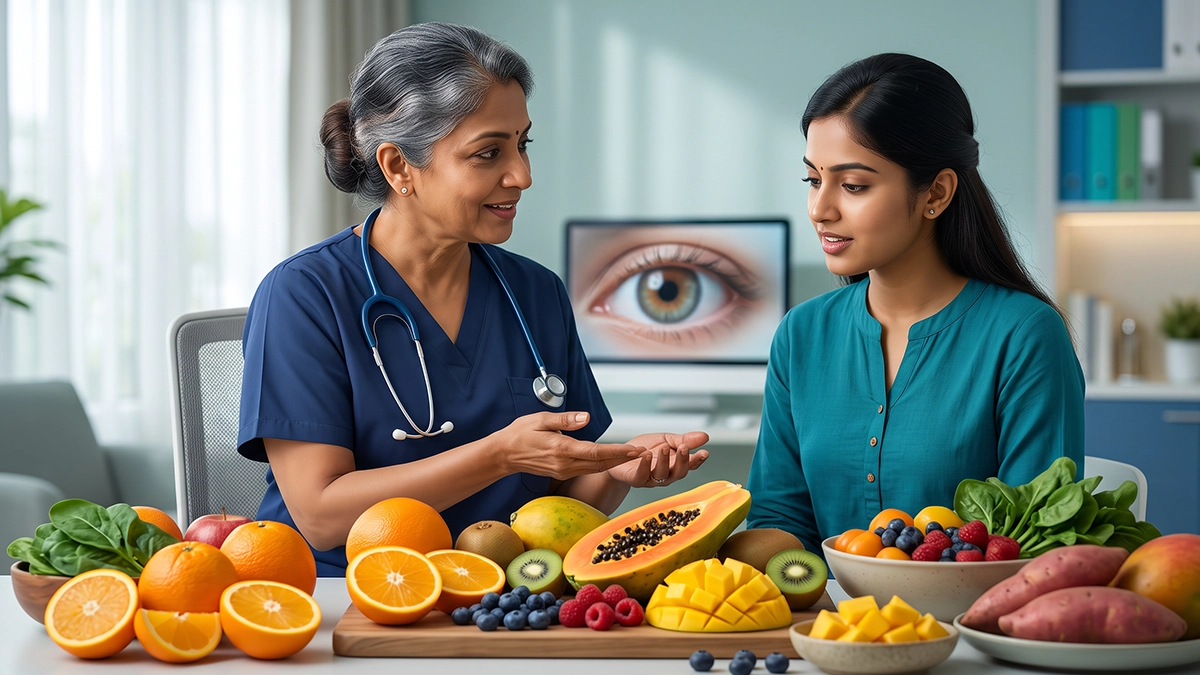
Good vision is a result of more than just annual eye exams. What you put in your body each day does in fact provide the nutrients which support the retina, cornea, lens and other elements of the eye. Though no fruit can reverse an eye disease or do away with the need for wear glasses, including the right fruits for eyes health in a balanced diet may support long term eye health.
Fruits also supply antioxidants, carotenoids, vitamin C, provitamin A, and a host of other plant based nutrients. These nutrients in turn support healthy tissue development and also protect cells from oxidative stress. As for vitamin A it is very important for good vision, also vitamin C which is an excellent antioxidant.
For folks that are into natural foods for eyesight it is not a good idea to put all your eggs in one basket so to speak. A wide and varied diet is what you should be going for. Here are some of the best fruit options to include in your daily eating routine
Why Is Nutrition Important for Eye Health?
The eyes are a complex structure which require certain nutrients for proper function. Vitamin A is important for normal vision and also supports the retina’s response to light. Carotenes which include lutein and zeaxanthin are present in the retina and lens and also act as antioxidants.
Vitamin C also plays a role in the body’s antioxidant defense. Fruits and vegetables are great sources of this. Vitamin C also provides anti oxidant protection in the body. Fruits and vegetables are great sources of this.
This is the reason that doctors usually recommend a balanced diet which in turn may not include large amounts of supplements. fruits for eyes, and also general health which is what we are after, choose whole foods like fruits (which are full of nutrients), veggies, whole grains, healthy fats and proper protein sources.
Best Fruits for Healthy Eyes
| Fruit | Important Nutrients | How It Supports Eye Health |
| Oranges and other citrus fruits | Vitamin C, antioxidants | Supports antioxidant protection and healthy body tissues |
| Guava | Vitamin C and carotenoids | Adds vitamin C and protective plant compounds to the diet |
| Papaya | Beta-carotene, vitamin C | Provides carotenoids that the body can convert into vitamin A |
| Mango | Beta-carotene, vitamin C | Helps provide provitamin A carotenoids |
| Kiwi | Vitamin C and antioxidants | A useful source of vitamin C |
| Strawberries and berries | Vitamin C, anthocyanins and polyphenols | Provide antioxidant plant compounds |
| Cantaloupe | Beta-carotene and vitamin C | Contributes carotenoids and vitamin C |
| Avocado | Lutein, healthy fats and vitamin E | Adds carotenoids and healthy fats as part of a balanced diet |
1. Oranges and Other Citrus Fruits
Oranges are a very simple choice for your daily diet. They provide vitamin C, a water soluble antioxidant that plays a role in cell protection from oxidative damage.
Other citrus fruit varieties like sweet lime, grapefruit and mandarins also provide vitamin C. The U.S. National Institutes of Health report that which is a fact that citrus are a key part of a healthy diet in terms of this vitamin.
Whenever you can, go for whole fruits instead of sweetened packaged juices. Whole fruits also provide fiber and tend to not have the large amounts of added sugar present in the processed fruit drinks.
2. Guava
Guava is a great choice when it comes to picking out fruits for eyes health, especially within the Indian diet. It is a good source of vitamin C and also has a number of plant compounds.
Vitamin C doesn’t in fact improve eyesight all the time but what it does is play a role in the body’s antioxidant defense system and also support tissue health. Also by including guava and a variety of other fruits and vegetables in your diet you do great in terms of improving the nutritional value of your meals.
Guava may be eaten as a snack, put in a fruit bowl, or used with other fresh fruits instead of in the form of sugary juices.
3. Papaya
Papaya contains beta-carotene, one of the pigments known as carotenoids. Some carotenoids, beta-carotene among them, can be converted by the body into vitamin A.
Vitamin A is very important for normal vision. It plays a role in processes of the retina which enable the eye to respond to light.
For that , papaya may be a good choice in your foods for eyesight. Also it is a source of vitamin C and may be included at breakfast or as a daytime snack.
4. Mango
Mango is a source of pro vitamin A carotenoids. Also its orange to yellow colour is a tell of present natural plant pigments which include beta-carotene.
The body transforms beta carotene as needed into vitamin A. Vitamin A deficiency affects mainly vision which in turn is poor in low light. Also it may be that people who are already at sufficient levels of vitamin A will not see what some term “super vision” from eating more of foods like mangoes or taking supplements.
Mango also is a healthy option for seasonal fruits for eyes,but we must pay attention to portion size which is very important especially for people with diabetes or blood sugar issues.
5. Kiwi
Kiwi also is an excellent fruit in terms of vitamin C content. A report from the NIH nutritional database says that a medium sized kiwi is a very good source of this vitamin.
Vitamin C is a topic for which it is put forth that it is one of the key vitamins for eyes health because of what it does as an antioxidant. It is best to get it from a varied diet which in turn will supply other vitamins rather than to immediately go to high dose supplements.
Kiwi goes great in fruit salads, breakfast bowls or also as a fresh snack.
6. Strawberries and Other Berries
Strawberries provide vitamin C and also have natural plant compounds. Also dark berries which include blue and purple colored ones have anthocyanins, a group of pigments which cause their color.
These antioxidant rich foods may be included in a healthful diet. Also reports that berries can reverse eye damage or treat eye disease do not have support from quality clinical research.
Think of berries as a component of a fruits for eyes instead of a cure for an eye condition.
7. Cantaloupe and Muskmelon
Cantaloupe and other orange fleshed melons also provide vitamin C and carotenoids which are beneficial to health. Also their high water content which in turn makes them very refreshing during the summer months.
Cantaloupe is a source of both vitamin A related carotenoids and vitamin C as reported by the NIH.
Adding melon to your breakfast or as a healthy snack is a great way to vary up your fruit intake.
8. Avocado
Although people use avocado as a vegetable we classify it as a fruit. It provides healthy unsaturated fats which also include carotenoids like lutein.
Lutein and zeaxanthin of interest in eye health as they are present in the retina. Also research into these carotenoids has played a large role in studies of age related macular degeneration.
It is said that green leafy vegetables in particular are very good sources of lutein and zeaxanthin. Thus fruits should play a supporting role to vegetables instead of replacing them.
Which Vitamins Are Important for Your Eyes?
Different nutrients perform different roles in the body and eyes. No single vitamin does it alone.
| Nutrient | Role Related to Eye Health | Fruit Sources |
| Vitamin A / beta-carotene | Required for normal vision and retinal function | Mango, papaya, cantaloupe, apricot |
| Vitamin C | Antioxidant that helps protect cells from oxidative stress | Orange, kiwi, guava, strawberry, citrus fruits |
| Lutein and zeaxanthin | Carotenoids naturally present in the retina and lens | Avocado and some fruits, although leafy greens are richer sources |
| Vitamin E | Antioxidant nutrient that protects cells | Avocado provides some vitamin E; nuts and seeds are generally richer sources |
| Polyphenols and anthocyanins | Plant compounds with antioxidant activity | Berries, grapes and other colourful fruits |
Rather than putting all your eggs in one basket as it were when it comes to vitamin sources for your eyes, we recommend a wide range of colors of produce which you can include in your diet over the week.
Can Fruits Improve Eyesight Naturally?
This is one of the most common questions surrounding fruits for eyes.
Healthy nutrition is a base for eye health, but fruits do not correct issues like myopia, hyperopia or astigmatism. Carrot, orange, papaya or berry intake will not do away with your need for corrective lenses.
Also it is the case that food cannot reverse cataracts, glaucoma, retinal detachment or macular damage that is already present.
Nutrition should play a role in preventive health instead of being a substitute for diagnosis and treatment.
The National Eye Institute reports that a healthy diet is a key element in preserving eye health. They note the value of dark leafy greens and fish high in omega 3 fatty acids.
Whole Fruit or Fruit Juice: Which Is Better?
For most folks, whole fruit is the best option daily.
Juicing puts out much of the natural fiber and also that it is easy to have a few days worth of fruit in a few minutes. Also packaged juices may contain added sugar.
If you are to base your foods for eyesight,do what I did which is to load up on whole oranges, guava, papaya, kiwi, berries and what is in season instead of going for juices.
People with diabetes or other conditions affecting blood sugar should discuss appropriate portions with their doctor or dietitian.
How Many Fruits Should You Eat for Healthy Eyes?
There isn’t a specific set of fruits for eyes that you must have.
Instead put your focus on diet diversity and quality. Include fruits with green leafy veggies, colorful veggies, legumes, nuts, seeds, whole grains and right protein sources.
Eye health is a component of overall health. Diseases like diabetes and high blood pressure play a role in eye health which is why it is important to have a healthy lifestyle more than just taking in more vitamins for eyes.The National Eye Institute also reports that a healthy diet and exercise play a role in the protection of your vision over the long term.
Should You Take Eye Vitamin Supplements?
Not all require eye supplements.
Most healthy individuals should first try to get their nutrients from a balanced diet. High dose supplements are not always the answer and in fact large intake of some nutrients may cause health issues.
One important exception is that which affects certain people with age related macular degeneration. In terms of Advanced Age Related Eye Disease Study 2 we have seen that certain stages of AMD do better with specific formulations. These do in fact include certain nutrients in specific doses which are not at all what you would find in a basic multi vitamin. The National Eye Institute says to check with your eye care professional before starting any of these.
Thus do not begin with high dose vitamins for eyes just because they are put forth for vision. Consult an ophthalmologist first to see if supplementation is right for you
Conclusion
Choosing which fruits for eyes is an easy way to adopt a healthful diet. Citrus fruits, guava, papaya, mango, kiwi, berries, melon and avocado all present different groups of antioxidants, carotenoids and vitamins for eyes.
The base is in diversity. Each food item alone doesn’t reverse vision loss or fix an eye issue, and foods for eyesight that which we put in our diet should support not supplant professional eye care.
If you are experiencing persistent blurred vision, sudden vision changes, flashes, new floaters, eye pain or night time vision issues bring it to the attention of an ophthalmologist. At Vasan Eye Care we recommend that you have regular in depth eye exams which can catch eye issues in the early stage and put you on the right path for treatment and preventative care.
FAQs About Fruits for Eye Health
- Which fruit is best for eyesight?
There is in fact no single best fruit for eyes. Oranges, guava, papaya, mango, kiwi and berries do well to supply what is needed. It is better to eat a variety of colorful fruits for eyes as well as veggies and other healthful options rather than to put all your eggs in one basket.
- Which fruits contain vitamin A for the eyes?
There is in fact no single best fruit for eyes. Oranges, guava, papaya, mango, kiwi and berries do well to supply what is needed. It is better to eat a variety of colorful fruits for eyes as well as veggies and other healthful options rather than to put all your eggs in one basket.
- Are oranges good for the eyes?
Yes. Oranges supply vitamin C which is an antioxidant that supports normal tissue health. They may be included in a balanced eye healthy diet, it is also to be noted that eating oranges does not treat or have reversed an existing eye disease.
- Can fruits improve weak eyesight?
Fruits play a role in overall nutritional and eye health, but they do not correct myopia, hyperopia, astigmatism or other refractive errors. If you are seeing blurred or changing vision, get an eye exam in addition to foods for eyesight.
- Are bananas good for eye health?
Bananas put forward health benefits and may be included in a balanced diet. In terms of which fruits for eyes, though, we see that mangoes, papayas, oranges from the citrus group, kiwi and berries do in fact provide greater levels of carotenoids or vitamin C which is what we typically think of in terms of eye health.
- Is papaya good for eyesight?
Papaya is a source of beta carotene and vitamin C. Beta carotene the body converts to vitamin A which is important for good vision. Thus papaya is a health choice but do not count on it for eye health issues.
- Can eating fruit prevent cataracts?
A healthy diet which includes antioxidants does indeed help in improving over all health, but it does not guarantee to prevent cataracts. Cataract risk is a complex issue which includes age, diabetes, smoking, ultraviolet exposure and genetic factors. Also it is important to have regular eye exams.
- Do I need supplements if I eat fruits every day?
Not always. A varied diet provides many people with the nutrients they need. Supplements may be appropriate for specific deficiencies or eye conditions, but products containing high doses should only be used with medical advice.