
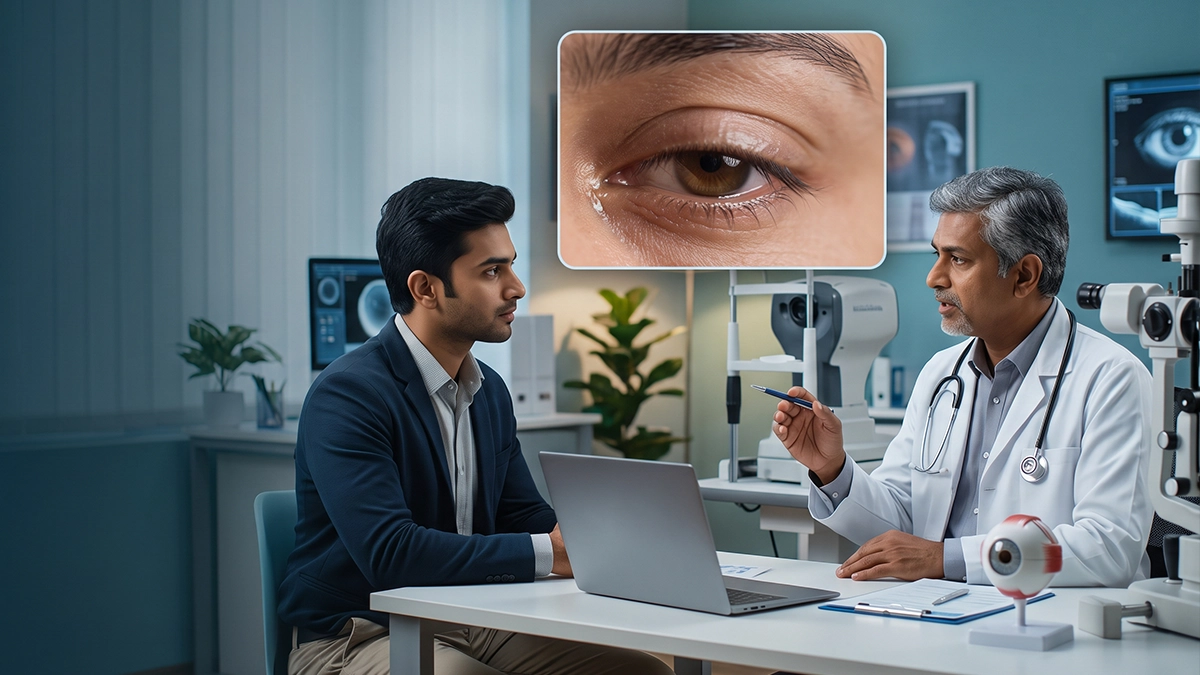
Blinking and eye health is very much a part of eye health which is what vasan eye care see each time you blink, which also spreads tears across the cornea, thus maintaining a smooth and comfortable eye surface. It is a fact that adults in normal activity blink between 15–20 times per minute, but what vasan eye care see is that rate goes down during intensive computer work. This in turn increases tear film evaporation and also contributes to dryness, irritation and also to that which is reported as fluctuating vision.
Why Is Blinking Important for Eye Health?
Blinking is a natural protective function which also performs to put the tear film in contact with the cornea, help remove small particles from the eye and at the same time work for a stable optical surface which in turn gives clear vision. The eyelids also play a role in the distribution of the oily tear component which in turn slow down the tear evaporation.
These are key blinking benefits. They see that regular in depth blinks support lubrication, reduce surface irritation and help to keep vision comfortable. Also by blinking they often protect the eye from dust and other environmental particles.
During which it is of great importance that there be a relationship between blinking and eye health at times of extensive near work. Which includes reading, driving and digital-device use it is in these that attention to the screen reduces spontaneous blink rate. Also which reports from Vasan Eye Care on symptoms related to screen use note that dryness is a result of reduced blinking.
For those that are worried about blinking and eye health, which is a primary issue, the fact is that what regular blinks do is to maintain the tear film which in turn gets the eyelids to move.
How Often Should You Blink?
There is no set exact number which all people should hit. At rest adults typically blink 15 20 times per minute which is a common rate to see; that said the rate does vary with attention span, fatigue, the presence of conversation and also other variables.
For those that are curious how often should you blink the practical advice is to not pay attention to every single blink. Instead what to do is to avoid very long periods of gazing without a full blink, especially during computer or smart phone use.
During screen time blink rate goes down. In an Indian Journal of Ophthalmology report which looked at 46 computer users with dry eye they saw that increased blink rate with the use of reminders improved the blink rate and dry eye symptoms.
This is an issue of blinking and eye health which affects people using computers for long shifts.
| Situation | What can happen to blinking | Practical approach |
| Normal relaxed activity | Spontaneous blinking continues | Allow natural blinking |
| Reading or close work | Blinking may become less frequent | Blink fully and regularly |
| Long screen sessions | Blink frequency may decrease | Take regular breaks and blink consciously |
| Dry or air-conditioned rooms | Surface moisture may evaporate faster | Reduce direct airflow and maintain comfortable humidity |
What Happens When You Do Not Blink Enough?
When blink rate goes down or does not fully close the eye the tear film may break up. You may notice a dry, sandy, burning, tired feeling in your eyes and your vision may fluctuate. Also these symptoms may become more noticeable after extended computer or smart phone use.
Research also reports that what is important is the quality of the blink not the frequency. In a study of 154 participants they saw that 64% of which had what is considered to be incomplete blinking by a clinician also had dry eye disease which was 44% in which did not have incomplete blink. The study reported an association which does not mean to prove that it is incomplete blinking which in and of itself causes dry eye.
This is what vasan eye care sees as a reason to put forward the issue of blinking and eye health in the same discussion when symptoms from screen use do not improve. Also, there are many causes for dry eyes which include eyelid inflammation, contact lens wear, some medicines that are taken, environmental factors, and tear film problems.
Vasan Eye Care also has info on dry eye treatment and ocular-surface issues which affect some chronically.
| Symptom | Possible link with reduced or incomplete blinking | When to seek assessment |
| Gritty or burning eyes | Tear-film instability | If persistent or recurrent |
| Fluctuating blur | Uneven tear-film coverage | If vision changes continue |
| Redness or irritation | Ocular-surface dryness | If frequent or worsening |
| Excessive watering | Reflex tearing from surface irritation | If associated with pain or vision change |
What Are the Benefits of Blinking During Screen Use?
The primary blinking benefits for screen work are in the area of tear film maintenance. A full blink which in turn spreads tears over the eye may also reduce the discomfort related to long term visual tasks.
Simple habits can support blinking and eye health:
- Take frequent breaks from screens when you’re working long hours at them.
- Make an effort to do full blinks instead of partial ones.
- Do not have fans or air conditioners blow into eyes.
- Keep at a comfortable viewing distance and have proper lighting.
- If dryness is persistent, see an eye care professional rather than continuously treat it.
Vasan Eye Care reports that with extended screen time, computer vision syndrome is associated with a reduction in blink rate.
Every 20 minutes take a 20 foot break for 20 seconds. This is a visual rest technique which also helps with dry eye symptoms but is not a treatment.
Can Better Blinking Prevent Dry Eyes?
Better eye blinking does improve the tear film, but it isn’t a cure for all cases of dry eyes. Dry eye disease may result from low tear production, too great an evaporation, issues with the eyelid or meibomian glands, inflammation, certain medicines and environmental factors.
Vasan Eye Care reports that in the case of persistent symptoms evaluation may include tear production and tear film stability tests.
People that have symptoms which last a while may benefit from an evaluation of the eyelids, the cornea and the tear film. As per the results which vasan eye care see in that exam the ophthalmologist may put into practice the use of lubricating drops, lid care, making changes in environment or other treatments.
Through Vasan Eye Care’s ocular surface disease resource.
When Should You See an Eye Specialist?
Occasional dry eyes brought on by long screen use may be improved with some simple changes. But an eye exam is right when symptoms persist, come back often or interfere with work, reading or daily life.
Seek immediate ophthalmic evaluation for sudden vision loss, severe eye pain, marked redness, light sensitivity which is a big issue, or the onset of flashes and floaters with a curtain like shadow. These symptoms may have causes beyond that of routine blinking and eye health and do not include things like blinking issues.
Persistent eyelid inflammation also affects the ocular surface. Vasan Eye Care presents info on blepharitis and its connection to dry eye symptoms.
Eye Care at Vasan Eye Care
Vasan Eye Care does a study for dry eye issues, ocular surface conditions and visual discomfort related to computer use. Vasan eye care may do a detailed check up which includes evaluation of tear film stability, eyelid function, the corneal surface and your visual requirements before putting together a care plan.
Related to Vasan Eye Care you will also see information on computer eye care, dry eye disease and eye health check ups.
Frequently Asked Questions
1. How often should you blink during screen use?
There is not a set universal number of blinks which must be achieved per minute. What is natural for each person may vary but screen time tends to reduce the rate. Full and complete blinks as well as short visual breaks are good for the tear film and in turn reduce discomfort.
2. What are the main blinking benefits?
Blinking distributes tears over the cornea, it also helps to remove small particles, supports tear film stability and protects the ocular surface. During activities which require prolonged visual attention complete and regular blinking is particularly useful.
3. Can reduced blinking cause dry eyes?
Reduced and/or incomplete blink rate may cause tear film instability and dry eyes issues which in turn is seen more during screen use. But also that dry eye disease has many causes which is why persistent symptoms should be evaluated by a health professional.
4. Is blinking enough to treat dry eyes?
Blinking helps to maintain a healthy tear film however it does not cure all causes of dry eyes. There is a persistent dryness which may result from tear production issues, fast evaporation, lid disease or inflammation and in which case an ophthalmic evaluation and a targeted treatment may be required.
References
- American Academy of Ophthalmology — What Is Dry Eye?
American Academy of Ophthalmology: What Is Dry Eye? - Indian Journal of Ophthalmology — Efficacy of blink software in improving the blink rate and dry eye symptoms in visual display terminal users
PubMed: Blink Rate and Dry Eye Study