
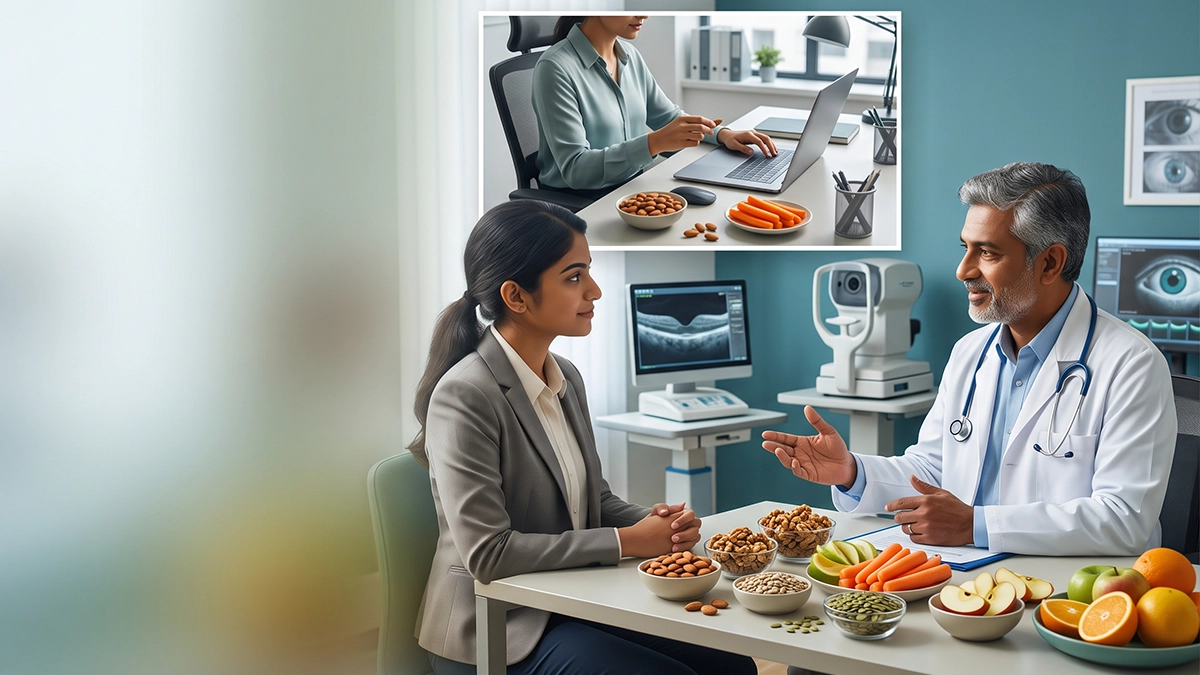
Healthy options for your eyes may support normal eye function at your desk which include carotenoids, vitamins, healthy fats and minerals. But do not think that food is a solution to digital eye strain. In office eye care it includes breaks from the screen, frequent blinking, hydration, right lighting and proper vision correction.
In 2025 a report out of Chennai which noted that 1,046 university students were included in the study found that 73.7% of them had digital eye strain which is a large proportion and indicates the widespread issue of these symptoms in heavy screen users.
Why Does Nutrition Matter for People Who Use Screens?
A healthy diet for screen users will in large part support eye health instead of which it claims to protect from screens. The retina benefits from nutrients such as vitamin A and carotenoids which include lutein and zeaxanthin.
The National Eye Institute’s AREDS2 trial had 4,203 adult participants who were aged 50-85 at the time of the study and had specific stages of age related macular degeneration. From this study vasan eye care see that there is a role for lutein and zeaxanthin in some AMD supplement regimens. It does not mean that healthy office workers require AREDS2 supplements or that supplements which prevent digital eye strain.
| Snack choice | Useful nutrients | Office-friendly option |
| Spinach or kale wrap | Lutein, zeaxanthin, folate | Small whole-grain wrap |
| Carrot and cucumber sticks | Beta-carotene, water | With hummus |
| Guava or orange | Vitamin C | One whole fruit |
| Almonds or walnuts | Vitamin E, healthy fats | Small unsalted handful |
| Boiled egg | Lutein, zeaxanthin, protein | One egg |
| Plain yoghurt with fruit | Protein and micronutrients | Small unsweetened bowl |
Which Healthy Snacks for Eye Health Work Well at the Office?
Colorful veggies are a eye healthy snacks option. Carrots, capsicums, cucumber and leafy green wraps in your diet add in carotenoids and variety without a lot of prep. Also include fruit in what you eat. Guava, oranges, amla, berries and papaya are in the vitamin C group and have other nutrients. Whole fruit is a great option to what may be sweetened drinks or very processed snacks.
Nuts and seeds present a great source of vitamin E, minerals and healthy fats. Almonds, walnuts, pumpkin seeds and sunflower seeds may also do in fact as your healthy snacks for eye health when it comes to portion size. Also try eggs, plain yogurt and roasted chana which are also great eye healthy snacks. These foods may be included in a balanced office eye care nutrition plan during long work days.
What Should Screen Users Limit?
Sugary and unhealthy high fat snacks as well as very salted prepackaged foods should play a small role in what a person puts in their screen users diet. Instead, healthy dense nutrients foods should be the bulk of what is snacked on every day. Also out of water, tea, coffee and other energy drinks goes as a regular choice with which to hydrate instead, water is best. While proper hydration is key for health, it is also important to note that drinking more water is not a stand alone solution to dry eye issues.
| Office habit | Better approach | Why it helps |
| Continuous desk snacking | Plan balanced snack breaks | Supports structured eating |
| Working through lunch | Step away from the monitor | Creates a near-work break |
| Frequent sugary drinks | Choose water more often | Reduces unnecessary sugar |
| Watching the screen while eating | Look away during meals | Adds screen-free time |
Why Food Is Only One Part of Office Eye Care
Healthy snacks for eye health should go along with practical office eye care. While at the computer for long times try regular breaks to stretch and look away which will in turn reduce dryness and tiredness. Vasan Eye Care’s guide to screen time eye care goes into in depth how to minimize strain when using devices for extended periods of time.
People also see dry eye relief options which they may apply if they have repeated grittiness of the eyes or temporary blur. They put out info on what is the impact of screen time on the eyes which in turn helps office goers to see why they should break from uninterrupted screen viewing.
People experiencing repeated changes in spectacle power can read about progressive myopia. Healthy eating cannot correct refractive errors or stop every eye condition.
For older adults, glaucoma prevention for seniors focuses on risk awareness and early detection rather than relying on lifestyle changes alone.
When Should Screen Users Have an Eye Examination?
Persistent blurriness, frequent headaches, ongoing dryness, eye pain, marked redness or difficulty in focus which require professional evaluation. Sudden vision loss, flashes with new floaters, a curtain like shadow or severe eye pain requires immediate medical attention.
A routine eye check-up which includes assessment of vision, refractive error and general eye health. Eye healthy snacks and a balanced screen user diet support healthy habits, but they do not replace an examination which is recommended if symptoms persist.
Eye Care at Vasan Eye Care
Vasan Eye Care provides for our patients to identify issues related to screen use, refractive errors and other vision issues. Vasan eye care may look at visual acuity, prescription of glasses, ocular surface and other health of the eye elements before putting together a care plan.
Frequently Asked Questions
1. What are the best healthy options for your eyes at work?
Great healthy snacks for eye health are leafy green wraps, carrots, whole fruits, eggs, yogurt, almonds and walnuts. These foods are a part of a balanced diet which is great, also it is important to note that no single food will prevent digital eye strain or replace good screen habits.
2. Eye healthy snacks can do little to prevent computer related dry eye?
What they do is add to your base level of nutrition which in turn supports overall health. As far as dry eye goes, regular breaks from the screen, standing up and moving away from the screen at set intervals, proper room humidity, and professional evaluation of persistent symptoms are what they put forward in a clinical setting.
3. What should a screen user’s diet include each day?
A screen based diet should include lots of veggies, fruits, whole grains, protein sources, nuts or seeds and also adequate fluids. Variety in diet is what you should put focus on instead of that one food which is marketed for eye health.
4. How often should office workers have an eye check up?
Age, the type of correction used, symptoms present, diabetes, glaucoma risk and other health issues all play a role in that. When office workers experience persistent pain or a change in vision they should seek an eye exam instead of waiting for the issue to progress.
References
- Digital Eye Strain Among Indian University Students in the Post-COVID Era: A Cross-Sectional Study
https://pubmed.ncbi.nlm.nih.gov/42338538/ - National Eye Institute — AREDS and AREDS2 Clinical Trials
https://www.nei.nih.gov/eye-health-information/clinical-trials/age-related-eye-disease-studies-aredsareds2/about-areds-and-areds2