
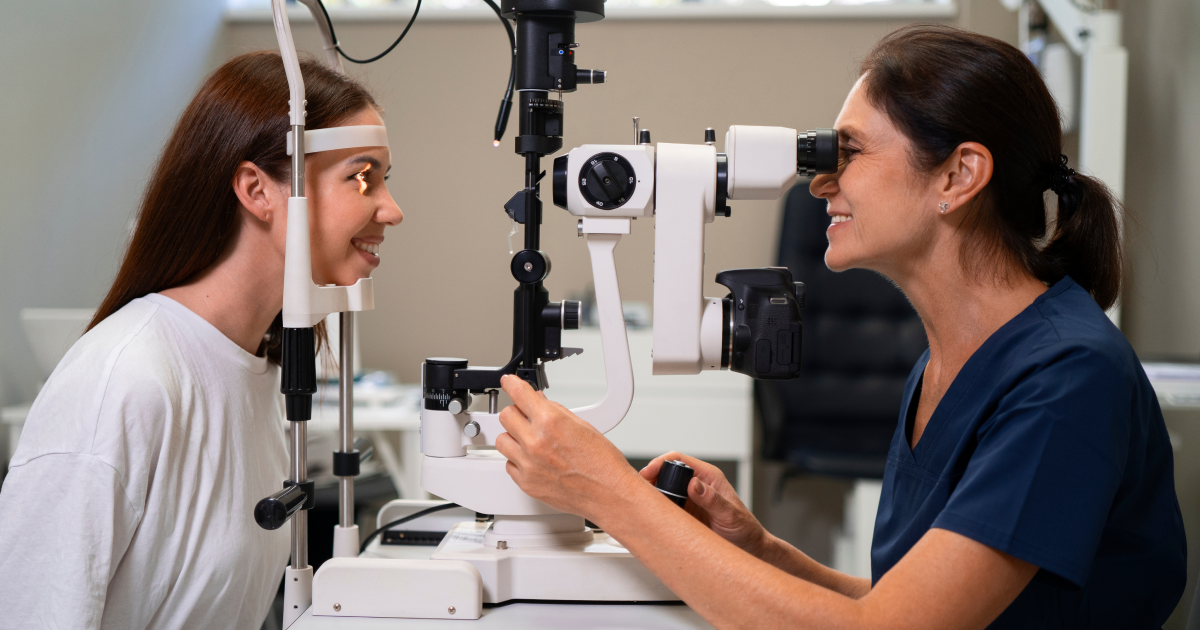
Clear vision plays a role in reading, driving, work, learning, and overall daily confidence. But it is also possible to have healthy-looking eyes that still may have issues that are not at first seen. At a routine eye exam, we get more than just a checkup for glasses. Also, the ophthalmologist will look at visual clarity, eye coordination, intraocular pressure, the front of the eye, the retina, and the optic nerve. Thus, the eye exam is a very important part of preventive health care.
Many eye diseases present with no clear warning signs. The CDC and the National Eye Institute report that comprehensive dilated eye exams may catch eye disease in an early stage, thus improving the chance for effective treatment, which in turn will help to protect vision.
During a routine eye exam, we create a record that can be compared to past results. Even a small variation in prescription, eye pressure, side vision, retinal appearance, or optic-nerve health may over time turn out to be significant. Regular monitoring is very valuable for people with diabetes, high blood pressure, a family history of glaucoma, prior eye surgery, contact lens use, or who are at increased age. Also a baseline eye exam gives the doctor a useful reference for follow up visits.
An eye exam also reports on issues which may not have obvious symptoms. It can for instance, clarify what is causing those chronic headaches, squinting, poor distance vision, trouble with reading, problems with glare while driving, or the fatigue of the eyes from screen use. In kids, we are able to pick up on early signs of focusing issues, squint, or low vision in a single eye, which may not yet be affecting their performance in the classroom.
Reading out the smallest letter on an eye exam chart is not a test of overall eye health. Visual acuity is but one aspect. The cornea, lens, retina, optic nerve, pupils, eye muscles, and peripheral vision may require separate assessment.
| Benefit | Why It Matters |
| Updated vision correction | Shows whether spectacles or contact lenses need to be started or changed |
| Earlier detection | May reveal glaucoma, cataract, retinal disease, or diabetic eye changes before major symptoms |
| Ongoing monitoring | Helps compare pressure, visual field, retinal findings, and prescription changes |
| Better daily comfort | Addresses reading difficulty, glare, screen-related strain, and night-driving concerns |
| Timely care planning | Supports suitable eye treatments when a condition is confirmed |
At every eye exam we tie in these measurements with the patient’s symptoms, lifestyle, and health risks.
What Can an Eye Exam Detect?
During an eye exam, the doctor will look for myopia, hyperopia, astigmatism, and presbyopia. Also they may report cataract, dry eye, corneal issues, retinal diseases, abnormal eye pressure, or optic nerve changes. Dilation is done to get a better look at the retina and optic nerve which in turn supports the detection of glaucoma, diabetic retinopathy and age related macular degeneration. No single eye exam is a predictor of all future eye issues but regular exams improve the chance of catching any significant change.
At times we may bring up issues related to a wide scale health issue, but it is important to note that these are not in place of medical investigations. We see swelling of the optic nerve and retinal bleeding with raised intracranial pressure. Also a presented case of brain aneurysm is evaluated via neurological exam and imaging which includes CT angiography, MRI, MRA, or cerebral angiography which isn’t to say a routine eye exam can do the job. In the course of your Eye Exam.
Your health care provider will ask at the start of your visit about symptoms, past eye issues, family history of disease, the medications you are on, diabetes, blood pressure, work habits and time spent on screens. Also bring in what you are wearing now as glasses or contacts, old reports, and a list of your current medicines.
The first test used is for visual acuity. You will cover one eye at a time and identify letters or symbols on the eye exam chart. MedlinePlus reports that visual acuity testing is a routine part of the eye assessment which is also done at 20 feet or 6 meters. Also we use different lenses which are placed in front of the eyes while you report which view is clearer. For those that are trying to figure out how to read an eye exam they should know that the prescription is only one element of the report and must be put in context with symptoms and eye health results.
| Test | What Happens | What It Assesses |
| Visual acuity | You read an eye exam chart, one eye at a time | Distance or near clarity |
| Refraction | Different lenses are compared | Spectacle or contact-lens power |
| Pupil and movement checks | Light and moving targets are used | Pupil response, alignment, and muscle function |
| Slit-lamp examination | A microscope examines the front of the eye | Cornea, iris, lens, eyelids, and tear film |
| Tonometry | A device measures pressure | Glaucoma risk assessment |
| Visual-field testing | You respond to lights in side vision | Peripheral vision |
| Dilated retinal examination | Drops widen the pupils | Retina, macula, blood vessels, and optic nerve |
In some cases your eye exam may be shorter in duration or more in depth based on what the first tests reveal. According to the National Eye Institute a comprehensive dilated eye exam may include visual acuity, visual field, eye muscle function, pupil response, tonometry, and dilation. What tests are done depends on age, symptoms, medical history and initial results.
The common eye exam chart is used to measure visual acuity which is the ability to see detail at a set distance. At the top are large letters with smaller ones below. Each eye is tested separately which is done to rule out the strong eye compensating for reduced vision in the other.
People ask how to read an eye exam which in turn we see for results like 20/20 or 6/6. The first number is the distance at which testing is done. The second is the distance at which a person with normal vision should be able to read the same line. 20/40 results mean you do at 20 feet what a person with normal vision would at 40 feet. Also a person may have perfect central vision and yet have early glaucoma, peripheral vision loss, retinal disease. So learning how to read an eye exam is to look past that one fraction and look at pressure, prescription, retinal health, visual field, symptoms, and medical history together.
When checking an eye exam chart, ask whether the value was recorded without glasses, with your current correction, or after refraction. Guides explaining how to read an eye exam may use the terms uncorrected visual acuity, presenting visual acuity, and best-corrected visual acuity. These describe vision without correction, with the lenses you arrived wearing, and with the clearest tested prescription.
On the smallest line that an eye exam chart presents which is read during an exam that we track the changes between visits. Also for those that are learning how to read an eye exam it is best to avoid comparing single numbers from separate sessions unless the distance of the test, type of chart used, lighting, and corrective measures were the same.
Prescription includes sphere, cylinder, axis, and an addition for near work. I have put in simple terms how to read an eye exam, which in turn will help you understand what these terms mean, but only your eye care doctor can tie them to your health, eye condition, and also which correction method of specs or contacts is best for you.
What Happens During Dilation?
In certain cases, the doctor may not use dilation during an eye exam but for the most part dilation is recommended when we see into the eye’s interior.
Dilation of the pupils is achieved with the use of drops, which in turn allows for a greater area of the retina and optic nerve to be seen. The National Eye Institute reports that this part of an eye exam is useful for doctors to check for diabetic retinopathy, glaucoma, age related macular degeneration, and other internal eye issues. Maybe that near vision will still be blurred and bright light may feel uncomfortable for several hours. We recommend that you have your sunglasses at the ready and see if you should arrange for transport or avoid driving right after your appointment. Also note that you may want to schedule a ride home. Did you schedule an Eye Exam?
There isn’t a one size fits all interval for everyone. What is recommended in terms of timing varies by age, symptoms, prescription changes, contact lens use, past surgeries, family history, and health conditions. The National Eye Institute says that people at greater risk of glaucoma should have a comprehensive dilated eye exam, which may be every one to two years. Many diabetics and hypertension patients may require a yearly dilated exam but your physician may recommend a different schedule. Go in for your eye exam if you notice sudden vision loss, new flashes or floaters, a curtain like shadow, severe pain, chemical exposure, eye injury, or very red eyes with light sensitivity. These symptoms may require emergency medical care.
How to Prepare for Your Checkup
Before your appointment, take note of when the symptoms started, which eye or eyes are affected, and how the issue is impacting your reading, driving, computer use, or night vision. This information will help us tailor the eye exam to your specific daily issues.
Present your current glasses and past prescriptions. Also for contact lens users which brand, power, wear schedule, and cleaning routine to use. When going over an eye exam, patients tend to pay attention to the prescription numbers but what is also useful is to compare with past results which will indicate if a change is expected or if further assessment is needed..
Ask the doctor to go over what the abbreviations mean beside the eye exam chart results. As a practical way to learn how to read an eye exam reports we put in order visual acuity, refraction, pressure, front of eye findings, retinal findings, diagnosis, and follow up advice
What Happens After the Eye Exam?
If all is well, the doctor will determine when to come back. If the prescription has changed, we may give you a new spectacle or contact-lens prescription. In the case of a problem which is found the next step may be retinal imaging, corneal testing, visual field testing, treatment or a follow-up visit.
Knowing how to read an eye exam results may help in asking better questions, however it does not do away with self diagnosis. What does the issue mean, is it stable, what symptoms need emergency review, and what is the plan for monitoring? If intervention is recommended an ophthalmologist will go over what the options for eye treatments are, what the benefits and risks of each are, also what the follow up will look like.
Patients who require in depth care may go to a Vasan Eye Care eye hospital, at which ophthalmology assessment, diagnostic services, and treatment planning are provided.
An eye exam chart does present a useful data point, but it should be put in the context of a larger clinical picture. Also an online resource which goes over how to read an eye exam doesn’t take into account your symptoms, health history, or the doctor’s assessment of the retina and optic nerve.
The primary benefit of an eye exam is that it provides a clear health picture of your eyes, what correction, if any is required, which conditions may require monitoring and at what interval you should return. Also in a patient’s best interest is when the eye exam is explained well which in turn empowers them to take care of themselves between visits. Regular follow up turns individual results into a comprehensive record of long term eye health.
Frequently Asked Questions
It may present with telltale signs like swollen optic nerve or retinal bleeding but these are not reliable for diagnosis of an aneurysm.
Yes. A comprehensive dilated eye exam can help identify glaucoma by examining the optic nerve and may be combined with pressure and visual-field tests.
Reference Links
- National Eye Institute: Get a Dilated Eye Exam
https://www.nei.nih.gov/eye-health-information/healthy-vision/finding-eye-doctor/get-dilated-eye-exam - Centers for Disease Control and Prevention: Why Eye Exams Are Important
https://www.cdc.gov/vision-health/about-eye-disorders/why-eye-exams-are-important.html - Centers for Disease Control and Prevention: Taking Care of Your Eyes
https://www.cdc.gov/vision-health/prevention/taking-care-of-your-eyes.html - MedlinePlus, U.S. National Library of Medicine: Visual Acuity Test
https://medlineplus.gov/ency/article/003396.htm - National Eye Institute: Glaucoma
https://www.nei.nih.gov/eye-health-information/eye-conditions-and-diseases/glaucoma