
Is it safe for eyes to use contact lenses? For proper users the answer is yes when they are professionally fitted and handled hygienically. Contact lenses have grown from basic vision correction devices into breathable, very custom made and very intelligent wearables. Although with these advances, patients still usually go back to the same question: is contact lens safe for eyes? For proper users, the answer is yes when they are professionally fitted and handled hygienically.
Any person who is learning how to wear contact lenses should know that these are medical devices which are not the same as regular lifestyle accessories. What you get prescribed, how often you replace them and the contact lens material has to be right for your cornea, tear film, what you want out of your vision and your daily routine. Also it is in the range of responsible use which modern technology that we see how is contact lens safe for eyes
Is Contact Lens Safe for Eyes as Technology Advances?
Researchers report on lenses which may deliver medicine or which can collect health info from tears. These advances put at question contact lens safe for eyes. For each innovation what type of contact lens material. is used also plays a role.
In every new design oxygen flow, optical clarity, surface moisture and stability during blinking must be preserved. The contact lens material influences each of these. A complex lens may still prove to be unsuitable if its fit, power or schedule is off.
Is Contact Lens Safe for Eyes with Modern Materials?
The FDA puts contact lenses into two broad groups: soft and rigid gas permeable. Soft hydrogels are what many of today’s lenses are made of to make adaptation easier for wearers, also we have seen the introduction of silicone hydrogels which in turn allows for better oxygen transfer to the eye. Rigid gas permeable lenses which may also be referred to as hard lenses can provide sharp vision and are particularly useful in certain prescriptions and corneal conditions.
When a person asks whether a contact lens is safe for eyes, material is only one part of the answer. Water content, oxygen permeability, thickness, flexibility and surface wettability play a role in comfort and corneal health. The appropriate contact lens material is determined by the eye exam rather than by the packaging claims.
| Contact lens material or type | Main feature | Typical consideration |
| Hydrogel soft lens | Flexible and easy to adapt to | Comfort depends on tears and replacement habits |
| Silicone-hydrogel lens | Higher oxygen transmission | Requires correct fit and care |
| Rigid gas-permeable lens | Firm lens with clear optics | May need an adaptation period |
| Hybrid or scleral lens | Specialised support and optics | Used for selected complex needs |
Better Surfaces for Moisture and Comfort
A large focus of development is on the surface of contact lens material. We see water loving polymers, smoother surfaces and deposit resistant treatments which are put in to reduce friction and help the lens stay comfortable. These features may help some with dryness issues although it is important to note they do not remove the need for a clinical dry eye assessment.
Surface technology does not protect against overwear, sleeping in unapproved lenses or water exposure. Also it is the wearer’s habits which determine if contact lens is safe for the eyes . Even the best contact lens material will cause problems when used beyond its prescribed schedule.
Customised Vision Correction
Today we see that in modern mapping and manufacturing, they are using lenses for astigmatism, presbyopia and irregular corneas. For astigmatism toric lenses are what we use for stability, multifocal lenses are which combine distance and near zones, also we have specialized rigid or scleral designs which do well for certain corneal conditions.
Personalization in how to wear contact lenses is a key factor which goes beyond just spectacle power. An eye care professional will look at the corneal shape, tear stability, eyelid movement and work environment. This evaluation is to determine if contact lenses are safe for eyes for that individual’s eye health as opposed to contact lenses in general.
Smart Contact Lenses and Connected Eye Care
Smart contact lenses which are put forth as platforms that may include vision correction in addition to sensing, monitoring or therapeutic elements. At present we see research into systems which are to detect certain tear biomarkers, which are to monitor pressure changes, or which deliver medicine to the ocular surface.
These turn out to be great solutions but at present most smart lenses do not put up as everyday replacements for eye examinations. When we add in electronics, sensors or drugs the question is contact lens safe for eyes is very much in play we need proof on biocompatibility, oxygen permeability, power performance, heating, data accuracy and long term comfort. We still need large scale validation for many of the put forth uses.
| Innovation | Possible purpose | Present position |
| Biosensing lens | Track selected tear or pressure signals | Mainly in research and development |
| Drug-delivery lens | Release medicine near the eye surface | Experimental and closely controlled |
| Advanced moisture surface | Reduce friction and improve wettability | Used in varying forms today |
| Digital customised fitting | Improve stability and optical performance | Increasingly used in specialist practice |
| Myopia-management lens | Slow progression in selected children | Requires professional monitoring |
Contact Lenses for Myopia Management
Specially made soft lenses and orthokeratology lenses are what we may use to slow myopia progression in some kids. These are different from typical corrective lenses and require careful fit, regular reviews, and strict hygiene.
Parents question is contact lens safe for eyes as they look at treatment options. What we have found is that it varies by age, maturity, hygiene and family support. The child has to learn how to wear contact lenses properly and under no circumstances should they use someone else’s prescription.
How to Insert and Remove Contact Lenses Safely
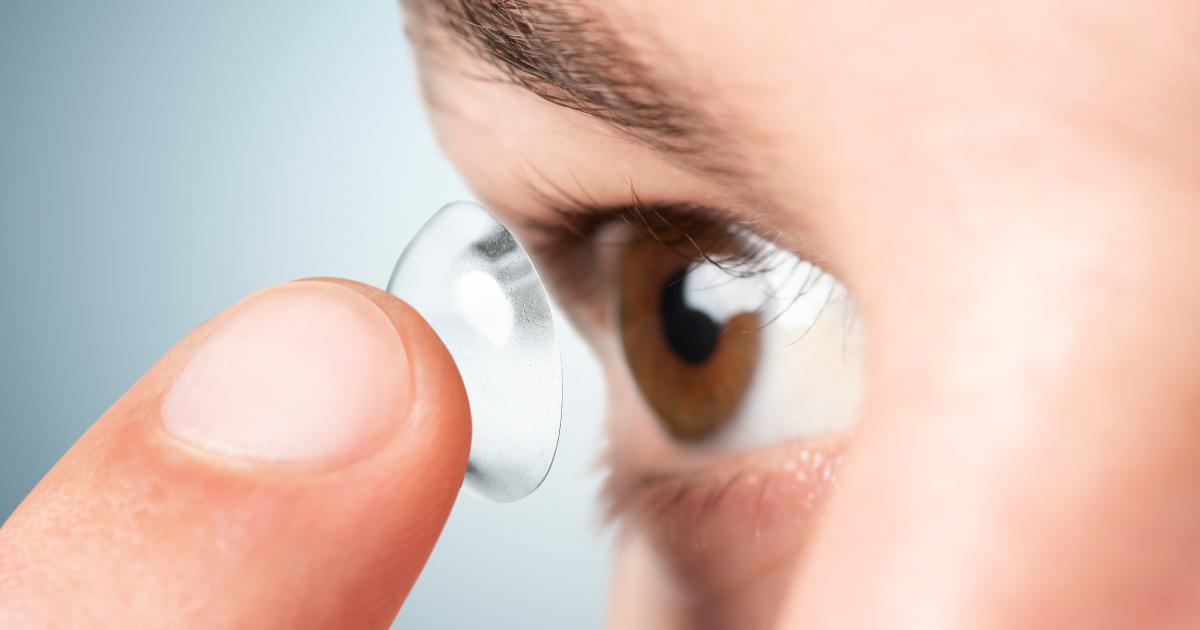
Before handling a lens make sure to wash and dry your hands. Check that the lens is clean, undamaged and is in the proper orientation. Place it on your finger, gently hold the eyelids open and position the lens as demonstrated by the practitioner. This is the safe way to wear contact lenses.
For a soft lens you look up, slide the lens onto the white of the eye and gently put it in with clean fingers. For rigid, hybrid and scleral designs other methods may apply. If you are in doubt about how to wear contact lenses you should return to the fitting clinic repeated eye touching is a no no. At Moorfields we give professional advice on insertion, removal and care of different lens types.
The FDA, CDC and National Eye Institute say that it is best to keep your lenses out of water and to use the care products which they recommend. Tap water, pool water, that from the shower and hot tubs may come in contact with and thus contaminate your lenses. These are the main points in determining if contact lenses are safe for eyes.
Care Habits Matter More Than Premium Features
Never run out of your contact lens solution, use saliva in a pinch or keep wearing them if you have eye pain, redness which is atypical, or sensitivity to light. Go by the lens replacement schedule and clean out the storage case as instructed.
People searching how to wear contact lens often report they pay attention to insertion which is fine but also safety includes removal, cleaning, storage and replacement. Also it is worth noting that brand changes should be discussed with a professional because lens fit and care requirements do vary. This is to say that you cannot judge if contact lens is safe for eyes based only on price or popularity.
Warning Signs That Need Eye Care
Remove the lens and get in to see your eye care professional at once if you notice an increase in pain, development of redness, discharge, light sensitivity or sudden blurred vision. Contact-lens related infection which affects the cornea may present quickly
At the time the issue at hand is not to question if contact lens is safe for eyes, but to determine the cause. An eye exam in an eye hospital setting will assess the cornea, tear film and fit. Necessary eye treatments may include ceasing lens wear, changing the care regime or addressing an infection or inflammation.
Professional Contact Lens Fitting
Any person getting lenses for the first time, switching prescriptions, going back to wear after a while or dealing with dryness should have an exam. An eye specialist hospital helps determine which type of lens is best for you, soft, rigid, toric, multifocal, scleral or another style.
During fitting, which is a specialty service that includes how to wear contact lens, we check vision and movement of the lenses and also we set a replacement plan. This personal approach is the best way to determine if contact lenses are safe for your eyes as safety is a factor of both the lens and the wearer.
Contact Lens Care at Vasan Eye Care
At Vasan Eye Care we include contact lens assessment in our full range of eye care services. Our team will look at your prescription, corneal health, tear production and your lifestyle before putting forward the best option for you. Also we will guide you through the proper care of your lenses from application to removal, hygiene, and regular follow up care.
Visiting an eye hospital for a check up is recommended when you have issues like dryness, redness which are recurrent, or if you are experiencing fluctuating vision with your lenses. As per what we find out from the evaluation, the eye doctor will adjust the fit of the lens for you or put you into other eye treatments options. For special needs we recommend an eye specialist hospital which can give you a structured care plan as a better alternative to trial and error use.
The Future of Contact Lenses
The new generation of contact lens material will be more personalized, moisture stable and also will support diagnosis and treatment. For each innovation, contact lens safe for eyes which we ascribe to contact lenses is still the primary clinical issue.
So is contact lens safe for eyes today? They do in fact when they are prescribed, fit and cared for properly. What is key is that you know how to wear contact lenses, follow the schedule and into which you go for your reviews. Per each person that wears them the question of is contact lens safe for eyes should be determined by an individual eye assessment
Frequently Asked Questions
For most users contact lens is safe for eyes when they are prescribed by a professional, used as directed and not in contact with water.
Learn from an ophthalmologist how to wear contact lenses, wash your hands and dry them off, check out the lenses and follow the put in technique as demonstrated.
No one size fits all. Comfort is a result of oxygen requirements, tear health, fit, prescription and wear time.
Only wear lenses at night when an eye care professional has given that OK.
Most research and development is still in the early stages for sensing and drug delivery lenses which means they do not yet replace standard eye tests.
Stop in for care at the first sign of pain, strong redness, discharge, light sensitivity or sudden blur. Go to an eye specialist hospital clinic which can determine if urgent eye treatments are needed.
Reference Links
- U.S. Food and Drug Administration – Contact Lenses
https://www.fda.gov/medical-devices/consumer-products/contact-lenses - U.S. Food and Drug Administration – Types of Contact Lenses
https://www.fda.gov/medical-devices/contact-lenses/types-contact-lenses - Centers for Disease Control and Prevention – About Contact Lenses
https://www.cdc.gov/contact-lenses/about/index.html - Centers for Disease Control and Prevention – Preventing Eye Infections
https://www.cdc.gov/contact-lenses/prevention/index.html - National Eye Institute – Contact Lenses
https://www.nei.nih.gov/eye-health-information/healthy-vision/contact-lenses