
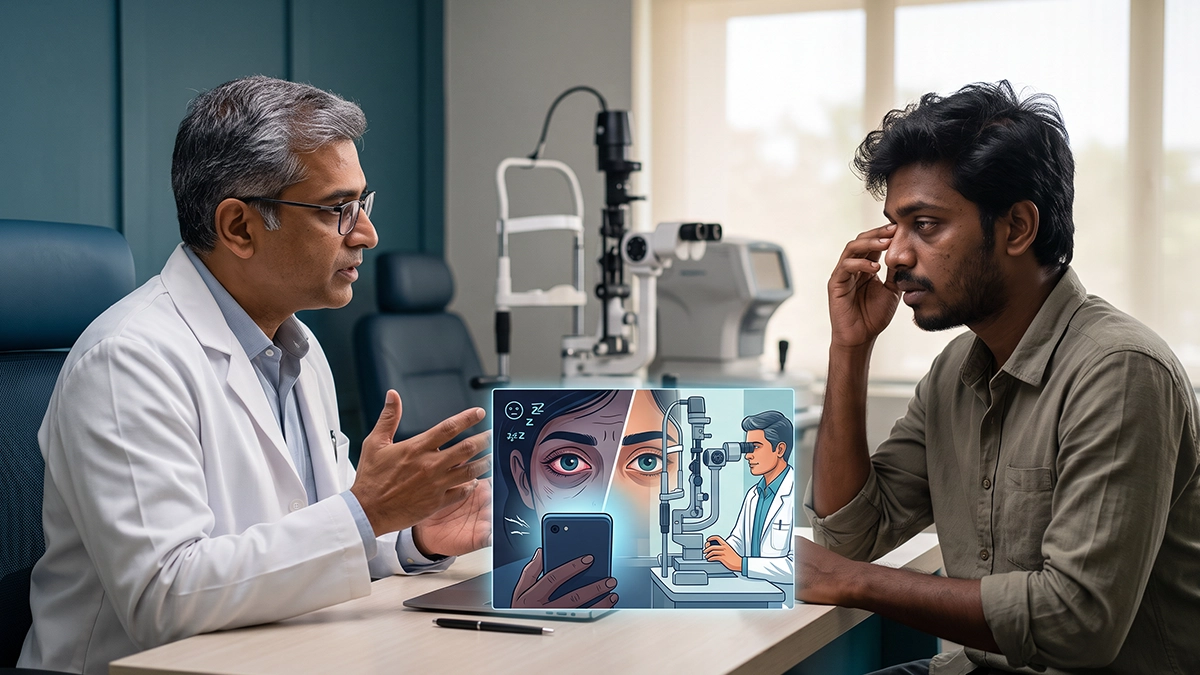
Stress and lack of sleep can leave the eyes dry, tired, or with temporary blur. These issues also present as eye strain. Also reported are searches for sleep and eyes, stress vision problems which include headaches, eye twitching, tired eyes, and difficulty focusing. Typically stress or that one bad night do not cause direct eye damage, but they do aggravate discomfort.
How Stress and Lack of Sleep Affect the Eyes
The relationship between sleep and eyes health is very much a factor in terms of comfort and health of the eyes. Poor quality sleep may cause dryness and tiredness to be more pronounced the following day which in turn causes more eye strain. The National Eye Institute in their dry eye guidelines report that it is important to get a full 7 to 8 hours of sleep which is one of the supporting measures.
Stress in itself does not usually cause permanent eyesight damage. That said stress vision problems may include eyelid spasm, headache, temporary blur, or difficulty in focus. The National Eye Institute reports that stress and lack of sleep play a role in lid spasm. Also if stress is a factor in increasing screen time, eye strain may notice more.
| Trigger | What you may notice |
| Poor sleep | Dry, tired eyes |
| Stress | Twitching or temporary stress vision problems |
| Long screen use | Dryness, blur, eye strain |
| Uncorrected vision | Squinting, headache, blur |
Can Lack of Sleep Cause Eye Strain?
Yes. In sufficient rest eye strain is less noticeable. Also for those with dry eye issues the sleep and eyes connection is important as it may cause dry eyes to feel worse after a poor night.
Still, we often attribute tired eyes to a lack of sleep which is not always the case. Dry eye, glare, poor lighting, out of date glasses, or long periods at close work can bring about the same signs. If symptoms persist it is worth inquiring about an eye exam.
Can Stress Cause Blurry Vision?
Some stress vision problems are of a temporary nature. Symptoms may be headache, flicker, or a short period of blur. Stress also plays a role in disrupted sleep and increased screen time which in turn aggravates eye strain.
However, these symptoms do not apply to all changes in sight. Sudden vision loss, severe pain, double vision, flashes, or a sudden increase in floaters requires prompt medical attention. An eye specialist doctor can evaluate for another cause.
How to Reduce Eye Strain
To reduce eye strain, take frequent breaks from close work, blink often, reduce glare, keep screens at a healthy distance, and use proper lighting. Better sleep and eyes habits may also support comfort when dryness and fatigue present together.
If dryness is persistent the right eye treatments will depend on the cause. Do not self treat with prescription eye drops. Repeat stress vision problems may also be a result of headaches, posture, workload, or an incorrect glasses prescription which in turn may cause eye strain.
| Situation | Best next step |
| Symptoms improve after rest | Reduce continuous close work |
| Dryness follows poor sleep | Improve sleep and eyes routine |
| Eye strain returns daily | Arrange an eye examination |
| Sudden pain or vision change | Seek prompt care at an eye hospital |
When Should You See an Eye Doctor?
Occasional eye strain does improve with rest. See an eye care professional when eye strain is a recurring issue or is present with dryness, headache, or blurred vision. Repeat sleep and eyes complaints may indicate dry eye or some other issue which requires evaluation.
Recurrent stress vision problems should also be looked at when they are new, severe, or persistent. At Vasan Eye Care we have an eye specialist doctor which does health check ups of the eyes and also of the ocular surface health before we put forth the best eye treatments options.
Stress, Sleep and Long-Term Eye Health
The issue at large is that we have made stress a routine in which we engage daily. We put in less sleep, increase screen time, take few breaks, and delay getting eye check ups which in turn aggravates eye strain. Better quality of sleep may in fact see to tired eye issues, also by changing how we use screens we may see stress vision problems less often.
If you are still experiencing eye strain after getting better rest, do not ignore it. If you have persistent stress vision problems or continuous sleep and eyes symptoms bring in to see a health care professional to determine the cause.
Conclusion
Stress and sleep issues may cause eye discomfort which in most cases does not lead to permanent damage. What we see is a mix of eye strain, disturbed sleep and eyes habits along with repeat stress vision problems which improve once the cause is treated. If symptoms persist visit Vasan Eye Care or a trusted eye hospital for a full assessment.
Frequently Asked Questions
1. Can stress permanently damage eyesight?
Stress in itself does not usually cause permanent vision damage. Stress vision problems related to stress such as flickering or temporary focus issues should be brought to the attention of a health care provider if they persist.
2. Can lack of sleep cause eye strain?
Yes. Poor sleep can cause dryness and fatigue which in turn may increase noticeability of eye strain from extended screen use.
3. How are sleep and eyes connected?
The connection between sleep and eyes health is that of rest and ocular surface comfort. Also, consistent sleep may reduce tired eye symptoms.
4. When should eye strain be checked?
See a doctor for eyes if eye strain is regular, constant, or comes with pain, redness, headaches, or blurred vision.
References
- National Eye Institute (NIH) – Dry Eye
https://www.nei.nih.gov/eye-health-information/eye-conditions-and-diseases/dry-eye - National Eye Institute (NIH) – Blepharospasm
https://www.nei.nih.gov/eye-health-information/eye-conditions-and-diseases/blepharospasm