
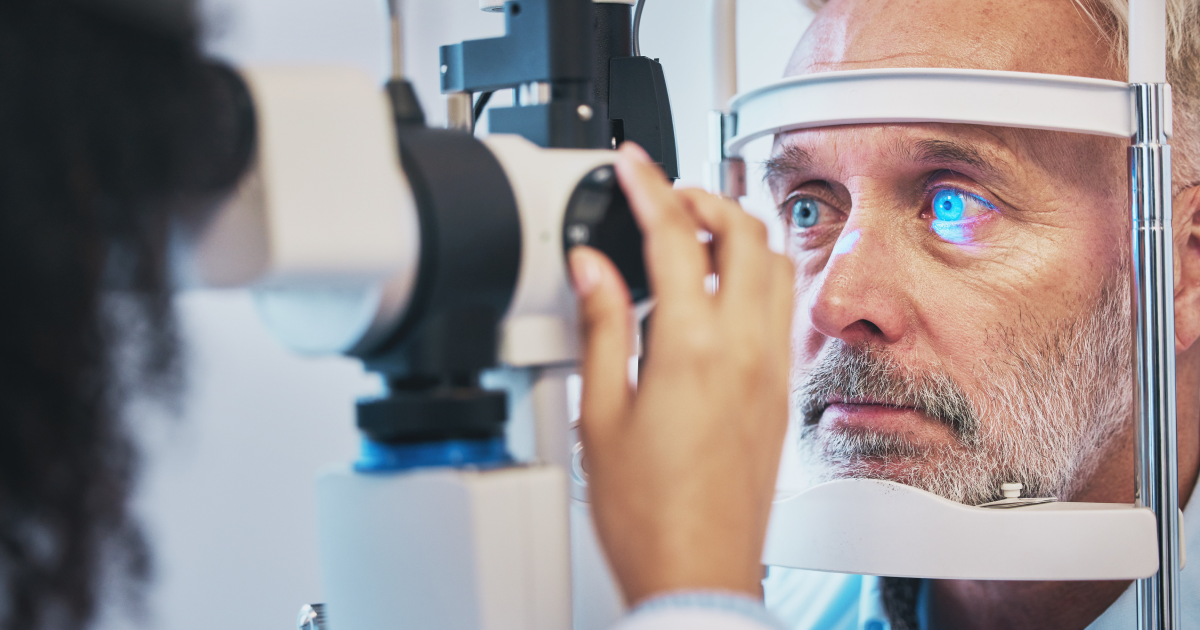
Glaucoma has earned the title of “silent thief of sight” for good reason it attacks the optic nerve before we see it coming. It is important to know about glaucoma blindness if you have high eye pressure, a family history of the disease, diabetes, are aging, or have had previous eye issues.
Patients commonly ask, can glaucoma lead to blindness in everyone who develops it? Not all. While glaucoma does cause irreversible vision loss when left undiagnosed or untreated, early diagnosis and consistent care can do a great deal to reduce that risk. Also it is in the early stages that the most common form may present with no noticeable symptoms which in turn may lead to silent development of glaucoma blindness.
The National Eye Institute reports that glaucoma is a group of eye diseases that present with vision loss and in advanced stages lead to blindness as a result of optic nerve damage. Also they note that early intervention in treatment is very much a key in stopping the disease from progress and in protecting what vision is left. Thus screening and treatment adherence is very much at the forefront in the battle against glaucoma blindness.
What Is Glaucoma?
Glaucoma does not refer to a single disease. Rather it is an umbrella term for a set of conditions in which the optic nerve does deteriorate. In most cases this damage is associated with high intraocular pressure. Also some people develop glaucoma despite having normal pressure in the eye, and in others there is high pressure which does not lead to damage of the optic nerve.
The eye constantly produces a clear fluid known as aqueous humour. That which is produced usually drains through special channels. When drainage becomes inefficient which in turn does not allow for the fluid to pass through, it may build up and cause an increase in pressure within the eye. Over time that pressure along with other biological elements can damage the optic nerve. Once optic nerve fibres are lost, the related vision usually cannot be restored, which is why doctors take glaucoma blindness seriously.
A diagnosis does not automatically mean total sight loss. The outcome depends on the glaucoma type, how early it is found, existing nerve damage, treatment response, and adherence to care.
Why Can Glaucoma Lead to Blindness?
Open-angle glaucoma usually first affects peripheral, or side, vision. Because central vision can remain clear for a long time, someone may keep reading, working, driving, or using a phone without noticing that their field of vision is shrinking. Damage can therefore continue without being detected.
As damage to the optic nerve grows, blind spots grow larger and may join together. One may lose notice of things approaching from the side or have trouble with steps.Advanced disease can also affect central vision and result in glaucoma blindness.
So, can glaucoma lead to blindness in every case? No. Treatment doesn’t usually restore vision which is already lost but lowering eye pressure does stop or slow down further damage in many patients. Thus early diagnosis changes the long term outlook.
According to MedlinePlus, glaucoma may present with no symptoms and if left untreated the disease may lead to blindness. Also it reports that measures which reduce intraocular pressure can do so at the cost of slowing progress of the disease. These points support which by identification of the risk are we able to prevent glaucoma blindness before vision is affected.
Types of Glaucoma and Their Effect on Vision
Different types of glaucoma present in different ways. Open angle glaucoma is a slow progressing disease. Angle closure glaucoma comes on suddenly as the drainage angle becomes blocked which in turn causes a quick rise in eye pressure. Normal tension glaucoma sees the optic nerve damaged within the range of normal pressure. Secondary glaucoma is a result of another eye issue, injury, drug use, inflammation or medical disorder. Congenital glaucoma which begins at birth or in early stage childhood.
| Type of glaucoma | Typical pattern | Possible effect on vision |
| Open-angle glaucoma | Slow and often symptom-free early | Gradual side-vision loss that may progress to glaucoma blindness |
| Angle-closure glaucoma | May occur suddenly with severe symptoms | Rapid permanent vision loss without emergency care |
| Normal-tension glaucoma | Damage despite normal-range pressure | Progressive blind spots and visual-field loss |
| Secondary glaucoma | Linked to another condition, injury, or medicine | Vision loss varies according to the cause |
| Congenital glaucoma | Begins in infancy or childhood | May impair visual development without early care |
When patients ask can glaucoma lead to blindness quickly, what we find is that it depends on the type. Chronic open angle glaucoma progresses over a period of years, but acute angle closure can within days. Sudden severe eye pain, redness, blurred vision, colored halos, headache, nausea, or vomiting require prompt medical care.
Early and Advanced Signs of Glaucoma
Early in the course of glaucoma it may present with no at all symptoms as the optic nerve damage is taking place. It is thus better to have a regular eye exam than to wait for pain or blurred vision. As the disease progresses signs may include loss of side vision, blind spots, trouble seeing steps or out of the corner of your eye, knocking into things, hard time telling apart colors and fine detail, tunnel vision or loss of central vision. In some cases of acute angle closure there may be very painful eyes, redness, sudden blur, seeing halos around lights, headache, feeling sick to the stomach or throwing up.
These symptoms do not point to glaucoma but they should be paid attention to. What we look at in an ophthalmologist’s exam is the optic nerve and visual field which is the issue as opposed to symptoms. Asking does glaucoma cause blindness after symptoms appear is understandable, what we do better is to screen before symptoms appear which in turn gives us a better chance at preserving sight.
Who Is at Greater Risk?
Risk increases with age also it may be greater with a family history, diabetes, long term steroid use, prior eye injury, thin corneas, large refractive error or high eye pressure. Though glaucoma is more common in the elderly it can affect adults, children, or babies. An ophthalmologist may put forward for earlier or more frequent exams when additional risk factors are present.
India’s Directorate General of Health Services include glaucoma as a large component of the National Program for Control of Blindness and Visual Impairment which is run by the Directorate General of Health Services. Also which issue of eye health we see as a priority in terms of prevention of glaucoma blindness via diagnosis and treatment.
How Is Glaucoma Diagnosed?
A glaucoma assessment goes beyond eye pressure measurement as in normal range pressure we see that which does not point out disease. In full evaluation we put together many factors to identify glaucoma and it’s progression.
| Glaucoma test | What it helps assess |
| Tonometry | Pressure inside the eye |
| Dilated optic nerve examination | Optic nerve appearance and damage |
| Visual-field test | Missing areas in side and central vision |
| Optical coherence tomography | Retinal nerve-fibre and optic nerve measurements |
| Gonioscopy | Whether the drainage angle is open, narrow, or closed |
| Pachymetry | Corneal thickness and pressure interpretation |
Diagnosis in this case looks at optic nerve appearance, visual field results, eye pressure, corneal thickness, drainage angle structure, and also trends over time. This broad assessment helps estimate the individual risk of glaucoma blindness. Also in normal tension glaucoma we see that pressure is not the only factor in the evaluation. Therefore, does glaucoma cause blindness requires an individual assessment.
Can Glaucoma-Related Vision Loss Be Reversed?
Vision once lost due to optic nerve damage is for the most part permanent. At present we focus care on what sight is left. This is the reason early glaucoma treatment is so important.
We aim in glaucoma treatment to reduce eye pressure to a level which we think will see to it that no more damage is done. That target varies for each patient. In the case of very advanced damage we may see a need for a lower target pressure as compared to a person diagnosed at an early stage.
Although established glaucoma blindness is not usually reversible, low-vision rehabilitation and assistive devices may help a person use remaining sight more effectively.
Glaucoma Treatment Options
Treatment also includes prescription eye drops, laser procedures, or surgery. Eye drops which reduce production of fluid or which improve drainage must be used as a routine. They are to prevent further damage which in turn will stop loss of vision.
Laser treatment may improve drainage in selected types. The National Eye Institute’s laser treatment guidance explains that laser procedures do in fact improve fluid outflow and lower intraocular pressure. What is chosen is based on the type of glaucoma, its stage, eye anatomy and also the ophthalmologist’s assessment.
When medicines or laser treatment do not control pressure sufficiently, glaucoma surgery may be considered. Surgery will create a new outflow tract, put in a drainage device, or in some cases perform a minimally invasive procedure. In which you proceed with glaucoma eye surgery is based on what the pressure will drop, the current extent of the damage, the patient’s drug load, and surgical risk.
Patients may still ask, does glaucoma cause blindness after treatment begins? Disease progression may present when the disease is advanced, pressure is over the target range, doses are missed, or follow up is not regular. Effective glaucoma treatment, including timely glaucoma surgery or glaucoma eye surgery when advised, can reduce the chance of further loss.
How to Reduce the Risk of Glaucoma Blindness
Not for every type of glaucoma prevention is a possibility, but we see that early diagnosis and ongoing management which includes a proper treatment plan does play a role in reducing permanent vision loss. We recommend annual comprehensive dilated eye exams as per what the ophthalmologist says is best for you. Also once a treatment plan is put in place consistency is key. That means using eye drops as prescribed and reporting any side effects to the doctor before stopping the medication. At follow up visits we are able to see if we are reaching the target pressure and also if there is stability in the optic nerve and visual field.
Good diabetes and blood pressure control which is great for overall eye health but it is not a substitute for glaucoma care. Also report to your ophthalmologist on use of steroid tablets, inhalers, creams, injections or eye drops steroids in some people may raise eye pressure.
The question does glaucoma cause blindness becomes less frightening when patients understand that regular follow up gives us the chance to modify care before severe damage sets in. Glaucoma blindness is a long term issue which is a partnership between the patient and the eye care team.
When Is Glaucoma an Emergency?
Most glaucoma is a slow process but acute angle closure is a medical emergency. Sudden severe eye pain, redness, quick onset of blurred vision, colored halos, headache, nausea, or vomiting may be signs of a sudden pressure rise. The NHS glaucoma guidance advises immediate emergency assessment when symptoms develop suddenly.
Emergency care is for immediate pressure reduction and protection of the optic nerve. Delaying evaluation increases risk of permanent damage and glaucoma blindness. Do not wait for symptoms to go away or use someone else’s eye drops.
Living With Glaucoma
A diagnosis of glaucoma may bring on anxiety. What the disease stage is at, what damage has been done, what the target pressure is, what the treatment plan includes and the follow up schedule will give you a better outlook. Many people do retain useful vision when glaucoma is identified early and is controlled. By keeping appointments, taking medicine as prescribed, and completing recommended tests you may see a great difference. Also family members may benefit from eye exams as some forms of the disease run in families.
Vasan Eye Care also puts out that it is important for people to get in for an eye exam if they have glaucoma risk factors, unexplained visual changes, or are worried about eye pressure. A personalized plan may involve glaucoma treatment, laser care, glaucoma surgery, or glaucoma eye surgery. The purpose is to preserve useful vision and lower the chance of glaucoma blindness.
Conclusion
Glaucoma requires attention as it may progress very gradually to cause permanent visual field loss. A diagnosis, however, does not automatically mean blindness, and the risk of glaucoma blindness can often be reduced. Outcomes are determined by early diagnosis, pressure control, and consistent care and follow up. Also of great import is that which we term regular monitoring which is our best defense against glaucoma blindness.
When patients ask does glaucoma causes blindness what they may not realize is that by the time symptoms show up it may be too late. We can catch changes at much earlier stages with full eye exams. For anyone asking does glaucoma cause blindness, the answer is that it can, but timely glaucoma treatment, laser care, glaucoma surgery, or glaucoma eye surgery can help protect remaining sight.
Frequently Asked Questions
In each patient there is not a single cause. We see that most commonly associated with optic nerve vulnerability and also with raised eye pressure which is a result of reduced fluid drainage.
May include reduced side vision, blind spots, tunnel vision, blurred vision, eye pain, red eye, colored halos, and nausea or vomiting. Open angle glaucoma may have no early symptoms.
No. Although glaucoma blindness is a reality it is not a given. We see early diagnosis, regular monitoring and consistent treatment of glaucoma which may in many cases slow or even stop further vision loss.
Risk increases at age 40 and also with each passing year but glaucoma may present at any age. Also people with certain risk factors may require to be screened earlier.
The answer to does glaucoma cause blindness in both eyes varies. It may affect one eye or both and the degree of affectation may be different in each.
Existing glaucoma blindness is mostly permanent which is a result of the fact that the damage to the optic nerve is usually irreversible. We are able to treat that we may preserve what vision we have.
No. Many patients present with drops or lasers as treatment. Glaucoma surgery or glaucoma eye surgery may be recommended when pressure is not well controlled.
Yes, normal tension glaucoma does occur which affects the optic nerve at levels of pressure within the normal range. Therefore, does glaucoma cause blindness cannot be judged from an eye-pressure reading alone.
References
- The National Eye Institute: https://www.nei.nih.gov/eye-health-information/eye-conditions-and-diseases/glaucoma
- The MedlinePlus Glaucoma Guide
https://medlineplus.gov/glaucoma.html - The Directorate General of Health Services, Ministry of Health and Family Welfare
https://dghs.mohfw.gov.in/opthalmology-division.php - The NHS Glaucoma Guide
https://www.nhs.uk/conditions/glaucoma/