
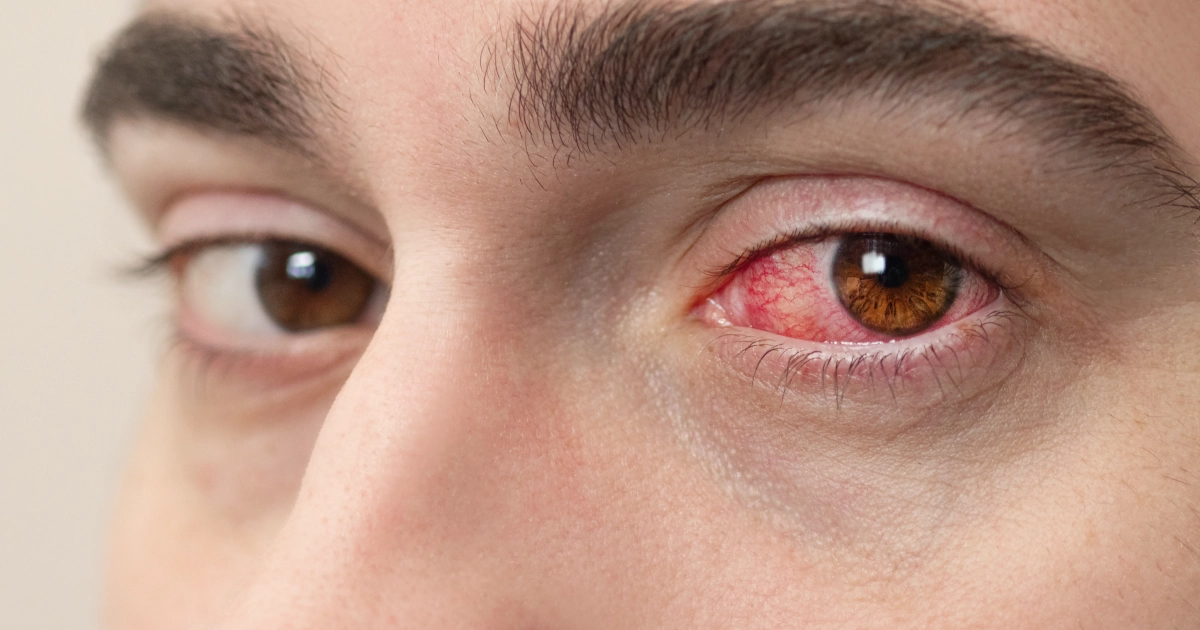
A child who reports frequent eye rubs, has aversion to bright light or awakens with mucus in the eyes may not be experiencing only what we think of as seasonal eye irritation. In some kids these symptoms point to VCK which is also known as vernal keratoconjunctivitis. It is a recurring allergic inflammation that affects the conjunctiva and in more active cases the cornea. We see this condition most in children and adolescents and it tends to present more trouble during warm, dry, dusty or windy weather.
Unlike viral or bacterial conjunctivitis, this allergic condition is not an infection and does not spread from one person to another. However, it should not be dismissed as ordinary redness. Persistent itching, light sensitivity, thick discharge or blurred vision deserves an eye examination because uncontrolled inflammation can occasionally damage the corneal surface. MedlinePlus, a service of the U.S. National Library of Medicine, describes it as chronic inflammation linked to an allergic reaction and advises medical review when symptoms continue or worsen.
What Is Vernal Conjunctivitis?
This is a type of allergic eye issue in which the immune system responds very well to environmental factors. The term “vernal” means spring but the issue does not present at a single time of year. Some children have seasonal out breaks, while others see symptoms for most of the year which in particular is the case in hot weather.
The inflammation usually is in both eyes. It may be present in the inner surface of the upper eyelid, at the border between the cornea and the white of the eye, or in both of these areas. During an eye exam an ophthalmologist may note large raised bumps under the upper eyelid, swelling at the corneal limbus or small white inflammatory spots. These are the features which help to tell VKC apart from more common forms of allergy.
Who Is More Likely to Develop It?
The condition is more common during childhood and adolescence. Many affected children have a personal or family history of asthma, eczema, allergic rhinitis or other allergic conditions. Warm weather, airborne dust, pollen, wind and outdoor exposure may aggravate symptoms, although the exact immune pathways are complex and not always linked to a single identifiable allergen.
Research reporting through the U.S. National Library of Medicine notes that this issue is a great concern in warm dry and windy climates and may have large scale impact on school, sleep and daily comfort. The tendency may run into puberty which in some cases does not fully outgrow it and some patients do experience it throughout their lives.
Common Vernal Conjunctivitis Signs
The preeminent symptom is intense itching. Also it is noted that kids may constantly rub at their eyes which in turn may aggravate the inflammation and damage the cornea. Other vernal conjunctivitis signs include redness, watering, burning, a gritty feeling, eyelid swelling, sticky or stringy mucus and discomfort in bright light.
Photophobia, a type of sensitivity to light, is an issue which does. A child may squint, cover up his eyes, stay away from sunlight or have trouble keeping them open. Blurred vision may present with the mucus that coats the tear film but also may be a sign of corneal involvement. Pain, reduced vision or severe photophobia should see an ophthalmologist at once rather than home treatment.
| Symptom or finding | How it may appear in a child | Why it matters |
| Intense itching | Frequent rubbing or blinking | Often the dominant symptom |
| Thick, stringy mucus | Sticky discharge, especially after sleep | Common in active allergic inflammation |
| Light sensitivity | Squinting or avoiding sunlight | May indicate significant surface irritation |
| Raised bumps under the upper lid | Detected during examination | A characteristic clinical feature |
| Blurred vision or eye pain | Trouble reading, watching screens or opening the eye | Can suggest corneal involvement |
Understanding Vernal Conjunctivitis Causes
There is rarely one simple answer to the question of why VKC develops. The main vernal conjunctivitis causes involve a large scale immune response in the eye which in turn is a result of environmental exposure and genetic predisposition. Pollen, dust, wind, heat, smoke and other air born irritants may cause or worsen an attack.
Allergy issues are a factor. We see that a child with asthma, eczema or hay fever is at greater risk, but also that VKC does present in the absence of what we may term clear allergic history. Also into play are hormones and genetics which we put forth as reasons for the preponderance of the issue in younger age groups and its tendency to quiet down post adolescence.
Parents tend to think that redness from playing outside is a sign of an infection. What they may not know is that the cause is allergic and inflammatory in nature as opposed to viral or bacterial. This difference is important to note because antibiotics do not treat the allergy base issue unless there is also a separate bacterial infection present.
How Is Vernal Conjunctivitis Diagnosed?
Diagnosis is usually clinical. An ophthalmologist inquires about the time of symptom onset, seasonal pattern, allergy history, discharge, light sensitivity and past use of eye drops. The eyelids are gently turned out, which allows for a look at the inner surface and a slit lamp is used to study the conjunctiva, limbus and cornea.
The doctor may use a safe dye which will test out the corneal surface for signs of dryness, scratch or inflammation. While we don’t perform allergy testing or a conjunctival sample from all kids we may do it in certain cases when the diagnosis is in question, symptoms do not respond as we expect or to eliminate the possibility of some other disease.
Because of the similarity in symptoms between allergic conjunctivitis, infection, dry eye and atopic keratoconjunctivitis we find that self diagnosis is not reliable. An examination at an eye hospital is particularly important when symptoms keep returning, one eye appears worse, vision changes or the child has used steroid drops without monitoring.
Vernal Conjunctivitis Treatment Depends on Severity
There is no one size fits all for patients. Vernal conjunctivitis treatment is selected according to symptom severity, corneal involvement, frequency of recurrence and response to previous medicines. For mild cases we may see response to avoidance of triggers, preservative free lubricating drops and cold compresses. In moderate or persistent cases we usually require to prescribe anti allergy medication for regular use.
The NCBI Bookshelf reports that treatment may include antihistamines, mast cell stabilizers or dual action drops. For severe flares short term use of topical corticosteroids may be required which should be followed by specialty supervised use of steroid sparing medicines like cyclosporine or tacrolimus in case of recurrent disease.
Lubricating and Anti-Allergy Eye Drops
Preservative free artificial tears may also serve to dilute allergens and better comfort the eye. Antihistamines can reduce the issue of itch, at the same time mast cell stabilizers present a method to prevent the release of inflammatory agents. Some medications play both of these roles and so are often included as a part of a continuous routine for patients.
These drops will be used as per the ophthalmologist’s advice. Once in a while a parent may stop the preventive medication as soon as the itch goes away which in turn may cause a retreat of symptoms. Also it is at the drop of a hat that we see a return of symptoms in the middle of the child’s usual allergy season.
Steroid Eye Drops Require Medical Supervision
Steroid drops are a quick fix for severe inflammation but they should not be used, repeated or extended without an ophthalmologist’s care. Unmonitored use may cause eye pressure to rise, lead to glaucoma, bring on cataracts or permit an infection to worsen. The best approach is usually a short and closely monitored course when the benefits outstrip the risks.
Parents should report to the ophthalmologist on all drops used which includes prescription and over the top medications. This will also to safe tune the care plan and to avoid any accidental repeat.
Immunomodulating Eye Drops
In certain that which is a frequent issue or disease which returns when we reduce steroids we put to you that the ophthalmologist may consider the use of steroid-sparing immunomodulating drops. Examples of which are Cyclosporine and tacrolimus which we use in selected patients. They are not “instant relief” drugs and may take some time before we see the full benefit. These drugs should be prescribed only after we do an eye exam. The strength, frequency and duration vary, and the doctor may monitor the cornea, eye pressure and response over time.
| Level of disease | Typical approach | Follow-up needs |
| Mild and occasional | Cold compresses, allergen reduction, lubricants and prescribed anti-allergy drops | Review if symptoms persist or recur |
| Moderate or recurring | Regular dual-action or mast-cell-stabilising drops; specialist-directed anti-inflammatory care | Planned ophthalmology follow-up |
| Severe or corneal involvement | Short supervised steroid course and possible steroid-sparing therapy | Close monitoring of the cornea and eye pressure |
| Complicated disease | Individualised medical or, rarely, procedural care | Specialist management at an eye hospital |
Home Care That Supports Medical Treatment
Simple remedies can be used for eye comfort, but in the case of severe symptoms an exam is in order. Try a clean cold compress over closed eyes which may ease itchy and swollen eyes. After going outdoors, wash your face and hair to remove pollen and dust. Sunglasses and a broad brimmed hat may also ameliorate wind and light sensitivity.
Eye rubbing should be discouraged. Rubbing briefly feels soothing but can increase inflammation and may contribute to corneal problems in children who already have chronic allergy. Fingernails should be kept clean, and towels, pillowcases and eye cosmetics should not be shared when the diagnosis is uncertain.
Parents also should not use up old antibiotic, redness relief or steroid drops. Wrong treatment can delay diagnosis or cause complications. Professional eye treatments are most effective when the exact type and severity of inflammation are known.
Can It Become Serious?
Most children do well when the condition is recognised and managed consistently. Still, active vernal conjunctivitis can affect the cornea. Possible complications include surface scratches, shield ulcers, scarring, irregular astigmatism and reduced vision. Some complications result from severe disease, while others are linked to prolonged unsupervised steroid use.
The child should be examined promptly if there is eye pain, marked sensitivity to light, reduced vision, inability to open the eye, a white spot on the cornea or symptoms that worsen despite medication. These features may indicate that the cornea is involved and that the treatment plan needs to change.
How Long Does Vernal Conjunctivitis Last?
Some of the disease is seen. In some children symptoms present only at certain times of the year, in others they are annual with a seasonal variation. Flares may repeat for many years. In most patients the disease dies down during or post puberty which is great info but don’t use that as a reason to discount present symptoms.
Consistent follow up is key which is true as the severity of the condition may change. We may see a case of mild itchy skin which later presents with more severe symptoms in a hot or dusty season. Timely review allows us to adjust the treatment as needed safely.
Eye Treatment in India for Children With VKC
Children in warm, dusty or high pollen settings may see repeat episodes. Timely eye treatment in India should focus on confirming the diagnosis, grading the severity, protecting the cornea and reducing dependence on steroid drops. A paediatric eye specialist or cornea specialist may be involved when symptoms are severe or recurrent.
Families may also present to Vasan Eye Care for issues like redness, itching, mucus discharge, light sensitivity which are common in VKC. We come up with a treatment plan for each case which also includes tips for school days, protecting during outdoor exposure, seasonal prevention and follow up.
Eye Care Support at Vasan Eye Care
A tailored plan may include a eye surface exam, review of past medication, advice on trigger control and a plan for follow up. The recommended eye treatments depend on whether the condition is mild, moderate, severe or affecting the cornea.
Visiting an eye hospital is especially useful when a child has recurring symptoms, an uncertain diagnosis or previous steroid exposure. With appropriate eye treatment in India, most children can control flare-ups, protect vision and continue normal school and outdoor activities with fewer interruptions.
Conclusion
Vernal conjunctivitis is an atypical seasonal eye allergy which we pay less attention to than we should. Recognising the vernal conjunctivitis signs, understanding likely triggers and seeking timely care can prevent discomfort from turning into corneal damage. The right approach to vernal conjunctivitis treatment includes reducing exposure to triggers, use of proper medication and a follow up based on the individual pattern of the affected child.
Parents are to take their child for an eye exam if they see that symptoms are constant, severe or related to pain, photophobia or blurred vision. At the first sign of issues bring your child in for an evaluation at an eye hospital which will in turn support better eye treatments outcomes and also help families to access the right eye treatment in India without relying on self-medication.
Frequently Asked Questions
The most suitable vernal conjunctivitis treatment depends on the degree of severity. Anti allergy drops are the first line of treatment we see, but in severe or recurrent cases supervised use of steroids or non-steroid options may be required.
It does become a serious health issue when the cornea is affected or if steroids are misused. Pain, light sensitivity or reduced vision should be reported to a health care provider right away.
The main vernal conjunctivitis causes are an exaggerated allergic immune response to environmental triggers which include pollen, dust, heat, and wind as well as individual susceptibility.
There are many options, but may include lubricants, antihistamine drops, mast cell stabilizers, dual action drops, other medications. Steroids and immunomodulators should be prescribed by an ophthalmologist.
Reference Links
- MedlinePlus, U.S. National Library of Medicine – Vernal Conjunctivitis
https://medlineplus.gov/ency/article/001390.htm - NCBI Bookshelf, U.S. National Library of Medicine – Vernal Keratoconjunctivitis
https://www.ncbi.nlm.nih.gov/books/NBK576433/ - PubMed Central – Diagnosis, Management, and Treatment of Vernal Keratoconjunctivitis in Asia
https://pmc.ncbi.nlm.nih.gov/articles/PMC9376221/ - PubMed Central – Vernal Keratoconjunctivitis: A Systematic Review
https://pmc.ncbi.nlm.nih.gov/articles/PMC10567967/