
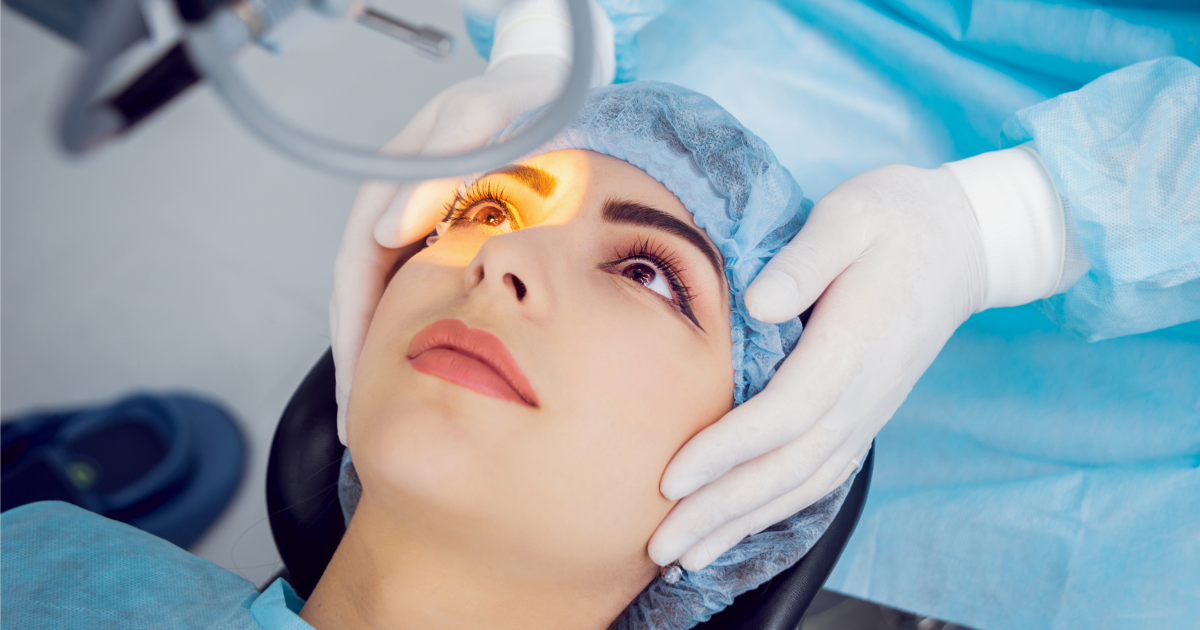
Choosing the best lens after cataract surgery is one of the most important decisions a patient makes before the procedure. Also it is a fact that for most people the thought of cataract treatment is that we are just removing the clouded lens, but today’s care also includes the choice of an IOL which best fits the patient’s eye health, daily activity, budget and what they expect out of the treatment.
During cataract surgery the cloudy natural lens is taken out and we put in an artificial lens which is what we call an intraocular lens. The National Eye Institute reports that before surgery eyes are measured to help the doctor pick the right artificial lens, also MedlinePlus says that surgery is the only treatment which works once the cataract is affecting day to day life.
The best lens after cataract surgery does not fit the same into every patient. Persons who drive a lot at night, who read in great detail for a long time, who have diabetes, or who have astigmatism will have different requirements. That is also true that a full eye exam, corneal scan, retina evaluation if required, and in depth counseling are a must before going ahead with cataract eye surgery.
What Is an IOL After Cataract Surgery?
An intraocular lens which is a man made clear lens that is put in at the time of the natural lens’ removal during cataract surgery. It helps to restore focus and improve vision after cataract surgery.
When patients ask what is the best lens post cataract surgery we do an evaluation of the eye and then present which lens is best for distance vision, near vision, intermediate vision or astigmatism correction. Though no IOL performs exactly as a young natural lens in all situations the choice should be based on what is practical..
Why Lens Selection Matters
A cataract procedure is a single event to schedule but the lens choice’s effect is felt for many years. Choosing the best lens after cataract surgery should not be treated like buying a product only by price or brand name. That is a medical decision which depends on eye measures, eye health, visual requirements and also what the surgeon recommends.
Some patients do report success with reading glasses post surgery which improves distance vision. Also some patients prefer to reduce dependence on glasses for phone use, reading, and computer work. Some have corneal astigmatism which may require a toric lens. As reported by an NCBI Bookshelf review which also notes that common IOL categories are monofocal, multifocal or accommodating, and toric lenses; which in turn may base on astigmatism, degree of desire for spectacle independence and budget.
Types of Lenses for Cataract Surgery
Understanding the types of lenses for cataract surgery makes the consultation easier. Most lenses are grouped by how they focus light and which visual distance they support. The best lens after cataract surgery is selected after comparing these options with the patient’s lifestyle and eye health.
| Lens type | How it helps | Best suited for | Important point |
| Monofocal IOL | Focuses mainly at one distance, usually distance vision | Patients comfortable using reading glasses | Reliable and commonly used |
| Toric IOL | Corrects cataract and corneal astigmatism | Patients with significant astigmatism | Needs accurate measurements and alignment |
| Multifocal IOL | Supports more than one distance | Patients wanting less dependence on glasses | Glare or halos may occur in some cases |
| Trifocal IOL | Supports distance, intermediate, and near vision | Active patients with suitable eyes | Retina, cornea, and pupil status matter |
| EDOF IOL | Extends range, especially distance and intermediate | Computer and screen users | Near glasses may still be needed |
| Light-adjustable IOL | Power can be adjusted after surgery in selected systems | Selected patients needing fine-tuning | Follow-up visits are very important |
The types of lenses for cataract surgery may sound similar, but their real-life experience differs. Monofocal lenses which we see a lot may give you that clear distance vision but will usually also require reading glasses. Multifocal or trifocal lenses may reduce your need for glasses overall but in some people can cause night time glare or halos. The FDA reports that multifocal IOLs are lenses which focus light from various distances and that traditional monofocal IOLs which we also use mostly focus at a single distance and which often will require you to wear glasses up close.
Monofocal Lens: Simple and Reliable
A monofocal lens is the most used type of lens for cataract surgery. We see them put in for improved distance vision which in turn helps while walking, watching TV, recognizing faces, and in outdoor activities. Many patients at this point end up using reading glasses for close work like mobile use, books, bills.
For large numbers of people monofocal IOL is the best choice and we see that it is a great and easy option. That said, patients who drive at night or are very much so affected by glare may prefer this choice after going over what is good and not so good about it with the surgeon.
Toric Lens for Astigmatism
Astigmatism is a condition in which the cornea isn’t perfectly round. If pre-existing large amounts of astigmatism are present in the patient who undergoes a procedure that uses a standard lens, they may still leave with blurry vision without the use of glasses. Toric IOL’s are designed to reduce this astigmatism at the same time as the cataract lens is replaced.
Among the types of lenses for cataract surgery, toric lenses are important for patients who want sharper distance vision and have measurable astigmatism. The FDA reports that toric IOL models which we have available do a good job at correcting an abnormal corneal shape, or astigmatism in adult patients which are appropriate candidates.
After cataract surgery a toric lens is the best choice for patients who have what we term regular corneal astigmatism, but it must be put in very precisely and put on the right axis.
Multifocal, Trifocal and EDOF Lenses
Multifocal and trifocal lenses are brought up for patients that are looking to reduce their dependence on glasses post cataract surgery. These lenses which are designed for vision at multiple distances may improve near for reading, phone use, and computer work as well as distance for everyday household tasks.
However, the best lens after cataract surgery is not decided only by the wish to avoid glasses. Premium lenses require health of the eye surface, health of the retina, proper pupil function, and real expectations. We see some patients getting halos, glare, or reduced contrast in low light which in particular is noticeable while driving at night.
EDOF lenses also called extended depth of field lenses are put in to improve vision range which is what we are going to call smooth in this case for distance and intermediate tasks. We see these do well for people that are at the computer, at the dashboard, at the tablet, in the office for long hours. When comparing types of lenses for cataract surgery, EDOF lenses may be discussed for patients who want more range than monofocal lenses but may not be ideal candidates for multifocal designs.
Indian vs Imported Cataract Lens: What Should Patients Know?
The term cataract lens Indian vs imported is a common search as patients’ tend to think that all imported IOLs are superior. What we should tell them is that you can’t judge quality by the country of origin. Some Indian lenses are very reliable and very much in use, while at the same time some imported lenses have advanced design, premium materials or special features.
The right question is not only cataract lens indian vs imported, but whether the lens is approved, suitable for the eye, matched to the patient’s needs, and implanted by an experienced cataract surgeon. For many patients, the best lens after cataract surgery may be an Indian monofocal or toric lens if it fits their medical and visual needs. For others, an imported multifocal, trifocal, EDOF, or advanced toric lens may be discussed if they want more spectacle independence and the eye is suitable.
| Comparison point | Indian cataract lens | Imported cataract lens | Practical buyer tip |
| Cost | Usually more affordable | Usually higher priced | Choose by need, not only price |
| Availability | Easily available in many centres | Depends on brand and model | Confirm availability before surgery |
| Lens designs | Standard and selected advanced options | Wider premium choices in some brands | Ask which feature helps your eyes |
| Visual range | Depends on lens type | Depends on lens type | Compare similar lens categories |
| Suitability | Good for many patients | Good for selected patients | Doctor evaluation matters most |
| Decision factor | Value and suitability | Features and suitability | The better lens is the one that matches your eye |
The cataract lens indian vs imported decision should not become a pressure-based choice. A premium imported lens is not automatically the best lens after cataract surgery for every patient. Similarly, an Indian lens should not be rejected only because it is affordable. Suitability, lens design, eye health, and surgeon recommendation matter more.
How to Choose the Best Lens After Cataract Surgery
To choose the best lens after cataract surgery, start with lifestyle. A retired person that mainly watches TV and reads newspapers may put forward a different case for lens choice than a business owner who drives at night and uses digital screens all day. Also a teacher, accountant, homemaker, driver, artist, or diabetic patient may each have different requirements.
In the second stage we look at eye health. The surgeon will check your cornea, retina, optic nerve, eye pressure, tear film, and pupil. If the retina is weak, if you have diabetic eye disease, or if the cornea has In the third step we will focus on expectation setting. A cataract lens can improve the quality of your vision, but does not guarantee 100% in all lighting situations. Some patients may still require the use of glasses for reading small print, prolonged reading, night time driving or fine details work. A clear discussion before cataract eye surgery helps avoid confusion after the procedure.
Buyer Tips Before Finalizing the Lens
Before determining which IOL to go with, ask what visual distance the lens is for, which of the glasses you will still need there is which, which it is that the lens will do for your retina and cornea and which the issues of glare or halos to expect. These questions are especially important when comparing premium types of lenses for cataract surgery.
Patients also should ask which elements make up the total package. For the cataract surgery cost to different patients may vary which in turn is a result of the type of lens used, surgical technique, hospital facilities, diagnostic tests, medicines, and follow up care. What may appear to be a lower package may not include the same lens or services as another package which is why it is better to go over all the details.
The best lens after cataract surgery is usually the lens that gives the most practical vision improvement with the least compromise for that patient. Also instead of basing their choice solely on ads patients should have a full eye exam and personal counseling.
Can Lens Power Be Changed Later?
In the typical cataract surgery setting an IOL is used as a long term implant which is why pre op measurements are very important. In some cases the FDA approved light adjustable lens which we also have post op fine tuning is used but also requires a different follow up and in that time patients will need to wear UV protective glasses.
For most patients, the practical way to get the best lens after cataract surgery is careful testing, correct IOL power calculation, and surgeon-guided lens selection.
Why Choose Vasan Eye Care for Cataract Lens Guidance?
At Vasan Eye Care we do not limit cataract planning to the removal of the cloudy lens. Our team instead focuses on getting to know the patient’s day to day life, doing a very in depth eye check up, we also discuss which lens options are best for the patient and we get the family involved in what to expect visually. Whether the patient is considering a monofocal, toric, multifocal, EDOF lens, or discussing cataract lens indian vs imported, the aim is to make the decision clearer and more comfortable.
An in-depth consultation also which goes into the cataract surgery cost, lens benefits, limitations, and recovery instructions. The goal is to help every patient choose the best lens after cataract surgery based on medical suitability, lifestyle, and long-term comfort.
Key Takeaways
The best lens after cataract surgery is different for every patient. It depends on eye measurements, astigmatism, retina health, lifestyle, budget, and how much spectacle independence the patient expects. The main types of lenses for cataract surgery include monofocal, toric, multifocal, trifocal, EDOF, and selected adjustable options. The cataract lens indian vs imported choice should be based on suitability, lens design, quality, and doctor recommendation rather than only brand origin. Before cataract surgery, patients should ask clear questions about visual range, glasses requirement, glare, cost, and follow-up care.
Frequently Asked Questions
The best lens after cataract surgery is the one that fits your eye condition, lifestyle, and budget. Monofocal lenses may work for patients who desire distance vision. Toric lenses may be the choice for patients with astigmatism. Multifocal, trifocal, or EDOF lenses may help some patients to reduce their dependence on glasses.
The main types of lenses for cataract surgery include monofocal lenses, toric lenses, multifocal lenses, trifocal lenses, EDOF lenses, and some adjustable lens technologies. Each lens has a different function which is why the final choice should be based on visual requirements and eye health.
The cataract lens indian vs imported comparison should be done carefully. It is not true that imported lenses are better for all patients and that Indian lenses are inferior. What does matter is suitability, approval, optical design, material, what the surgeon recommends and the patients’ expectations.
You may still need glasses after cataract eye surgery, especially for reading, fine print, night driving, or prolonged computer work. The need for glasses depends on the IOL type, lens power accuracy, astigmatism correction, and your eye condition.
Yes, the cataract surgery cost varies based on the lens which is chosen, the surgical method, quality of the hospital facilities, which diagnostic tests are done, what medications are prescribed and the follow up care. Also premium toric, multifocal, trifocal, EDOF, or adjustable lenses tend to be more expensive than standard monofocal lenses.
No. Premium lenses are not right for every eye. Patients with retina disease, glaucoma, severe dry eye, irregular cornea, or certain pupil concerns may not be the best candidates for these lenses. The best lens after cataract surgery should always be chosen after a complete eye examination.
Reference
- National Eye Institute, NIH – Cataract Surgery
https://www.nei.nih.gov/eye-health-information/eye-conditions-and-diseases/cataracts/cataract-surgery. - MedlinePlus, U.S. National Library of Medicine – Cataracts
https://medlineplus.gov/cataract.html - NCBI Bookshelf, NIH – Intraocular Lenses for Cataract Surgery
https://www.ncbi.nlm.nih.gov/books/NBK599976/ - U.S. FDA – TECNIS Synergy IOL and Toric IOL Information
https://www.fda.gov/medical-devices/recently-approved-devices/tecnis-synergytm-intraocular-lens-iol-model-zfr00v-tecnis-synergytm-toric-ii-iol-models-zfw150