
Nystagmus is a health issue that has the eye moving again and again out of control. The movement may be back and forth, up and down, or in circles. Also some people are born with nystagmus and others develop it later which may be from an eye issue, inner ear, neurological, medication related or some other health issue. By understanding what is nystagmus patients may be able to know when to have an eye exam.
What Is Nystagmus?
The basic nystagmus definition is an involuntary and rhythmic movement of one or both eyes. When patients ask about nystagmus meaning, doctors inform them that the eyes do not maintain a steady position for normal fixation. Nystagmus may cause issues with visual clarity, depth perception, balance or coordination which vary between patients.
To properly define nystagmus an eye doctor looks at its direction, speed, pattern, age of onset, and what triggers it. We see that brief eye movements which in some situations are normal, but persistent or newly developed nystagmus should be evaluated.
| Type | Typical Feature |
| Infantile | Usually appears within the first months of life and may occur with inherited or developmental visual conditions. |
| Acquired | Develops later and may be linked to vestibular, neurological, medication-related, or metabolic problems. |
| horizontal nystagmus | Eye movement is mainly from side to side. |
| Vertical or torsional | Movement is mainly up and down or rotational. |
What Causes Nystagmus?
There is no single explanation for all nystagmus causes. In infants we see nystagmus present with albinism, congenital cataract, retinal or optic nerve issues, reduced early visual development, or hereditary eye movement conditions. In adults we see nystagmus present with inner ear problems, stroke, multiple sclerosis, brainstem or cerebellar disease, head injury and also from certain medications and substances. Authoritative clinical reports present on the developmental and acquired forms and also put forth the issue of identifying the visual, vestibular, or neurological base cause.
Historiographically, miners’ nystagmus was reported as a health issue among underground coal miners that put them at risk due to poor lighting. Bruns nystagmus is a specific bidirectional eye movement pattern which we see especially in patients with lesions at the cerebellopontine angle and is also to note as an important neurological sign.
What Symptoms Can Occur?
The primary sign of nystagmus is the visible eye movement. Also associated with it may be blurred or reduced vision, difficulty in focus, abnormal head posture, dizziness, balance issues, light sensitivity, or a sensation that the environment is in motion. In the case of children who have had nystagmus since before they developed full eyesight, they may present with different symptoms as their visual system grows with the condition.
Sudden onset of nystagmus in adults which also brings along severe dizziness, weakness, speech difficulties, severe headache, or balance problems requires urgent medical attention.
How Is Nystagmus Diagnosed?
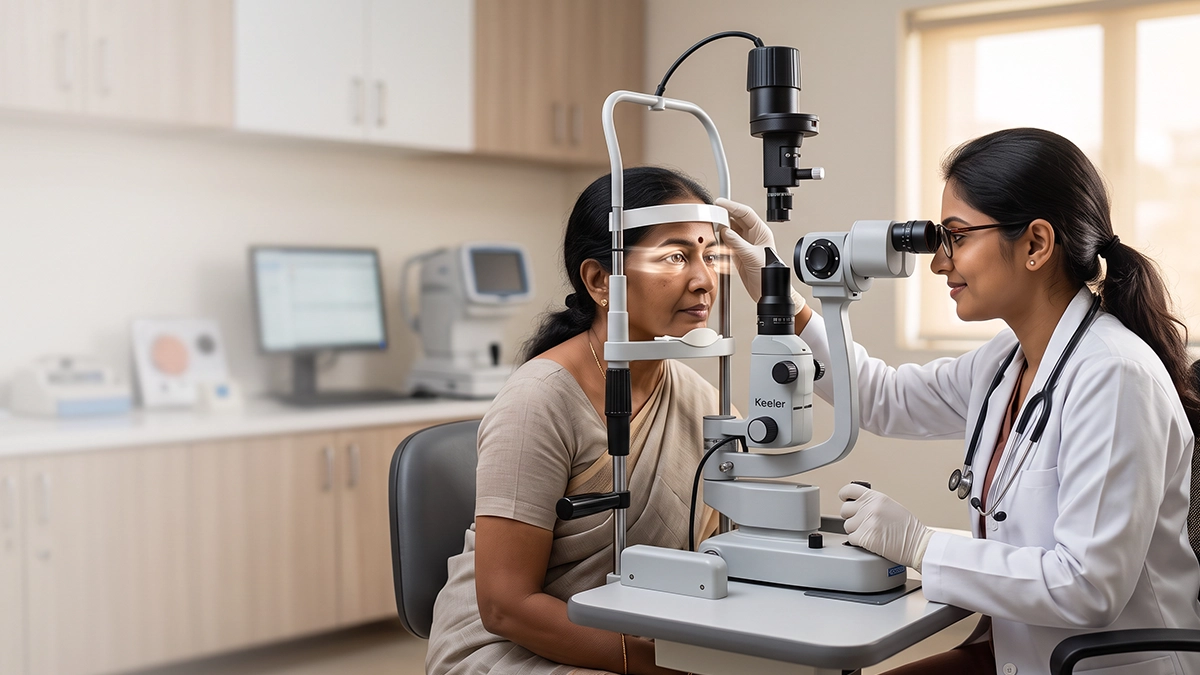
A nystagmus test is in fact a collection of clinical assessments which present as a suite of tests rather than a single study. An eye specialist will look at eye movement in various gaze directions, check visual acuity and alignment, and study the retina and the optic nerve. As nystagmus patterns are variable doctors may suggest vestibular testing, eye movement recording, blood work up, neurological evaluation, or imaging.
| Assessment | Why It May Be Used |
| Eye and vision examination | Checks vision, refraction, alignment, retina, optic nerve, and associated eye disease. |
| Eye-movement assessment | Evaluates the direction, frequency, amplitude, and gaze-related changes in nystagmus. |
| Vestibular or neurological tests | May be needed when dizziness, balance problems, or neurological signs are present. |
| MRI or other imaging | May be advised for suspicious or newly acquired nystagmus based on clinical findings. |
Nystagmus Treatment
The right nystagmus treatment is based on what is causing it and how it is affecting vision and balance. Nystagmus is a condition which does not always respond completely to treatment. Management may include the use of glasses or contact lenses, treatment of a base eye or neurological issue, vestibular care, medicine review, or specific drugs in cases of acquired nystagmus. In some patients which are proper candidates, surgery may improve an abnormal head posture or the position where nystagmus is at its least intensity.
At Vasan Eye Care we see that in an eye hospital we can identify which visual issues may be present and also determine if a second specialist opinion is needed. It is very important at onset of sudden nystagmus to seek timely eye care. An eye specialist doctor will then put forth the best eye treatment option based on the diagnosis.
Conclusion
Nystagmus is a term for eye movement which is not a single disease. What it looks like, age of onset, visual impact and associated symptoms inform the diagnosis. At Vasan Eye Care we do in depth evaluation which helps us to determine the cause and put out an appropriate care plan without delay.
Frequently Asked Questions
- Can nystagmus be cured completely?
Some types improve with treatment of the base cause but in the case of long term nystagmus may require ongoing symptomatic and visual management.
- Is horizontal nystagmus serious?
The issue of its import is what the onset was, what other symptoms present, and what the exams show. New nystagmus should be evaluated as soon as possible.
- What test confirms nystagmus?
Clinical ophthalmic and movement assessment is the way we identify nystagmus. As for other tests that we do, they are based on what we think is the cause.
- Can children with nystagmus see normally?
Vision also is a variable element. In some children the effect is very mild, in others there is reduced vision which is a result of an associated eye condition.
References
- National Library of Medicine / NCBI Bookshelf – Nystagmus Types
NCBI Bookshelf – Nystagmus Types - National Library of Medicine / NCBI MedGen – Bruns Nystagmus
NCBI MedGen – Bruns Nystagmus