
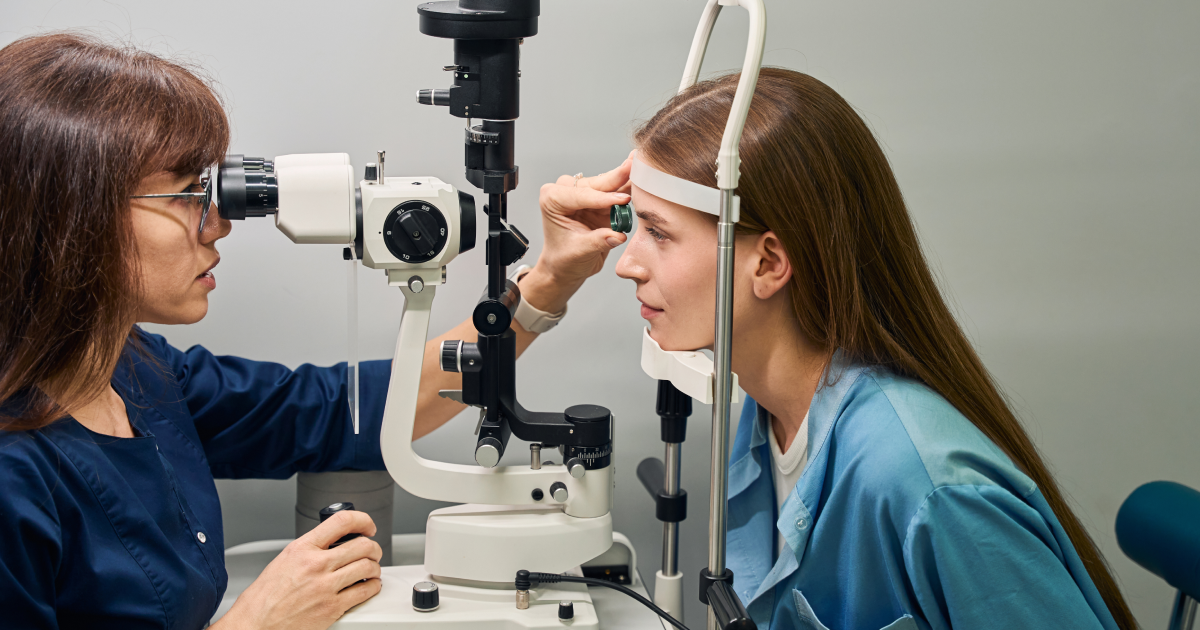
Many of the time people that wear glasses or have contact lenses at some point look into a more permanent solution for vision correction. At that point in the process PRK eye surgery may be brought up which is a laser procedure we use to correct refractive errors like myopia, hyperopia and astigmatism. In other words what is prk eye surgery means understanding a surface laser procedure that gently reshapes the cornea so light can focus more accurately on the retina.
Photorefractive keratectomy (PRK) is one of the earlier forms of laser refractive surgery, but it still has relevance in some patients. The National Eye Institute reports that refractive surgeries which change the shape of the cornea thus correct refractive errors, also MedlinePlus reports that laser eye surgery which in turn changes the clear front part of the eye does that which is to change its focusing power.
What Happens During PRK?
The cornea is the clear front part of the eye. It is when this does not do its job of bending light properly that vision becomes blurry. In PRK eye surgery the ophthalmologist removes the outer thin layer of the cornea which is the epithelium. Then a computer guided excimer laser is used to reshape the underlying corneal tissue to the patient’s eye power.
Unlike that of LASIK, PRK eye surgery does not make a corneal flap. This no flap approach may be of use to people with thin corneas, certain professional requirements, or active lives which include eye impact. At the end of the laser correction the use of a protective bandage contact lens is usually reported to which the patient goes while the surface layer of the eye heals naturally.
How Doctors Check PRK Suitability
Before PRK is recommended an eye specialist will do a detailed exam. This may include eye power, corneal thickness, corneal shape, tear film quality, pupil size, eye pressure, retina health, and total eye condition. These tests help the doctor decide whether photorefractive keratectomy (PRK) is suitable or whether another vision correction method may be safer.
A good candidate for the procedure has stable power in their glasses, healthy corneas, realistic expectations, and no present eye disease. Those with severe dry eye, unstable prescriptions, corneal disease, uncontrolled diabetes, pregnancy related changes in prescription, active infection, or poor healing may be told to wait or to look at other options for refractive surgery.
PRK Procedure: Step-by-Step
On the day of PRK anesthetizing drops are used to keep the eye at ease. The eyes are gently held open, the epithelium is removed and the laser which restructures the cornea does its work based on pre op tests. MedlinePlus reports that refractive corneal surgery which uses a laser to re shape the cornea corrects for mild to moderate nearsightedness, farsightedness and astigmatism.
After that patients are to take the prescribed meds, out of the habit of rubbing their eyes, protect them, and also come in for a follow up.
What is Difference in PRK vs LASIK
PRK and LASIK both aim to free yourself from glasses or contact lenses, which is the main goal for both, but the surgery is different. In LASIK we create a corneal flap, in PRK we work the corneal surface once the outer layer is removed. As the surface has to heal which takes time, early recovery is slower with PRK.
| Comparison Point | PRK | LASIK |
| Corneal flap | No flap is created | A flap is created and repositioned |
| Early recovery | Slower visual recovery | Often faster early clarity |
| Initial discomfort | More discomfort may occur for a few days | Usually milder early discomfort |
| Suitability | May suit selected thin-cornea cases | Needs adequate corneal thickness |
| Final decision | Based on eye tests and doctor advice | Based on eye tests and doctor advice |
NCBI Bookshelf reports that visual recovery from PRK is a slower process than from LASIK, also patients may see light sensitivity and discomfort which may last for several days; it is also a fact that full visual acuity may take weeks to months to achieve. This is why it is important for patients to be informed of the PRK eye surgery recovery time before they decide to go ahead with the procedure.
Benefits of PRK
In PRK eye surgery the primary benefit is that it may reduce the use of glasses or contact lenses in appropriate patients. Also since it is a flap free procedure it avoids issues related to flaps.
Another benefit we see in tailored laser planning. The laser correction we do according to the patient’s refractive error and corneal measurements. Also it is true that PRK eye surgery does not fit all.
Recovery After PRK
PRK has a greater recovery time which is seen in the fact that the epithelial layer has to heal. In the first few days patients may see that they are still in some pain, that their eyes are watery and irritated, also that they have a sensitivity to light and that their vision is still very blurred. MedlinePlus also reports that what we may see in PRK is that recovery of symptoms like pain, scratchiness, tearing, light sensitivity, and haze in vision may take a few more days that what is seen in some other refractive procedures.
Vision varies in the first week. Some patients see improvement within a few days, others have to wait. As a whole PRK eye surgery recovery may take over a few weeks, fine visual stability developing over a few months. We go back to screen use, driving, exercise, swimming, and outdoor activity only as the ophthalmologist advises.
| Recovery Phase | What You May Notice | General Care Guidance |
| First 1–3 days | Watering, irritation, light sensitivity, blurry vision | Use prescribed drops and avoid rubbing the eyes |
| First week | Surface healing and fluctuating clarity | Attend follow-up visits and protect the eyes |
| 2–4 weeks | Gradual improvement in vision | Resume activities only after medical advice |
| 1–3 months | More stable vision | Continue reviews if recommended |
Every eye heals differently. A person with dry eyes, higher correction, or slower surface healing may need more time than someone with mild correction and healthy tear film.
PRK Eye Surgery Cost in India
In the planning stage many patients ask about PRK eye surgery costs. In India what we see is that price varies by city, hospital infrastructure, surgeon experience, diagnostic scans, laser technology, medicines, post-operative visits and which eye or which eyes are to be treated. Also at Vasan Eye Care’s PRK treatment page it is reported that PRK in India goes from ₹35,000 to ₹75,000 for both eyes which again is subject to the above mentioned variables.
The term photorefractive keratectomy cost is not limited to the laser fee. A full estimate includes pre-operative consultation, corneal scans, procedure charges, bandage contact lens, medicines, and follow up care. Thus PRK eye surgery cost is best confirmed after a full eye evaluation.
Patients do not choose a treatment based on cost. Transparency in quotes will help patients see which items are included in which bills.
Possible Risks and Safety Factors
No, in every case of eye surgery we can say it is 100% safe. PRK eye surgery has helped many people which is a fact, but what is also true is that there are risks associated with it. These may be temporary pain, dryness, glare, halos, delayed healing, haze, infection, undercorrection, overcorrection, or the need for another enhancement procedure..
The National Eye Institute recommends that you speak to an ophthalmologist regarding the risks and benefits of refractive surgery before you decide. Also put forth is that the best approach is in depth screening, real expectations, proper post operative care, and timely follow up.
How to Prepare for PRK
Before prk eye surgery your doctor may ask that you not wear contact lenses for a few days to a couple of weeks which varies by type of lens. Also it may be asked that you do not put in makeup, perfume, lotions or eye creams the day of the procedure.
Photorefractive keratectomy (PRK) was the first in the field of laser refractive surgery but we still see it used for certain patients. The National Eye Institute reports that what refractive surgeries do is change the cornea’s shape in order to correct refractive errors also MedlinePlus reports that laser eye surgery changes the clear front of the eye which in turn changes its focusing power.
Life After PRK
After PRK eye surgery patience is a key factor. Vision does improve over time which is a gradual process at times it may fluctuate. We ask that you follow our prescription for eye drops, wear sunglasses when you are outside, do not rub your eyes, keep water away as advised and to attend all review appointments.
Once after healing many appropriate patients report to be less dependent on glasses or contact lenses. But age related vision changes like presbyopia may still present itself at a later time. PRK does correct for present refractive error, it just does not put a stop to natural aging changes within the eye.
Conclusion
Prk eye surgery which is short for photorefractive keratectomy is a no flap laser based corrective option of the cornea which improves focus. It is a choice for some patients which have refractive errors as a LASIK may not be for them. As with any decision regarding this treatment a full eye exam, evaluation of the corneal health, overall eye health and a discussion with an ophthalmologist is required.
If your main question is what is PRK eye surgery and whether it is suitable for you, the right next step is a professional eye evaluation. At Vasan Eye Care, patients can discuss photorefractive keratectomy (PRK), eligibility, recovery, photorefractive keratectomy cost, and other refractive surgery options with an eye care specialist.
Frequently Asked Questions
PRK does not always do better than LASIK. Also LASIK does not do better than PRK. What is best depends on corneal thickness, eye power, lifestyle, eye health and what the doctor says. PRK is flap free, also with LASIK you usually see faster early results.
During PRK eye surgery anesthetizing drops are used so most patients don’t report surgical pain. Post procedure there is some pain, watering, burning, and light sensitivity which may last for a few days. We prescribe medications and eye drops to improve comfort and aid in the healing.
PRK eye surgery cost in India is a variable which depends on the hospital, city, technology, diagnostic tests, eye issue, and follow up care. Vasan Eye Care reports that PRK surgery in India does in general between the ranges of ₹35,000 to ₹75,00 for both eyes. A definitive quote is given out after the examination.
No eye surgery is guaranteed to be 100% safe for everyone. PRK, LASIK, cataract surgery, and other procedures all require proper screening, experienced care, sterile technique, and follow up. The best option is the procedure which is put forth by complete eye evaluation. No eye surgery is guaranteed to be 100% safe for everyone.
What is PRK eye surgery for is a very common question from people with glasses. PRK is used to correct refractive errors like nearsightedness, farsightedness, and astigmatism by reshaping the cornea with a laser.
Recovery varies from one person to another. At the surface level healing begins within a few days but vision may still be blurry or fluctuating for some time. Many patients see improvement over weeks, at full stability may take a few months.
Reference
- National Eye Institute — Surgery for Refractive Errors
https://www.nei.nih.gov/eye-health-information/eye-conditions-and-diseases/refractive-errors/surgery-refractive-errors
- MedlinePlus — Laser Eye Surgery
https://medlineplus.gov/lasereyesurgery.html
- NCBI Bookshelf — Laser Eye Surgery for the Correction of Refractive Errors
https://www.ncbi.nlm.nih.gov/books/n/sbu200704/pdf/
- American Academy of Ophthalmology — What Is Photorefractive Keratectomy?
https://www.aao.org/eye-health/treatments/photorefractive-keratectomy-prk