
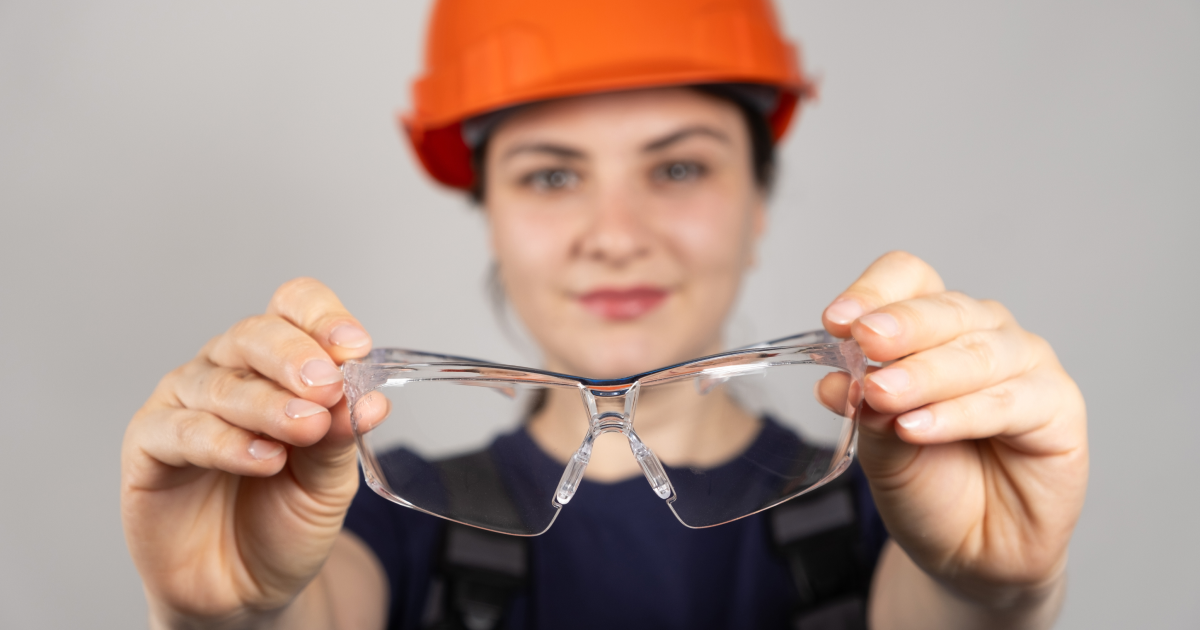
A small metal particle, chemical splash, wood chip, or flash of bright light can damage the eye in a second. While regular glasses may improve vision they are not by design meant to withstand work place impact or protect against hazard. Thus it is to the benefit of the worker, employer, student, technician, health care team, and home user to know protective eyewear standards which are in place for that very purpose.
No one set of Safety glasses ratings will fit all tasks. What we see in the lab may not translate to real world performance which is why it is important to match the hazard at hand with the right rating. People should wear protective eyewear that fits well, covers the eye area fully, has a clear field of vision during use, and which also has the appropriate standard or certification for the job.
Why Protective Eyewear Standards Matter
Safety eyewear can be evaluated for impact resistance, optical clarity, frame retention, side coverage, resistance to droplets or dust, filter performance, durability, marking, and care instructions. That is to say that protective eyewear standards are more reliable than terms like “industrial style, “strong lens, or “heavy duty glasses.
The CDC’s National Institute for Occupational Safety and Health explains that eye protection should be chosen according to the nature of the hazard, the circumstances of exposure, other protective equipment, and the wearer’s vision needs. In practice what we see is that safety glasses ratings report what tests a product has passed but they do not guarantee that one design will fit all environments. Workers should wear protective eyewear only after the task and the level of exposure has been determined.
Major Protective Eyewear Standards Used in 2026
Product labels and in the workplace we see to it which of the Indian, American, international and regional requirements we put forth. The table which follows gives a summary of what we found to be the main protective eyewear standards in 2026.
| Standard or regulation | Main use | What it generally addresses |
| IS 5983:1980 | Eye protectors in India | BIS specification for eye protectors, supported by related optical and non-optical test methods. |
| ANSI/ISEA Z87.1-2025 | Occupational and educational protection in the United States | Requirements for performance, testing, marking, selection, care, and use. |
| OSHA 29 CFR 1910.133 | United States workplace compliance | Employer duties, side protection, prescription eyewear, and accepted performance criteria. |
| ISO 16321-1:2021 with Amendment 1:2024 | International occupational use | General protection against impact, dust, splashes, heat, optical radiation, gases, vapours, and aerosols. |
| ISO 16321-2:2021 | Welding and related processes | Additional requirements for welding eye and face protectors. |
| ISO 12312-1:2022 | General-use sunglasses | Protection from solar radiation; it is not the general occupational eye-protection standard. |
In 1980 we adopted the standard for eye protectors, also our Bureau of Indian Standards lists IS 5983:1980, which at present includes this standard for that product category. Internationally, we see that ISO 16321-1:2021 is the current version which published an amendment in 2024. These protective eyewear standards provide buyers with a recognized base to evaluate safety claims. What protective eyewear standards to use still depends on the products intended use and the hazard identified.
What Changed in the United States for 2026?
A key change is that the 2025 edition of ANSI/ISEA Z87.1-2025 is out which supplants the 2020 edition. It includes testing, permanent marking, selection, care, and use of occupational and educational eye and face protectors. Also the revision goes into detail on marking and testing requirements.
OSHA 1910.133 regulation still includes former issues of the standard which had adopted ANSI/ISEA Z87.1-2010, ANSI Z87.1-2003, and ANSI Z87.1-1989 (R-1998). Also OSHA puts forward that whichever protection an employer puts in place which is proved to be at least as effective is also accepted. This is an issue in the implementation of protective eyewear standards which may see the new voluntary consensus reports to put forward different information from that in what is put into a regulation.
When looking at safety glasses ratings check out the full standard designation, manufacturer information, and workplace requirements. Do not accept a print of the Z87 style mark that does not have traceable product info. Employees should wear protective eyewear which has passed the company’s hazard assessment and compliance process.
How to Read Safety Glasses Ratings and Markings
In the category of protective eyewear standards, we see that marks may appear on the lens, frame, temple, side shield, packaging, or certificate. In the ANSI system, what you see is “Z87” which is for basic impact protection and “Z87+ which is for high impact performance. Prescriptive products may have marks like “Z87-2” or “Z87-2+. Also you’ll see other codes which may identify protection against splash, dust, fine dust, ultraviolet or infrared radiation.
| Marking or information | General meaning | What to verify |
| Z87 | Basic-impact protection under the applicable ANSI scheme | Check the lens, frame, product instructions, and declared standard edition. |
| Z87+ | High-impact protection | Confirm that the complete assembled product is certified, not only one component. |
| D3 | Splash or droplet protection | Determine whether goggles or combined eye-and-face protection are required. |
| D4 / D5 | Dust / fine-dust protection | Check the seal and ventilation because open spectacles may leave gaps. |
| U / R with scale information | Ultraviolet / infrared filtering | Confirm the correct filter scale for the source; dark tint alone is not proof. |
| Manufacturer and standard details | Traceability | Match product markings with packaging, instructions, and an authorised supplier. |
These safety glasses ratings which in turn makes it easier to compare products, but a high looking code is not at all what you want. Chemical handling may require sealed or indirect ventilation of the goggle’s frame which in turn may require the use of air fed systems, also for the former we see that in the case of flying particles full coverage goggles with side protection is what you should be using. For welding a proper filter and shade is a must. As the job changes so do your protective eyewear standards and wear protective eyewear designed for the new exposure.
Safety Glasses, Goggles, and Face Shields
Safety glasses are very much used for flying particles and in general for impact hazards which they do cover well. Goggles which fit closer to the face may also provide better protection against dust, droplets or chemical splashes as per their design and certification. A face shield covers more of the face which is true, but it is in most cases a secondary layer of protection rather than a primary form of eye protection.
OSHA PPE assessment guidance which says to use a face shield with goggles or safety glasses when there is a requirement for impact protection. Also from the CDC we are told that safety glasses do not provide the same splash protection as goggles. In some cases proper use of protective eyewear standards will require a mix of products. It is the user’s duty to wear protective eyewear under a face shield at the time of the primary eye hazard assessment.
Choosing Protection for the Actual Hazard
In mechanical work pay attention to the size, speed, and direction of particles which also includes side and overhead exposure. In chemical handling look at splashes, vapours, mist and material compatibility. For dusty work a close fitting design is required. With welding, cutting and intense optical sources use the right filters. And with laser work do a laser specific assessment which is not to be treated as any other industrial risk.
This we put forward the safety first approach which is what gives our safety glasses ratings their value. High impact clear lenses do not equate to certified welding filters and regular sunglasses do not provide occupational protection. ISO 12312-1:2022 we see that the changes apply to general use sunglasses which now are set apart from occupational products which are covered by the ISO 16321 series. It is put forward that users wear protective eyewear for the task at hand even when they are wearing their everyday sunglasses or prescription glasses.
In health care and laboratory settings the which way and how much droplet exposure is a factor. CDC reports that goggle use gives better eye protection, and that a well designed face shield may protect a greater area of the face. We should choose protective eyewear standards based on the bio or splashing risk at hand instead of look alone.
Fit, Side Coverage, and Prescription Lenses
Certified eyewear may be out of the question to give the protection it is meant for when it shifts around, produces large gaps, fogs up repeatedly, or gets in the way of a respirator, helmet, or hearing protection. Check the nose bridge, temple length, seal, side coverage, field of vision, and also how it does with other PPE. Fit is a key element of protective eyewear standards which also includes comfort.
Certified eyewear may be out of the question to give the protection it is meant for when it shifts around, produces large gaps, fogs up repeatedly, or gets in the way of a respirator, helmet, or hearing protection. Check the nose bridge, temple length, seal, side coverage, field of vision, and also how it does with other PPE. Fit is a key element of wear protective eyewear standards which also includes comfort.
Good safety glasses ratings should always be paired with proper fit. A certified product which is too loose, damaged, or not worn in the right way may leave the eye exposed even if it is marked as protective.
Cleaning, Inspection, and Replacement
Maintenance also is included in protective eyewear standards. Before each use inspect the lenses, frame, temples, side shields, seals, and straps. Deep scratches will reduce visibility, also cracked frames, loose parts, damaged seals, or missing shields may reduce protection. Clean the product according to the manufacturer’s instructions and stay away from chemicals that may damage lens coatings or frame material.
Replacement is based on condition, contamination, impact history, manufacturer guidance, and workplace policy. That which has had a great impact may require replacement of eye wear even when damage is not visible. Proper protective eyewear standards practices address care and use because protection depends on the total system still being serviceable. Safety glasses ratings are relevant only when the product is cared for properly and users wear protective eyewear throughout exposure.
Common Selection Mistakes
Common issues are putting faith in a seller which we don’t know just because they have a printed out code, using dark lenses for welding which we didn’t check for the right filter scale, putting on a face shield when we have other eye protection which goes under it, or using open spectacles for a chemical splash risk. Also we see that it is a practice to assume that one occupational health and safety measure covers lasers, sports, infectious material exposure, or all types of radiation.
To properly fit protective eyewear standards follow the physical marking with the manufacturer’s certificate, instructions, and also the intended use as well as the applicable workplace rule. If safety glasses ratings are not clear ask a safety officer, authorized supplier, optometrist, or ophthalmologist before exposure. It is safer to wear protective eyewear at the start of the task than to put it on after sparks, dust, or liquid has occurred.
When to Seek Medical Care After an Eye Injury
Urgency in assessment present with chemical splash, penetrating injury, high speed impact, sudden vision loss, severe pain, marked light sensitivity, bleeding, or a foreign body which appears embedded. Do not rub the eye or attempt to remove a deeply embedded object. In a chemical exposure begin appropriate irrigation immediately and get emergency care.
At an eye hospital an evaluation may note injury to the cornea, lens, retina, or other eye structures. At Vasan Eye Care we present our network of which within are located eye treatments and specialist care. When pain, redness, blurred vision, or light sensitivity persist a prompt visit to an eye specialist hospital is very important.
Key Takeaway for 2026
The right product is that which has the appropriate certification, design, fit, and is for the identified hazard. In 2026 protective eyewear standards include India’s BIS framework, ANSI/ISEA Z87.1-2025, OSHA requirements, and the ISO 16321 series for occupational protection.
Read through safety glasses ratings in detail, verify the standard edition, also note which is the right protective eyewear for your need as spectacles, goggles, shields, sunglasses, sports eyewear, welding filters, or laser eyewear each have different uses. Also always wear protective eyewear when you are to use it. A set certified and sitting in a drawer does no good for eye protection.
Frequently Asked Questions
In 1980 in India, ANSI/ISEA Z87.1-2025 in the U.S., and ISO 16321-1:2021 worldwide. Wear appropriate protective eyewear standards for the task.
ISO 16321-1: In 2021 we see the introduction of general requirements for occupational eye and face protection. In 2024 Amendment 1 was passed which also saw the introduction of more specific requirements. Also in 2021 the ISO 16321-2 update introduced in depth requirements for welding protection.
OSHA in 29CFR 1910.133 requires proper eye or face protection which includes side protection for flying objects. They also present recognized ANSI versions and any that are proven to be at least as effective.
Reference Links
- Bureau of Indian Standards – IS 5983:1980, Specification for Eye Protectors
https://services.bis.gov.in/php/BIS_2.0/bisconnect/standard_review/Standard_review/Isdetails?ID=MTI4MTk%3D - Bureau of Indian Standards – Revised Guidelines for Issue of Licences
https://www.bis.gov.in/revised-guidelines-for-issue-of-licenses/?lang=en - Occupational Safety and Health Administration – 29 CFR 1910.133 Eye and Face Protection
https://www.osha.gov/laws-regs/regulations/standardnumber/1910/1910.133 - Occupational Safety and Health Administration – PPE Assessment Guidance
https://www.osha.gov/training/library/personal-protective-equipment/assessment - CDC/NIOSH – Eye Safety for Workers
https://www.cdc.gov/niosh/ppe/eye-safety/index.html