
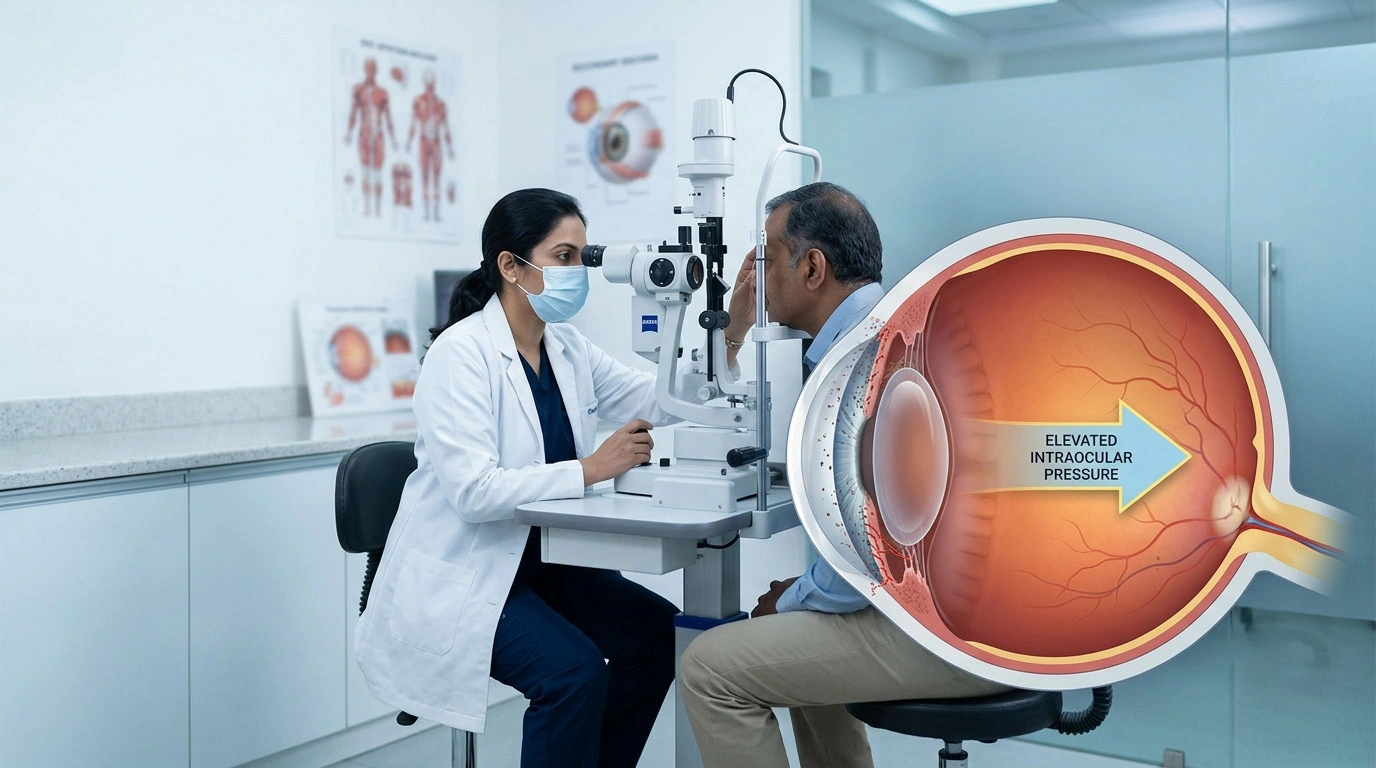
Glaucoma is a set of eye diseases which may cause optic nerve damage. With some forms there is no other apparent eye disease but in the case of secondary glaucoma another condition, injury or medication interferes to produce a disruption of fluid outflow from the eye.
The disease may present slowly with little to no warning signs or it may present suddenly with pain and quick rise in eye pressure. As per the base cause it may present as secondary open angle glaucoma or secondary angle closure glaucoma. Early diagnosis is key, which is that those who have already lost vision from glaucoma are not going to return, but that which is treated in time may help to preserve what is left of the vision.
What Is Secondary Glaucoma?
Secondary glaucoma is the type which is brought on by some other health issues in the eye, or in your general health. Issues like inflammatory eye disease, injury, abnormal blood vessel development, specific medicines, former eye surgeries, or changes in the lens may produce what is called a “clogged up” aqueous humour, the clear material found at the front of the eye.
When that which is supposed to drain does not function properly, intra ocular pressure, or IOP, may increase. May also see pressure which is persistent or severe which in turn may cause damage to the optic nerve and in time affect vision.
The term acquired glaucoma also comes up in the context of the disease which presents later in life as opposed to at birth. Also it is not true of all cases of acquired glaucoma that they are secondary. In secondary glaucoma we are usually able to identify a preexisting condition or factor which has brought about the glaucoma. The American Academy of Ophthalmology reports that many acquired eye conditions which in turn cause glaucoma do so via different processes.
What Causes Secondary Glaucoma?
secondary glaucoma does not have a single cause. Rather, many ocular and systemic issues which affect fluid outflow or which alter the structure of the drainage angle may present.
Eye Inflammation
Uveitis which is the inflammation of structures within the eye. In this condition inflammatory cells and proteins will plug the outflow system. Also in some people the inflammatory process may produce scar tissue which in turn affects the angle between the iris and the cornea. Also the disease process itself as well as the corticosteroid drugs we use to treat it may play a role in changing eye pressure.
Steroid Use
Steroids can raise eye pressure in some people. This may happen with steroid eye drops, injections or less commonly other forms of steroid treatment. Steroid related glaucoma often presents like secondary open angle glaucoma in which the drainage angle remains open while the outflow of fluid is impeded.
Patients must always check with their doctor before they stop a prescription of steroids. Also in case of long term steroid use eye pressure should be watched.
Eye Injury
Blunt and also penetrating eye injuries which may affect the drainage of aqueous humor are reported to us. Onset of raised pressure can be immediate post injury of some cases but in other cases may appear a season or many years after.
A type of glaucoma which is angle-recession glaucoma may present after blunt trauma. That is why a history of major eye injury in the past is still very important to report. Traumatic glaucoma has to cause permanent optic nerve damage if not managed properly.
Abnormal Blood Vessel Growth
Neovascular glaucoma is a severe type of secondary glaucoma in which abnormally new blood vessels grow into the iris and drainage angle. Also it is a condition that at times results from poor blood supply to the retina and may present in patients that have very advanced diabetic eye disease, retinal vein occlusion or other retinal vascular diseases.
Lens-Related Problems
In some cases a very mature or large cataract may cause issues with fluid flow or may bring on inflammation which in turn may cause lens induced glaucoma. In these cases we may see to it that we first address the issue of eye pressure but in most cases we also have to treat the cataract itself for full recovery.
Previous Eye Surgery
Some patients present with raised intraocular pressure post ophthalmic surgery. The cause is variable based on the type of procedure which may include inflammation, anatomic change, retention of material or impairment of aqueous outflow.
Types of Secondary Glaucoma
Doctors place secondary glaucoma into groups which may be related to the cause of the disease and also which fall into categories of open or closed eye drainage angle.
| Type | What Happens |
| Secondary open angle glaucoma | The drainage angle remains physically open, but fluid drainage becomes impaired because of factors such as steroids, inflammation, trauma or material accumulating within the drainage system. |
| Secondary angle-closure glaucoma | The drainage angle becomes obstructed or closed because of conditions such as inflammation, abnormal blood vessels, lens-related changes or changes following surgery. |
| Neovascular glaucoma | Abnormal blood vessels grow over the iris and drainage angle, eventually interfering with fluid outflow. |
| Traumatic glaucoma | Eye injury damages or alters structures responsible for maintaining normal eye pressure. |
| Steroid-induced glaucoma | Eye pressure increases in response to corticosteroid exposure in susceptible individuals. |
| Lens-induced glaucoma | Changes involving the natural lens or cataract interfere with normal aqueous flow or trigger inflammation. |
Some secondary angle-closure conditions can produce a sudden, significant rise in eye pressure and require urgent medical attention.
Symptoms of Secondary Glaucoma
Symptoms depend heavily on the cause and how quickly eye pressure rises.
Chronic secondary open angle glaucoma may present with few or no symptoms in its early stage. As the disease progresses peripheral vision may fall out which is a result of optic nerve damage. This silent progression is also a reason for people at risk to have regular eye exams.
When pressure comes up suddenly symptoms present more noticeably. A person may have severe eye pain, redness, blurry vision, which may see colored halos around lights, headache, nausea or a sudden loss in vision.
Sudden intense pain in the eye, redness, nausea or acute loss of vision are signs to report as an eye emergency instead of waiting for a routine appointment.
How Is Secondary Glaucoma Diagnosed?
Diagnosing secondary glaucoma is more than just the identification of high eye pressure. What an ophthalmologist has to do is to determine if the optic nerve is affected and also to find out the cause of the pressure change.
A very in depth past and family ophthalmic history is recommended. Patients should report to their physician past eye injuries, eye surgeries, use of steroids, diabetes, retinal issues, inflammation and any other relevant health issues.
| Examination | Why It May Be Performed |
| Tonometry | Measures intraocular pressure |
| Slit-lamp examination | Examines the front structures of the eye and may reveal inflammation or abnormal blood vessels |
| Gonioscopy | Allows the doctor to examine whether the drainage angle is open, narrow, damaged or closed |
| Optic nerve examination | Checks for characteristic glaucoma-related changes |
| OCT imaging | Measures structures such as the retinal nerve fibre layer and helps monitor damage |
| Visual field testing | Detects areas of peripheral or central vision loss |
| Pachymetry | Measures corneal thickness, which can help the ophthalmologist interpret eye-pressure readings |
Several of these tests may be repeated over time because glaucoma management depends on determining whether optic nerve or visual field damage is stable or progressing.
How Is Secondary Glaucoma Treated?
Treatment usually has two goals: lowering eye pressure and managing the condition responsible for the glaucoma.
Glaucoma Eye Drops
Prescription eye drops also can reduce production of aqueous fluid or improve its outflow. What works best is based on the kind of secondary glaucoma, present, the base health issue and the patient’s overall health.
Some patients do better with a combination of a few medications in order to achieve a safe target pressure.
Treating the Underlying Cause
In that which we see of primary glaucomas vs.acquired glaucoma which is a result of another disease the trigger treatment is of great importance.
For instance, we see that inflammation may require appropriate anti-inflammatory treatment. In the case of lens induced glaucoma it may end up that the patient requires cataract or lens surgery. With neovascular glaucoma we may have to treat retinal ischemia in addition to that of lowering the pressure. When steroids are a factor in pressure increase the health care provider may look at adjusting the medication when it is appropriate to do so.
Do not change your steroid or glaucoma medicine without professional advice.
Laser Treatment
Laser treatments which do benefit some patients. We see that Laser trabeculoplasty improves fluid outflow in some open angle cases. For a certain type of angle closure which causes pupillary block we may use Laser peripheral iridotomy.
The National Eye Institute reports that in right patients laser surgery can reduce intraocular pressure through better drainage of fluid.
Glaucoma Surgery
If medical and laser options do not work then surgery may be put forth as a solution. In each case of the patient we may have Trabeculectomy, glaucoma drainage implants or other pressure reduction procedures to choose from.
The decision is based on what is causing the glaucoma, the extent of damage to the optic nerve, prior treatments and the patient’s target eye pressure.
Can Secondary Glaucoma Be Cured?
Whether the cause is correctable depends on the type of condition. In some cases treatment of the base issue may greatly improve pressure. However with glaucoma we have found that once damage to the nerve has occurred it is usually permanent.
For that which is the case, treatment is directed toward the prevention or slowing of further damage as we see in the fact that we do not have methods to restore nerve tissue that has already been lost. Presently in the management of glaucoma we see that which includes medicines, laser procedures or surgery which will be determined by the patient’s condition.
Who Should Be More Careful About Secondary Glaucoma?
People that have had severe eye injury, long term use of steroids, repeated eye inflammation, retinal vascular disease, late stage diabetic eye disease or prior eye surgery may require closer monitoring.
Patients with these conditions are to follow the advice of their ophthalmologist for examination schedules which may be different from what they may think they require based on how well they see at present. Some types of secondary open angle glaucoma can develop without us noticing the issue in early stages.
Why Early Diagnosis Matters
The main issue in secondary glaucoma is permanent damage to the optic nerve. Identification of high eye pressure at the onset of significant visual field loss gives doctors a better chance to preserve useful vision.
Managing only the symptom of raised eye pressure may not be enough. We also have to identify and treat the base disease when we can. This is one of the main differences between secondary and what we may call primary forms of glaucoma.
Conclusion
Secondary glaucoma is an issue that requires in depth assessment as it usually has another eye issue, injury, medication or health issue which is the root cause. It may present as secondary open angle glaucoma, secondary open angle glaucoma, or some other cause specific type.
In some diseases which present no symptoms early on people with eye trauma, inflammation, steroid exposure, diabetes, retinal disease or prior eye surgery should not depend on symptoms. Regular comprehensive eye exams are key to catching pressure changes and damage to the optic nerve at an earlier stage.
Treatment is tailored to the type of glaucoma and its cause. In which early diagnosis is achieved, proper pressure is controlled and follow up is regular; many patients are able to reduce their risk of further vision loss.
Frequently Asked Questions About Secondary Glaucoma
1. What is the main cause of secondary glaucoma?
There is a single cause for that. In the case of Secondary glaucoma it may present due to eye inflammation, trauma, steroid use, abnormal blood vessel growth, lens issues, past surgery or other eye diseases. The ophthalmologist will determine what the cause is through the patient’s history and in depth eye exam.
2. Is secondary glaucoma the same as open-angle glaucoma?
No. Secondary glaucoma also presents in open or closed drainage angles. Secondary open angle glaucoma is used to describe situations in which although the angle is open the fluid does not drain right because of some other health issue that is affecting the outflow.
3. Is acquired glaucoma the same as secondary glaucoma?
Not always. Acquired glaucoma which has developed post birth is what we term as acquired glaucoma. Secondary glaucoma which is glaucoma that results from another condition, injury, medicine or eye anomaly is a type of this also. An ophthalmologist will be able to determine the exact type after an eye exam.
4. Can steroid eye drops cause secondary glaucoma?
Yes, steroids can increase intraocular pressure in some people, particularly with prolonged exposure. Patients using steroid eye drops for extended periods may require pressure monitoring. Never stop prescribed steroid medication without discussing it with the doctor who is managing the underlying condition.
5. Can secondary glaucoma cause blindness?
Yes. Untreated or uncontrolled secondary glaucoma may produce permanent damage to the optic nerve which in turn may cause great vision loss. Risk of damage is based on what is causing the disease, the level of pressure, and the length of time of the disease. Early diagnosis and proper treatment may reduce that risk.
6. Can eye injury cause glaucoma years later?
Yes. Some eye injuries which may not present issues immediately can in fact cause problems with pressure production at a later time. If you had what is known as blunt or penetrating eye injury report that to your ophthalmologist and follow up on the long term eye pressure issues which may arise.
7. Does secondary glaucoma always cause high eye pressure?
Raised intraocular pressure is seen in secondary forms of glaucoma but for a diagnosis of glaucoma to be made from that fact alone is not enough. At the consult we also look at the optic nerve, drainage angle, visual field and other eye structures before we determine if in fact glaucoma is present and what the treatment will be.