
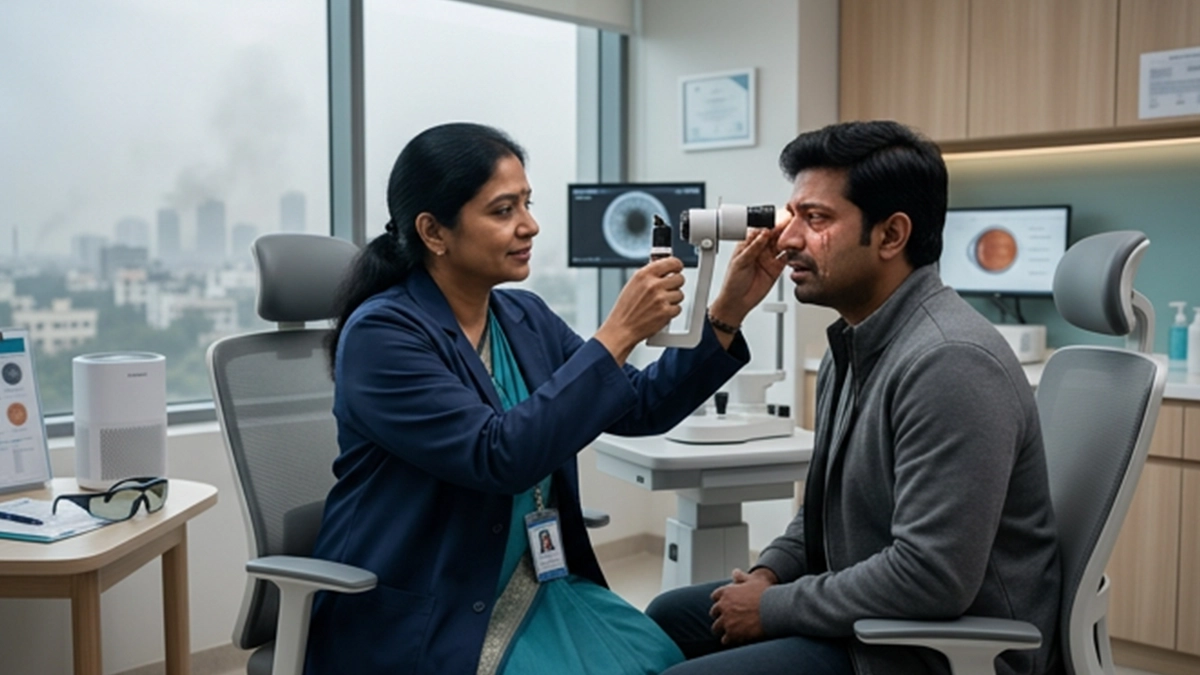
Smoke has a very close relationship with eye health. In smoke there are tiny particles and irritants which can impact the tear film that we depend on for eye moisture and protection. Also poor air quality may bring about redness, burning, watering, itching, and blurred vision. Also it is the case that long term exposure to smoke may bring forward dry eye issues which in turn may be made worse in people that already have eye issues. To protect your eye comfort try to reduce your smoke exposure and to note any persistent symptoms. If symptoms don’t improve or your vision does go blurry an eye exam at Vasan Eye Care may help determine the issue and if treatment is required.
How Does Smoke Affect Eye Health?
Smoke out of vehicles, industrial emissions, construction dust, forest fires and firecrackers puts eyes at risk of fine particles and irritants. These pollutants may affect the conjunctiva which is the thin layer of tissue that covers the white part of the eye and also disrupt the tear film that protects the cornea.
In 2022 the World Health Organization reported that 99% of the world’s population breathes air that is beyond its air quality guidelines. While that report is related to large scale air pollution issues which in turn affect the eyes is not the primary focus, it does bring to light the large scale issue of air pollution and eyes.
When there is an increase in smoke exposure your eye irritation within minutes or hours. Also people with allergies, contact lens issues or dry eye disease may see more severe symptoms during times of poor air quality.
What Are the Common Symptoms of Pollution-Related Eye Problems?
Common pollution eye problems are burning, redness, excessive watering and a gritty feeling. Smoke also causes tear evaporation which in turn may leave the eyes feeling dry despite an increase in water production. Temporary blurred vision may appear when the tear film becomes unstable.
Symptoms present themselves based on degree of exposure, individual sensitivity and preexisting eye conditions. It is also put forth that persistent discomfort may not in all cases be due to pollution which in fact may be a result of allergies, infections and corneal issues.
| Symptom | Possible explanation | Recommended action |
| Burning, itching or redness | Surface irritation from smoke and particles | Move away from the exposure and avoid rubbing the eyes |
| Dryness or gritty sensation | Tear-film disruption or worsening dry eye | Reduce exposure and seek advice if symptoms persist |
| Excessive watering | The eye’s response to irritation | Monitor symptoms and arrange an eye examination if recurring |
| Sudden blurred vision or severe pain | Possible underlying eye problem | Seek urgent ophthalmic assessment |
Who Is More Vulnerable to Smoke and Eye Health Problems?
People who have pre-existing dry eye disease, allergic eye conditions or sensitive ocular surfaces may see an increase in symptoms during poor air quality.
Children are at great risk of environmental irritants which may be present during poor air quality days as they spend time outside. Parents note if there is a lot of eye rub, redness, and discharge. If symptoms persist, bring in for an evaluation, also if they are affecting daily life or are associated with other signs of eye diseases in children.
People who report to work long hours at the computer may also see the same symptoms present at the same time.People who blink less often while using digital eye strain when exposed to smoke, as reduced blinking can worsen dryness and discomfort.Also very important is that we get enough rest, the statement “sleep is overrated” should not be from your health care provider, in fact getting proper sleep supports overall health and may also play a role in reducing eye fatigue.
How Can You Protect Your Eyes When Air Quality Is Poor?
Practical steps can reduce exposure and help manage mild eye irritation during smoky conditions.
- Limit outdoor exposure: Check out local reports on air quality and if it’s high reduce your outdoor time.
- Wear protective eyewear:Wrap around glasses do a great job at keeping out wind and small particles that regular glasses don’t filter out.
- Avoid rubbing your eyes: This can make irritation worse and may cause a scratch to the eye if there is a particle present.
- Rinse safely when needed: In the case of chemical exposure you will require immediate and thorough irrigation and prompt medical care.
- Manage indoor air:If practical keep windows closed during very poor outdoor pollution and also consider getting a good air purifier.
- Use eye drops carefully:While they may help with mild dryness do not use medicated or redness reducing drops without proper advice.
These precautions can reduce exposure, but they do not guarantee protection against every cause of pollution eye problems.
| Preventive measure | How it helps | Important consideration |
| Checking air quality | Helps plan safer outdoor activities | Follow local pollution alerts |
| Wraparound glasses | Reduces direct exposure to wind and particles | Does not replace respiratory protection |
| Clean indoor air | May reduce indoor particle exposure | Maintain filters as directed |
| Lubricating eye drops | May ease dryness and surface discomfort | Persistent symptoms need assessment |
When Should You See an Eye Specialist?
Mild ocular issues which present from smoke may improve once you are out of the polluted environment. As for persistent redness, recurrent watering, ongoing dryness, light sensitivity or continuous blurred vision, an eye exam..
Sudden vision loss, severe eye pain, marked light sensitivity or in large amounts of redness related to a loss in vision which is an immediate cause for emergency medical care. Also get prompt attention for chemical splashes in the eye or what may be an injured eye. Do not assume that these warning signs are a result of poor air quality.
Eye Care at Vasan Eye Care
Vasan Eye Care has a wide range of ophthalmic services for eye symptoms and vision issues. An ophthalmologist at our facility does a study of the eye surface, we also do a tear film health assessment and we are able to tell the difference between pollution related irritation and allergies, infections or other eye issues. Based on what we find we may put you on a regimen of lubricating drops, suggest you avoid certain triggers or put you on a specific medical treatment for your condition.
Persistent eye irritation should be evaluated by a health care professional instead of self treating.
Frequently Asked Questions
1. Can smoke cause dry eyes?
Yes. Smoke and airborne particles may break up the tear film and increase tear evaporation. This may cause dryness, burning, redness or a gritty sensation in also affected people which have dry eye disease.
2. Can air pollution cause blurred vision?
Air pollution is a cause of transient blurred vision which is a result of irritation and dryness which in turn leads to breakdown of the tear film. If you are experiencing sudden, persistent or worsening blurred vision seek medical advice as it may be a result of other eye issues.
3. How can eye irritation from smoke be relieved?
Move out of smoke, don’t rub the eyes and gently wash out loose irritants with clean water or sterile saline. For mild dryness use of lubricating eye drops may be of help. See a health care professional if symptoms continue to be present or get worse.
4. When should pollution-related eye problems be checked?
Arrange for an eye exam for issues such as persistent redness, watering, dryness or light sensitivity. In the case of sudden vision loss, severe eye pain or if you have very red eyes which also report reduced vision, go to the emergency room.
References
- World Health Organization — https://www.who.int/news/item/04-04-2022-billions-of-people-still-breathe-unhealthy-air-new-who-data
- National Eye Institute — https://www.nei.nih.gov/eye-health-information/eye-conditions-and-diseases/dry-eye/causes-dry-eye