Dry Eye Treatment
Dry eye disease is not a single-condition problem. It usually falls into two main types:
- Aqueous-deficient dry eye, where tear production is low
- Evaporative dry eye, often linked to Meibomian gland dysfunction
In most cases, patients have a mix of both.
During consultation, an ophthalmologist may perform a Schirmer’s test to measure tear production or a Tear Film Break-Up Time (TBUT) test to check tear stability. Fluorescein staining may also be used to see if there are dry patches on the corneal surface. These are simple chair-side tests but give useful information.
Most people seek help only when vision begins to fluctuate during work hours. That is usually the turning point.
Dry eye syndrome treatment depends on identifying the root cause rather than just prescribing drops.
When Should You Consider a Dry Eye Treatment?
You should not ignore symptoms such as:
- Persistent burning or stinging
- Redness that returns frequently
- Blurred vision that improves after blinking
- Sensitivity to light
- Excessive watering with irritation
If these symptoms continue for weeks, clinical assessment helps prevent surface damage.
Types of Dry Eye Treatment Available
Management ranges from simple lubrication to advanced in-clinic procedures. Not every patient needs intensive therapy.
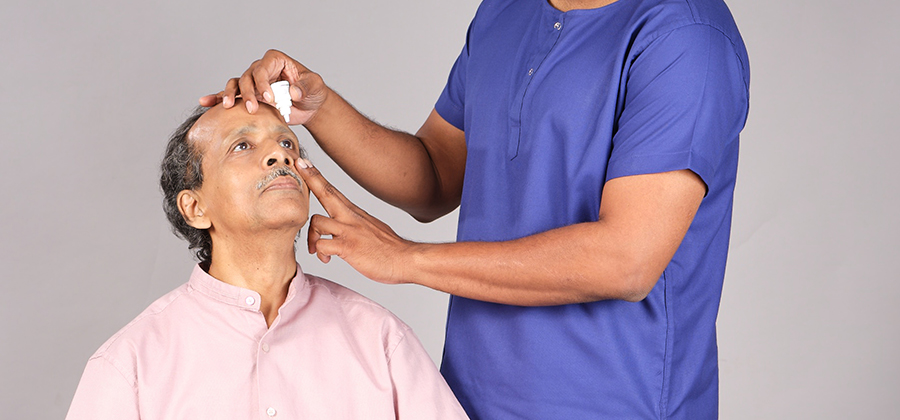
- Lubricating Eye Drops
Artificial tears are often the first line of dry eye treatment. For long-term use, it’s best to use formulas that don’t have preservatives. These drops add to your natural tears and make you feel better.If you are using drops more than four times a day and not getting any relief, you need to see a doctor. - Medicines that reduce inflammation
Inflammation is a big part of moderate cases. Under supervision, short courses of mild steroid drops or cyclosporine-based medication may be recommended. Over time, these make the surface less inflamed and the tears more stable. - Meibomian Gland Therapy
Blocked oil glands along the eyelid margin can worsen evaporative dry eye. Warm compresses, lid hygiene routines, and in-clinic gland expression are commonly recommended. Some centres also offer thermal pulsation therapy, considered among the latest treatments for dry eye syndrome in selected cases. - Punctal Plugs
If tear drainage is excessive, small silicone plugs can be inserted into the tear ducts. This helps retain natural tears on the eye surface longer. The procedure is quick and usually done in the clinic. - Intense Pulsed Light (IPL)
IPL therapy is sometimes used in resistant cases associated with gland dysfunction. It improves gland function gradually over sessions.Treatment plans vary. What works for one person may not suit another.Have you ever noticed that your eyes feel worse in air conditioning or after scrolling for hours without blinking? These environmental and behavioural patterns often guide therapy decisions.
Dry Eye Treatment Cost in India
Patients frequently ask: how much does dry eye treatment cost?
The answer depends on severity and type of therapy required. Basic evaluations and lubricating drops don’t cost too much. Punctal plugs or IPL therapy, which are more complicated procedures, cost more overall.
In most Indian cities:
- Consultation and diagnostic tests: moderate, one-time cost
- The cost of medication each month depends on the prescription.
- Procedures done in the clinic are more expensive, but not always necessary.
Treatment for dry eye syndrome is usually ongoing, not just a one-time cost. Planning your budget is helpful, especially if you need to take medicine for a long time.
Dry Eye Treatment Post-Surgery Care and Recovery
Some patients develop dryness after procedures such as LASIK or cataract surgery. Temporary nerve changes in the cornea can reduce tear production for a few weeks or months.
Post-surgical dry eye treatment usually includes:
- Frequent lubricating drops
- Gel-based tears at night
- Anti-inflammatory medication if needed
Recovery varies. In most cases, symptoms improve gradually as the ocular surface stabilises.
If discomfort persists beyond the expected healing period, re-evaluation is necessary.
What to Expect After Dry Eye Treatment?
Relief is rarely immediate in moderate to severe cases. Mild dryness often improves within days of lubrication. More established disease may take weeks.
Some patients notice:
- Less burning sensation
- Improved visual clarity
- Reduced redness
- Better comfort during screen time
Consistency matters. Skipping medication often leads to recurrence.
Most people are surprised to learn that blinking consciously during long computer sessions can reduce symptoms significantly.
Dry eye treatment works best when combined with lifestyle adjustments.
Post-Operative Care Tips
Even if you are not undergoing surgery, daily care supports recovery.
- Follow the drop schedule exactly as prescribed
- Avoid rubbing the eyes
- Take short breaks during prolonged screen use
- Use a humidifier in air-conditioned rooms
- Maintain eyelid hygiene if advised
Simple measures, when done regularly, make a noticeable difference.
One thing I often tell patients is this: dry eye behaves like a chronic skin condition. You manage it; you don’t “cure” it overnight.