
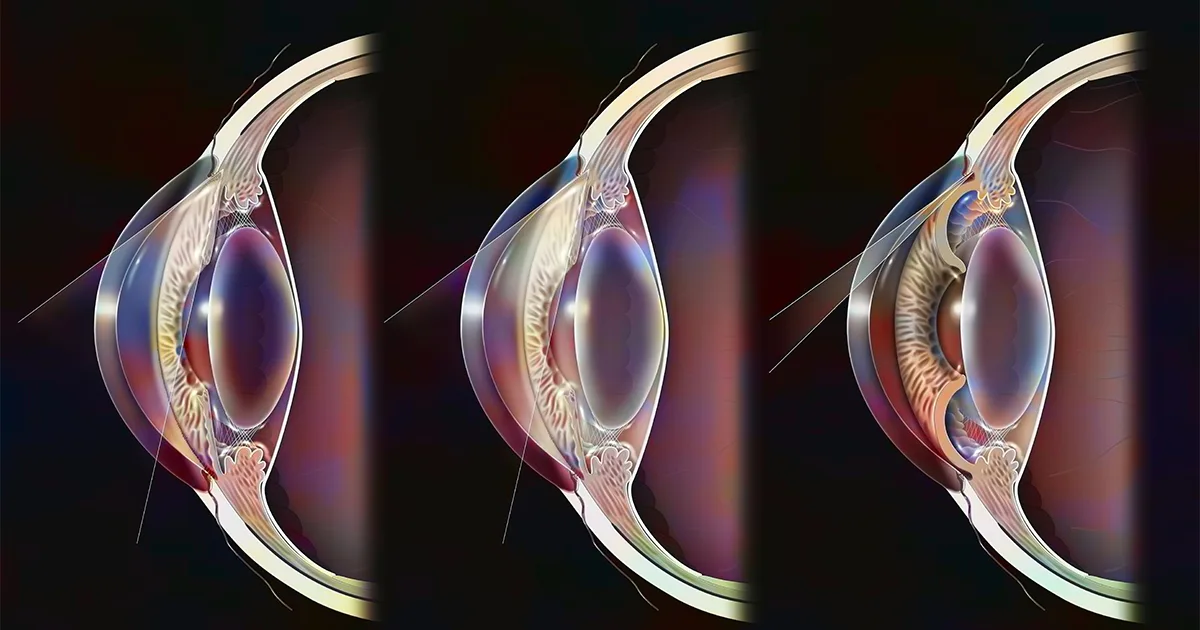
Glaucoma stands as a primary factor which leads to permanent vision impairment because it advances without showing symptoms until it reaches severe damage. Understanding the difference between open and closed angle glaucoma is essential for early detection and timely treatment. Medical professionals most frequently examine open angle glaucoma vs angle closure glaucoma because the two conditions show different mechanisms, symptoms, and treatment requirements.
This blog outlines what is open angle glaucoma, what is angle closure glaucoma, and provides a clear clinical distinction to support informed decision-making and prompt medical attention.
What is Glaucoma?
Glaucoma refers to a group of eye conditions that damage the optic nerve, primarily due to increased intraocular pressure (IOP). The optic nerve transmits visual signals to the brain, which results in permanent vision impairment when it suffers any form of damage.
Early diagnosis is critical. The patients need to understand the warning signs, which they must treat as immediate steps to take to stop disease development.
What is Open Angle Glaucoma?
The most frequent question which patients ask ophthalmologists is what open angle glaucoma means. The majority of glaucoma cases around the world are caused by open-angle glaucoma, which stands as the most common type of the condition.
Key Characteristics:
- The drainage angle between the cornea and iris remains open
- The trabecular meshwork becomes less efficient over time
- Intraocular pressure begins to rise at a steady pace
- The disease advancement occurs at a gradual speed, while most patients show no signs of their condition during the initial period
Symptoms:
- The patient experiences a gradual decrease in their ability to see objects located at the sides of their field of vision
- Tunnel vision in advanced stages
- No pain or redness in most cases
The silent development of open-angle glaucoma leads to its discovery during standard eye checkups. The regular screening process establishes itself as an essential method for preventing eye diseases.
What is Angle Closure Glaucoma?
The acute and sight-threatening nature of angle closure glaucoma makes it essential to know its definition.
The eye drainage system produces angle-closure glaucoma when a sudden blockage of the drainage angle prevents fluid from flowing out of the eye, which causes intraocular pressure to rise at a fast rate.
Key Characteristics:
- The drainage angle appears either narrow or fully blocked
- The body experiences a quick increase in eye pressure
- This condition requires urgent medical treatment
Symptoms:
- The person experiences extreme eye discomfort
- The person develops sudden visual impairment
- The person experiences a headache
- The person experiences nausea and vomiting
- The person sees light sources surrounded by halos
- The person exhibits eye redness
Emergency medical treatment needs to occur without any delay because every minute spent waiting increases the risk of permanent vision loss, which can happen within hours. All patients need to pay attention to these danger signals because they should never overlook them.
Also Read: Glaucoma Treatment Timeline: From First Diagnosis to Surgery and Life After
Open Angle Glaucoma vs Angle Closure Glaucoma
The understanding of open angle glaucoma and angle-closure glaucoma assists in the differentiation of their clinical patterns and emergency response requirements.
1. Onset and Progression
- The disease of open-angle glaucoma continues to progress throughout its entire duration.
- The establishment of angle-closure glaucoma occurs through an immediate onset, which then advances at an accelerated rate.
2. Drainage Mechanism
- Open-angle: The drainage angle remains open but operates at reduced efficiency.
- Angle-closure: The drainage angle experiences complete physical obstruction.
3. Symptoms
- The early stages of open-angle disease show no visible indicators of the condition.
- The condition of angle-closure presents medical symptoms that occur suddenly with extreme intensity.
4. Urgency
- The medical condition of open-angle glaucoma needs treatment which lasts for several months.
- The medical situation of angle-closure requires immediate treatment at the emergency room.
5. Risk to Vision
- The condition of open-angle glaucoma results in continuous vision impairment for the affected person.
- The condition of angle-closure causes immediate and severe vision loss for the person affected.
- The difference between open and closed angle glaucoma shows the need for doctors to identify the condition within the proper timeframe.
Difference Between Open and Closed Angle Glaucoma in Clinical Practice
The difference between open and closed angle glaucoma extends beyond symptoms to diagnosis and treatment strategies.
Diagnosis:
- Complete eye exams are required to perform the following tests
- The tonometry test allows doctors to evaluate the intraocular pressure of patients
- The gonioscopy test enables doctors to examine the patient’s drainage angle
- The procedure requires visual field testing to measure the patient’s visual capabilities
Risk Factors:
Open-Angle Glaucoma
- Ageing
- Family history
- Diabetes
- High intraocular pressure
Angle-Closure Glaucoma
- Anatomically narrow angles
- Hyperopia (farsightedness)
- Ageing
- Certain medications
Patients with risk factors must undergo regular screening. This step represents a critical requirement to prevent vision loss.
Treatment Options for Open Angle vs Closed Angle Glaucoma
The management approaches for open angle glaucoma and closed angle glaucoma differ according to the specific cause and emergency situation of each case.
Open-Angle Glaucoma Treatment
- The use of prescription eye drops helps to decrease intraocular pressure
- The doctor prescribes oral medications when they find them necessary
- The treatment includes laser therapy through trabeculoplasty
- The treatment includes surgical procedures that become necessary
The treatment aims to maintain pressure at controlled levels for an extended period. The medical team can reach successful results through prompt diagnosis because their eye doctors possess deep expertise, and the institution maintains decades of exemplary eye care standards.
Angle-Closure Glaucoma Treatment
The first step to treat angle-closure glaucoma requires doctors to provide immediate medical care. The treatment requires doctors to use medications which will quickly lower the patient’s intraocular pressure. The procedure uses laser technology to create a new drainage system through the patient’s peripheral iris. Doctors need to perform surgical operations for patients who reach advanced stages of their condition.
The medical emergency requires immediate treatment because it threatens the patient’s life. The patients need to take immediate action to stop their condition from developing into permanent harm.
Also Read: Glaucoma Surgery: Risks, Recovery, and Success Rates
Why Early Detection Matters?
Glaucoma-related vision loss cannot be reversed. The disease progression can be reduced through early disease detection.
Key recommendations:
- People should have eye tests at regular intervals starting from their 40th birthday.
- Patients who experience symptoms should seek medical help without delay.
- Doctors should conduct ongoing health checks to assess patients who face high health risks.
The availability of cost-effective diagnostic services enables more people to undergo early screening tests.
Preventive Measures and Awareness
The prevention of glaucoma remains impossible, yet timely treatment enables effective management of the disease progression.
Preventive Steps:
- Eye check-ups should be conducted on a regular basis
- People should learn about their family’s medical history
- Patients should control their existing health issues
- Patients must follow their treatment plans exactly as their doctors instructed them
Patients must not ignore subtle changes in vision. Even minor symptoms should be evaluated without delay.
When to Seek Medical Attention?
You need to see a doctor right away in case you experience any of these symptoms.
- Sudden eye pain
- Blurred vision
- Halos around lights
- Headache with eye discomfort
The condition of angle-closure glaucoma will cause permanent vision loss when treatment gets postponed. The best protection against the disease exists through early detection methods.
Conclusion
The process of diagnosing and treating patients requires medical professionals to understand the differences between open-angle glaucoma and angle-closure glaucoma. Open-angle glaucoma develops without showing symptoms, while angle-closure glaucoma appears suddenly as a medical emergency.
The difference between open and closed angle glaucoma occurs because both conditions start at different times and show different symptoms and need different levels of medical attention. These differences between the two options need to be understood by medical professionals because they affect their ability to make treatment decisions and provide timely emergency medical care.
Patients need to understand their potential hazards and maintain their watchfulness until the moment they need to take action against their developing symptoms. Early detection and treatment through the expertise of leading eye hospitals and their decades of experience in eye care service enables patients to maintain their vision while achieving better long-term health results.
Frequently Asked Questions (FAQs)
The primary distinction between open-angle glaucoma (OAG) and angle-closure glaucoma (ACG) is in the manner in which aqueous humor drains through the eye. OAG develops slowly and silently, while ACG occurs rapidly and requires immediate attention.
Open-angle glaucoma (OAG) is a chronic disease where the whole ducted angle does not work well resulting in progressive loss of vision, in which peripheral vision is adversely affected.
Angle-Closure Glaucoma (ACG) is a medical emergency which begins when the drainage angle experiences complete blockage. The sudden blockage results in a rapid increase in intracranial pressure, which eventually leads to permanent vision loss.
The diagnostic process for OAG and ACG requires three tests, which include IOP measurement for intraocular pressure assessment, optic nerve evaluation, and gonioscopy assessment of drainage angle status.
Glaucoma maintains no existing cure, yet early detection combined with correct treatment methods allows doctors to stop glaucoma-related vision loss.
Treatments We Offer: Eye Treatments | Cataract Surgery | LASIK Eye Surgery | Squint Eye Treatment | Retinal Diseases | EPI LASIK | Corneal Services | Refractive Surgery | Oculoplasty Surgery | Dry Eye Treatment | Contoura Vision Surgery | Anti VEGF Agents Treatment | Photorefractive Keratectomy | Vitrectomy Surgery | Epi Contoura Eye Surgery | Customised LASIK Surgery | Retinal Laser Photocoagulation Treatment | Implantable Collamer Lens |Cataract Surgery in Bangalore | Cataract Surgery in Hyderabad | Cataract Surgery Chennai | LASIK Eye Surgery in Hyderabad | LASIK Eye Surgery in Bangalore | LASIK Eye Surgery in Chennai | Retina Services in Hyderabad | Retina Services Chennai | Squint Eye Treatment in Bangalore | Squint Eye Treatment in Hyderabad | Squint Eye Treatment in Chennai | Glaucoma Treatment in Bangalore | Glaucoma Treatment in Chennai | Glaucoma Treatment in Hyderabad