
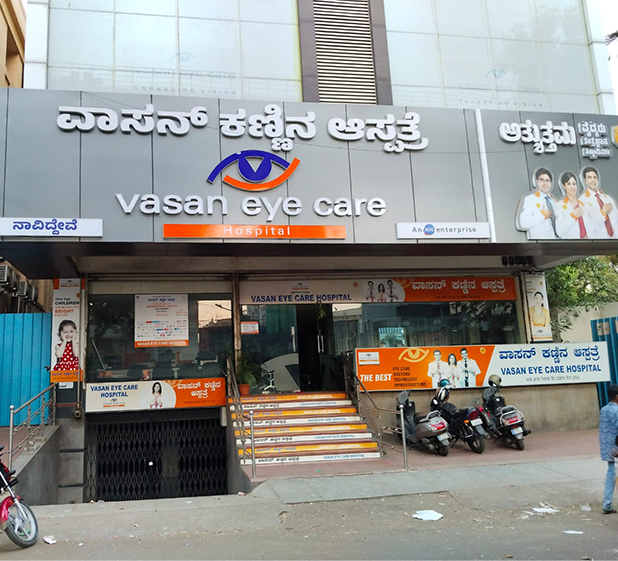
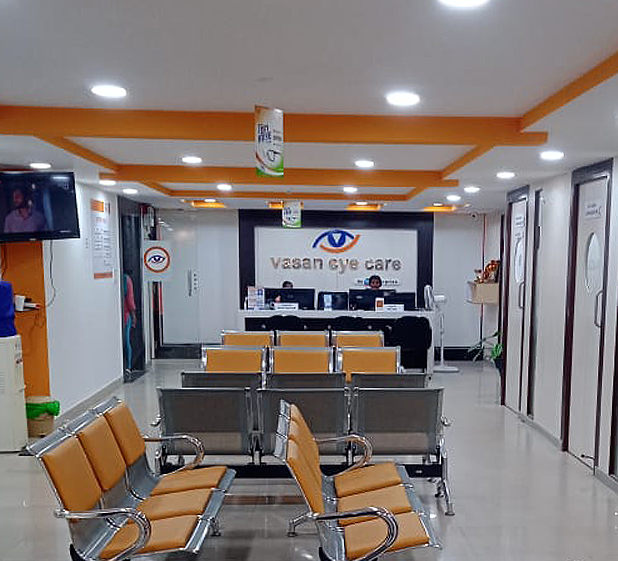
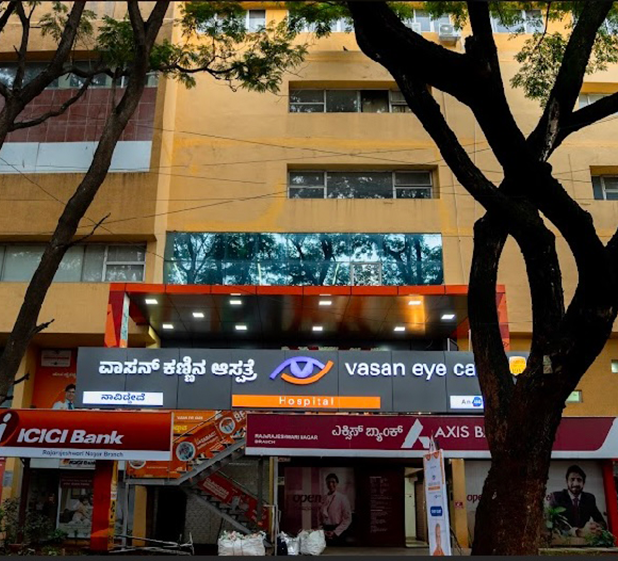
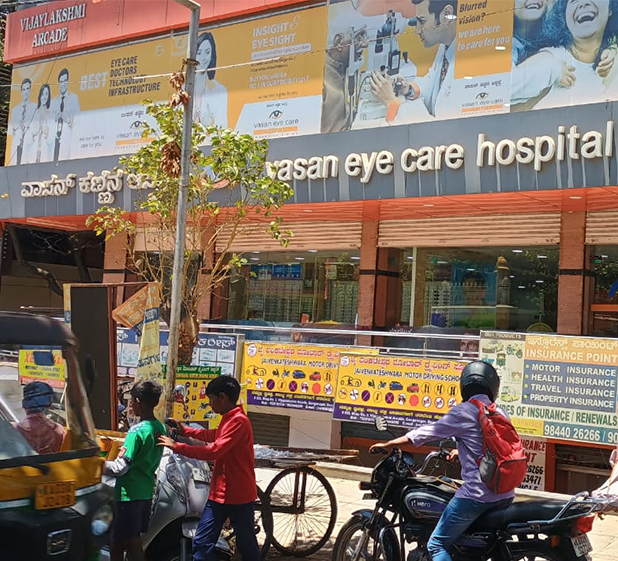
If you or a loved one is experiencing blurred vision, glare sensitivity, or trouble with daily tasks due to cataracts, consult our specialists at Vasan Eye Care Hospital in Bangalore. Early diagnosis and timely treatment can significantly improve visual outcomes and quality of life.

Cataract Surgery in Bangalore: Cost, Treatment & Procedure
If a parent or relative has been told they need cataract surgery in Bangalore, the news often lands a bit heavier than expected. Suddenly, there are decisions to make about lenses, hospitals, costs, and recovery. The good news? Cataract surgery is one of the safest and most performed eye procedures anywhere, and Bangalore has plenty of well-equipped centres that handle it routinely.
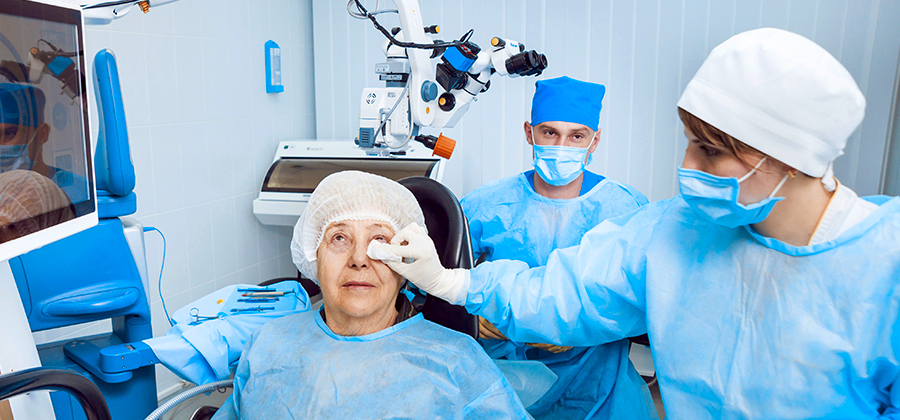
So what actually happens? In simple terms, the eye’s natural lens (which has clouded over time) is gently removed and swapped with a clear artificial intraocular lens, also called an IOL. Vision usually clears up within a day or two, and most people are back to their normal day in a week. The whole thing is minimally invasive, completed in well under thirty minutes, and patients walk in and walk out the same day.
Cataract Surgery in Bangalore: When is it Time?
Cataract surgery in Bangalore is recommended when blurry vision starts getting in the way of routine life, things like reading the newspaper, recognising someone across the room, or driving at night. Here’s the thing nobody often spells out: there’s no eye drop, no medication, no vitamin that reverses a cataract once it’s formed. Surgery is genuinely the only fix.
During the evaluation, the ophthalmologist runs a few standard checks. Visual acuity testing, a slit-lamp examination to see how clouded the lens has become, and biometry to calculate the right intraocular lens (IOL) power. A retinal exam usually rounds it off, just to make sure the back of the eye is healthy and won’t limit the visual outcome.
Common Cataract Symptoms
People often describe their cataract symptoms in surprisingly similar ways:
- Blurry or cloudy vision, like looking through a steamed-up window
- Halos around lights, especially at night
- Difficulty driving after dark
- Frequent changes in spectacle prescription
- Faded or yellowed colour perception
- Light sensitivity and glare during the day
- Double vision in one eye
Not every cataract needs immediate surgery. In the early stages, stronger glasses can buy you a few months. But once vision starts limiting daily routines, that’s the cue.
What Causes Cataracts?
Cataracts mostly develop with age, but the list of contributing factors goes a bit beyond just getting older:
- Age-related changes in the eye lens (the most common cause)
- Diabetes, especially when poorly controlled
- Long-term exposure to UV rays from sunlight
- Smoking and heavy alcohol use
- Eye injury or trauma
- Long-term steroid use
- Genetic predisposition
Patients often ask, “Is it safe to wait?” In most cases, yes, surgery can be scheduled when the cataract becomes visually limiting. But very advanced cataracts can become harder to operate on later, so the modern thinking is: don’t wait until they go fully “mature” before treating them.
Types of Cataract Surgery in Bangalore
Different surgical techniques and lens choices both shape the visual outcome and the cataract surgery cost in Bangalore. Here are the main options offered at well-equipped centres:
Phacoemulsification (Phaco Surgery)
This is, by a long way, the most commonly performed cataract surgery technique today. The surgeon makes a tiny incision, then an ultrasonic probe gently breaks the cloudy lens into small fragments which are removed. A foldable IOL is slipped in through the same incision. Recovery is quick, and stitches are usually not needed at all.
MICS (Micro Incision Cataract Surgery)
MICS is essentially Phacoemulsification taken a step further. The incisions are even smaller, which means less disturbance to the eye, lower infection risk, and a slightly faster recovery. Many patients looking for the best cataract surgery in Bangalore opt for MICS because it preserves more of the eye’s natural anatomy. It’s the modern, minimally invasive route.
Manual Small Incision Cataract Surgery (SICS)
SICS uses a slightly larger incision than Phacoemulsification to remove the lens in one piece. Sounds old-school, but it’s actually quite effective for advanced or hard cataracts where ultrasound energy alone might not break the lens cleanly. Visual recovery is good, though healing usually takes a touch longer than Phaco.
Laser-Assisted Cataract Surgery (LACS)
Also known as robotic cataract surgery in some places, LACS uses femtosecond laser technology to perform certain steps, like creating the corneal incisions and softening the lens, with high precision. It’s a bladeless approach. Not every patient needs laser assistance, but for some, it’s a worthwhile upgrade. The cost is noticeably higher, so the doctor usually walks you through whether it’s actually relevant for your eye or not.
Extracapsular Cataract Extraction (ECCE)
ECCE is mostly considered for very advanced or extremely hard cataracts where modern techniques can’t safely break the lens. It involves removing the cataract in one piece through a larger incision and placing the IOL in the lens capsule. Used less often these days, but still has its place.
Types of Intraocular Lenses (IOLs)
The lens you choose plays a big role in your visual outcome and the cataract eye surgery cost in Bangalore. Here’s how the main IOL options break down:
- Monofocal Lens: the standard option, gives clear vision at one distance (usually far). Reading glasses are typically needed.
- Advanced Monofocal Lens: improved contrast and sharper vision, especially in low-light conditions.
- Multifocal Lens: covers both distance and near focus, which means less dependence on glasses for most everyday tasks.
- Trifocal Lens: designed for distance, intermediate (computer range), and near vision, the most spectacle-independent option for active patients.
- Toric Lens: corrects astigmatism alongside the cataract, available in monofocal or multifocal versions.
A common question is, “Will I be completely free from glasses?” Honestly, it depends on the lens type and any pre-existing conditions in the eye. Multifocal and Trifocal lenses cut down glasses dependence significantly, but no IOL guarantees zero glasses for everyone.
Cataract Surgery Cost in Bangalore
Let’s talk numbers, because most people start there. The cataract surgery cost in Bangalore depends on several things:
- The surgical technique (Phaco, MICS, SICS, or laser-assisted)
- The intraocular lens you choose
- The hospital infrastructure and surgical setup
- The surgeon’s experience and expertise
- Pre-surgery diagnostics and post-surgery follow-up visits
Generally, Monofocal Lens procedures sit at the most affordable end. The cataract eye surgery cost in Bangalore goes up when premium lenses like Multifocal, Trifocal, or Toric IOLs are picked, simply because the lens itself costs more and the surgery is more customised.
Cataract Surgery Cost at Vasan Eye Care, Bangalore
At Vasan Eye Care, the pricing is kept transparent and lens-specific, so you know exactly what you’re paying for:
- Monofocal Lens: ₹13,000 to ₹47,000
- Advanced Monofocal Lens: ₹55,000 and above
- Multifocal Lens: ₹57,000 and above
- Trifocal Lens: ₹90,000 and above
People often Google “How much does cataract surgery cost in Bangalore?” before booking. You’ll get a rough idea from any listing, sure, but the exact amount only becomes clear once the lens is chosen and the eye is properly examined. Insurance policies usually cover basic cataract procedures comfortably; coverage for premium lenses can vary, and that’s worth confirming with your insurer beforehand.
Insurance and Cashless Cataract Surgery in Bangalore
Cataract surgery is one of the few eye procedures that’s almost always covered by health insurance. Most major private insurers, government schemes, and corporate group policies include it as standard. At Vasan Eye Care, the team helps coordinate insurance approvals and cashless procedures wherever the policy permits, so you’re not stuck navigating paperwork on top of recovery.
That said, if you’re choosing a premium lens like a Multifocal or Trifocal Lens, the lens upgrade cost may not be fully covered. The counselling team usually walks you through what’s covered and what’s out-of-pocket before scheduling the surgery.
Who Should Consider Cataract Surgery?
You might be a candidate for cataract surgery if you’re noticing any of these:
- Blurred or cloudy vision that’s getting worse over months
- Glare or halos around lights, particularly at night
- Difficulty reading, driving, or recognising faces
- Frequent eyeglass prescription changes that don’t really fix things
- Faded or yellowed colour perception
A comprehensive eye examination at Vasan Eye Care will confirm whether surgery is required and which lens and technique would suit you. There’s no rush to schedule the operation immediately, but earlier surgery often means an easier procedure and faster recovery.
Why Choose Vasan Eye Care for Cataract Surgery in Bangalore?
With years of experience in eye care and multiple branches across Bangalore, Vasan Eye Care has handled a steady volume of cataract procedures. The reasons patients keep coming back are pretty practical:
- Experienced Surgeons: qualified ophthalmologists who’ve performed thousands of cataract surgeries between them.
- Advanced Technology: Phacoemulsification and MICS (Micro Incision Cataract Surgery) for painless, stitchless procedures.
- Customised Lens Options: from Monofocal and Advanced Monofocal to Multifocal, Toric, and Trifocal IOLs, picked based on lifestyle and visual needs.
- Personalised Care: from pre-operative evaluation through to post-surgery recovery, with rapid visual rehabilitation.
- Affordable & Transparent Pricing: no hidden charges, the cost discussion happens upfront.
- Multiple Bangalore Branches: follow-ups don’t have to mean a cross-town drive.
Vasan Eye Care Branches Offering Cataract Surgery in Bangalore
Cataract consultations and surgeries are available at the following Vasan Eye Care centres in Bangalore:
- Vasan Eye Care Bangalore – Banaswadi
- Vasan Eye Care Bangalore – Bommanahalli
- Vasan Eye Care Bangalore – Jayanagar
- Vasan Eye Care Bangalore – Marathalli
- Vasan Eye Care Bangalore – Rajajinagar
- Vasan Eye Care Bangalore – Sarakki
- Vasan Eye Care Bangalore – HSR Layout
- Vasan Eye Care Bangalore – Rajarajeswari Nagar
- Vasan Eye Care Bangalore – RT Nagar
To find the nearest centre or schedule a cataract evaluation, call 1800 571 2222 or drop in at any Vasan Eye Care branch.
Cataract Post-Surgery Care and Recovery
Recovery from cataract surgery in Bangalore is, honestly, smoother than most people expect. A lot of patients see noticeable improvement within 24 to 48 hours. Vision may shift slightly during the first week or two as the eye settles in around the new IOL, which is completely normal.
Standard post-surgery instructions usually include:
- Antibiotic and anti-inflammatory eye drops for a few weeks
- Avoid rubbing or pressing the operated eye
- Keep dust and water out of the eye for the first week
- Wear protective glasses outdoors, especially in bright sunlight
- Skip heavy lifting and strenuous activity for about a week
- Hold off on swimming until the doctor gives the green light
Mild redness, watering, or a foreign-body sensation in the eye is fairly common during the first week. Most people in Bangalore are back to desk work within two or three days, depending on comfort. Night driving might take slightly longer because the brain needs a bit of time to adapt to the new lens optics.
Follow-up visits are scheduled at standard intervals to monitor healing and check intraocular pressure. Don’t skip these; that’s how complications get spotted and dealt with early.
What to Expect After Cataract Surgery in Bangalore
Visual improvement is usually pretty quick, although final clarity can take a few weeks to settle. If you’ve gone with a Monofocal Lens, reading glasses are still likely to be part of life. Patients choosing Multifocal or Trifocal Lenses sometimes notice mild halos around lights for the first few weeks; these typically fade as the brain neuroadapts.
A common question: “Can cataracts come back after surgery?” Strictly, no. The natural lens doesn’t grow back. However, a thin film called posterior capsule opacification (PCO) can develop months or years later behind the IOL, causing blurred vision again. The good news is the fix is straightforward, that is, a five-minute outpatient laser procedure called YAG capsulotomy clears it up in a single sitting.
Temporary Precautions
- Avoid heavy lifting for at least a week
- Keep soap and water out of the operated eye
- Don’t go swimming until your doctor approves
- Avoid dusty environments and construction zones
- Use protective sunglasses outdoors during the day
From years of clinic conversations, one pattern stands out clearly: patients who understand their lens options before surgery feel much more satisfied afterwards. Cataract surgery cost in Bangalore is partly a function of long-term expectations, especially around how much spectacle independence you want.
Post-Operative Care Tips
Healing tends to go well when the basics are followed:
- Use eye drops exactly as prescribed, on time, every time
- Wash your hands thoroughly before applying medication
- Avoid dusty construction zones during the early recovery period
- Attend every follow-up appointment, even if everything feels fine
- Report any sudden pain or sharp drop in vision immediately
Most patients feel comfortable within days, although complete stabilisation takes a few weeks. Cataract surgery in Bangalore has become a routine, predictable, highly successful procedure. The proper post-operative care is what makes the difference between a good outcome and a great one.
Book Your Cataract Consultation in Bangalore
If you or someone in the family is dealing with blurred vision, glare sensitivity, or trouble managing daily tasks because of cataracts, get an evaluation done sooner rather than later. Early diagnosis usually translates into a simpler procedure and faster recovery. Visit your nearest Vasan Eye Care centre in Bangalore or call 1800 571 2222 to book a consultation.
Why Choose Vasan Eye Care

Centres
175 +

Patients treated
5 Cr+

Cataract surgeries
8 L+

LASIKs
5 L+
Book an Appointment with Our Cataract Specialist Doctor
Book An Appointment






Frequently Asked Questions: Cataract Surgery in Bangalore
It mainly depends on the surgical technique and the type of intraocular lens chosen. At Vasan Eye Care, Monofocal Lens procedures range from ₹13,000 to ₹47,000, Advanced Monofocal Lens from ₹55,000 onwards, Multifocal Lens from ₹57,000, and Trifocal Lens from ₹90,000. The exact figure becomes clear once your eye evaluation is done.
No, not really. The procedure is done under local anaesthesia, sometimes with just numbing eye drops. You may feel mild pressure for a few seconds, but actual pain is rare. Most patients describe it as far less stressful than they had expected.
The actual procedure usually wraps up in 15 to 30 minutes per eye. It’s a same-day surgery, meaning you walk in, get it done, and head home a few hours later.
Most light activities, reading, walking, watching TV, can resume within a day or two. Strenuous exercise, heavy lifting, and swimming should be avoided for about a week or as your doctor advises.
That depends entirely on the IOL you pick. With a Monofocal Lens, reading glasses are usually still needed. Multifocal and Trifocal Lenses reduce or eliminate the need for glasses for most everyday tasks.
Surgeons typically operate on one eye at a time. The second eye is scheduled a few days or a week later, once the first eye has stabilised. This minimises any small risk and gives the brain time to adjust.
Yes, most health insurance plans and government schemes cover cataract surgery as standard. Coverage for premium lenses (Multifocal, Trifocal, Toric) may vary, so it’s worth checking your policy or asking the counselling team at Vasan Eye Care for clarification.
Cataract surgery is generally very safe. Complications like infection, swelling, or posterior capsule opacification (PCO) are uncommon and almost always manageable when caught early through follow-up visits.
Under normal conditions, an IOL is designed to last a lifetime. There’s no need to replace it. The lens itself doesn’t wear out or degrade like the natural lens did.
Differences come from the surgical technique used, the lens chosen, the hospital’s infrastructure, and how comprehensive the follow-up care package is. Premium technologies like LACS or Trifocal IOLs naturally raise the total.
For most patients, Phacoemulsification or MICS (Micro Incision Cataract Surgery) are considered the best balance of safety, recovery speed, and cost. Vasan Eye Care offers both, along with premium IOL options for patients who want greater spectacle independence.
In most cases, yes, cataract surgery significantly improves vision by removing the clouded lens and replacing it with a clear IOL. Final outcomes can vary slightly based on pre-existing eye conditions like macular degeneration or diabetic retinopathy, which the doctor will discuss with you upfront.
When vision starts limiting daily activities like reading, driving, working, or recognising faces, that’s the cue. There’s no need to wait until the cataract becomes “mature” before getting it operated on.