
Understanding Cataract Surgery in Hyderabad
So someone in the family has been told they have a cataract and need surgery. That’s typically how this whole journey starts, and it’s rarely fun news. Suddenly, there’s a flood of questions about lenses, hospitals, costs, and recovery. Here’s the part nobody tells you upfront: cataract surgery is genuinely one of the safest and most performed procedures in eye care, and Hyderabad has plenty of well-equipped hospitals doing this every single day.
The actual procedure is fairly simple. The eye’s natural lens, which has clouded over time, is gently removed and swapped with a clear artificial intraocular lens (also called an IOL). The whole thing wraps up in 20 to 30 minutes per eye, you walk in and walk out the same day, and most patients see clearer within 24 to 48 hours. Cataracts develop gradually, so by the time the doctor tells you it’s time, daily things like reading the newspaper or driving at night have probably been getting harder for a while.
Picking the right cataract surgery centre in Hyderabad with experienced specialists is what makes the difference between a smooth recovery and an ok one.
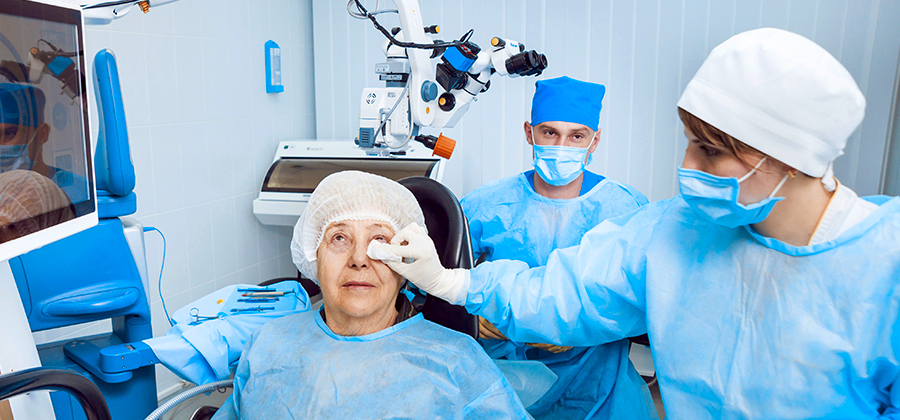
Cataract Surgery in Hyderabad: What’s Actually Happening?
Cataracts happen when the eye’s natural lens slowly turns cloudy. Why? Honestly, it’s mostly age. As we get older, the proteins in the lens of the eye start to break down and clump together. That buildup blocks light from passing through clearly, and the result is blurry or dim vision. Cataracts mostly show up in older adults, but they can also develop because of diabetes, eye injuries, long-term steroid use, and a few other health conditions.
Cataract surgery in Hyderabad means the surgeon takes out the obstructed lens and inserts a clear artificial intraocular lens (IOL). The procedure runs under local anaesthesia, which means just numbing eye drops, no general anaesthesia, no overnight stay. Most patients walk home the same day.
Before the actual surgery, the eye specialist will run a thorough set of eye tests. This step matters more than people realise. The detailed assessment is what tells the doctor exactly which IOL power suits your eye, your lifestyle, and your daily activities. Skipping this step would basically be guesswork.
Modern cataract surgery uses tiny incisions instead of the large cuts that older procedures needed. That single shift, smaller incisions plus better technology, is the reason recovery is so much faster than it used to be. Most patients see substantial improvement within the first few days.
Common Cataract Symptoms
By the time most people walk into a clinic, they’ve usually been dealing with one or more of these for a while:
- Blurry or cloudy vision, like looking through a slightly dirty window
- Difficulty driving at night and discomfort with oncoming headlights
- Halos and glare around bright lights
- Frequent prescription changes that don’t actually help anymore
- Faded or yellow-tinged colour perception
- Sensitivity to bright light and sunshine
- Double vision in one eye
What Causes Cataracts?
Age is the main cause, but not the only one. Cataracts can also be triggered by:
- Diabetes, particularly when blood sugar isn’t well controlled
- Long-term steroid use (oral, inhaled, or as eye drops)
- Smoking and heavy alcohol intake
- Excessive UV exposure over years
- Eye injuries or trauma
- Genetics and family history
An eye specialist at Vasan Eye Care will identify the actual trigger during your evaluation. It matters because some causes change how aggressively the cataract progresses, which feeds into how soon surgery should happen.
Types of Cataract Surgery Available in Hyderabad
The surgical technique chosen depends on your specific eye condition, the density of the cataract, and your overall medical needs. There’s no single best technique that suits everyone. Here are the main options offered at well-equipped centres:
Phacoemulsification (Phaco Surgery)
Phaco is, by a long stretch, the most popular cataract surgery technique today. The surgeon makes a small corneal incision, then uses ultrasound energy to break the cloudy lens into tiny fragments which are gently suctioned out. A foldable IOL slides in through the same opening. The whole procedure feels surprisingly quick, recovery is fast, and stitches usually aren’t needed at all.
Femtosecond Laser-Assisted Cataract Surgery
Femtosecond Laser-Assisted Cataract Surgery, sometimes called FLACS or LACS, uses a laser to make precise corneal cuts and to soften the cataract before removal. It’s a bladeless approach, computer-guided, and adds an extra layer of accuracy that’s particularly useful for premium IOL placements. The cataract laser surgery cost in Hyderabad is naturally on the higher side because of the technology involved, but for selected patients (especially those choosing multifocal or toric IOLs) the precision is genuinely worth it.
Manual Small Incision Cataract Surgery (MSICS)
Manual Small Incision Cataract Surgery uses a slightly larger incision than Phaco, but it’s an excellent option for advanced or rock-hard cataracts where ultrasound alone might struggle. Sounds old-school, but it’s genuinely safe, effective, and reliable. The doctor usually recommends MSICS when Phacoemulsification isn’t the most suitable approach for the specific eye.
Micro Incision Cataract Surgery (MICS)
MICS takes Phaco a step further, with even smaller incisions, often under 2 mm. The smaller the incision, the less the disturbance to the eye, the lower the infection risk, and the faster the visual recovery. For patients searching for the best cataract surgery in Hyderabad, MICS is often the technique of choice because it preserves more of the eye’s natural anatomy and gives a more comfortable post-op experience.
Extracapsular Cataract Extraction (ECCE)
ECCE is a more traditional method, used mainly for very advanced cataracts that the modern techniques can’t safely break apart. It involves a larger incision and usually needs sutures. Less common today, but still has its place for specific complex cases.
Types of Intraocular Lenses (IOLs)
The IOL implanted during surgery is honestly one of the biggest decisions you’ll make. The lens shapes both your visual outcome and a noticeable chunk of the cataract surgery cost in Hyderabad. Here’s how the main IOL options break down:
- Monofocal lenses: the standard IOL, gives clear vision at one distance (usually far). Reading glasses are typically still needed for close-up work.
- Multifocal lenses: designed for both near and far focus, which means a lot less dependence on glasses for daily tasks like reading and driving.
- Toric lenses: specifically designed to correct astigmatism alongside cataract removal. Available in monofocal or multifocal versions.
The ophthalmologist will figure out which IOL suits you best after examining your eyes and asking about your daily activities. There’s no single “premium = better” answer here. The right lens depends on what you actually want from your vision.
Cataract Surgery Cost in Hyderabad
Let’s get to the part most people start with anyway, that is, the money. The cataract surgery cost in Hyderabad isn’t a single fixed number; it varies depending on a handful of practical factors. The cost for cataract surgery may differ depending on the cataract surgery specialists in Hyderabad you choose. At Vasan Eye Care, the cost typically ranges between ₹30,000 and ₹2,15,000 per eye, depending on which technique and lens combination is selected.
Here are the main things that shape the total cost of cataract surgery in Hyderabad:
1. Type of Surgery
Different surgical methods come at different price points:
- Regular cataract surgery uses manual surgical instruments and is the most common, safest, and typically the most affordable option.
- Phacoemulsification (Phaco) uses ultrasound to break up the cloudy lens before removal. Phaco is generally faster and tends to feel more comfortable for the patient.
- Laser-assisted cataract surgery replaces blades with lasers and adds precision, but it’s also more expensive.
2. Lens Choice (IOL)
This is honestly the biggest cost variable. The IOL implanted during surgery represents a sizeable chunk of the bill:
- Monofocal lenses are the standard option. They restore clear vision at one distance, usually far, but reading glasses are typically still part of the package.
- Toric lenses are designed for patients with astigmatism on top of cataracts. They cost more but cover both problems in one go.
- Multifocal lenses or premium IOLs let you see at near and far distances, which significantly cuts down spectacle dependence after surgery.
3. Location and Type of Hospital
Larger hospitals in Hyderabad usually charge more because of advanced resources, 24/7 emergency teams, and a recognised brand. Mid-sized clinics often offer comparable quality at slightly lower prices, while smaller-sized clinics can come in at the lowest end. This isn’t really about safety; it’s more about the kind of experience and accommodation a larger hospital offers.
4. Surgeon’s Experience
More experienced cataract surgery specialists in Hyderabad usually charge a bit more, and that’s mostly because of skill, years in practice, and a strong success record. Experience matters, especially for complex cases, so this isn’t really an area to pinch pennies on.
5. Technology Used
Some clinics use advanced diagnostic systems that map the eye in detail before surgery. Others use femtosecond laser platforms to assist with lens removal. These technologies can push up the cataract eye surgery cost in Hyderabad, but they also bring real precision benefits, particularly when premium IOLs are chosen.
6. Aftercare and Surgical Packages
Some hospitals bundle the post-op visits, medications, and protective glasses into the surgical package, while others bill these separately. Always worth asking upfront what the quoted price actually covers, so there are no surprises later.
Basic cataract procedures with standard lenses are generally more affordable, while premium lenses and laser-assisted techniques push the overall cost up. The consultation usually wraps up with a clear cost breakdown so there are no surprises later. And honestly, price shouldn’t be the only deciding factor; treatment quality, hygiene, surgical skill, and post-op support all matter at least as much.
Insurance and Cashless Cataract Surgery in Hyderabad
Most modern health insurance policies include cataract surgery coverage as standard. Whether your specific policy covers everything depends on a few things, particularly the type of lens you pick and whether your hospital is in the insurer’s network. So a quick check with both your insurer and the hospital before scheduling is genuinely worth doing.
If you’re picking a premium lens like a Multifocal or Toric Lens, the lens upgrade cost may not be fully covered. The counselling team at Vasan Eye Care usually walks you through what’s covered and what’s out-of-pocket before surgery is scheduled. Cashless options are available with most major insurers, and EMI is also offered at select centres.
Why Choose Vasan Eye Care for Cataract Surgery in Hyderabad?
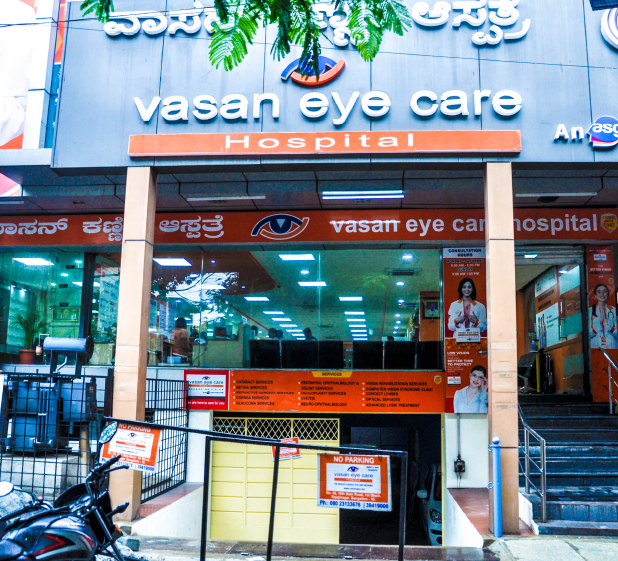
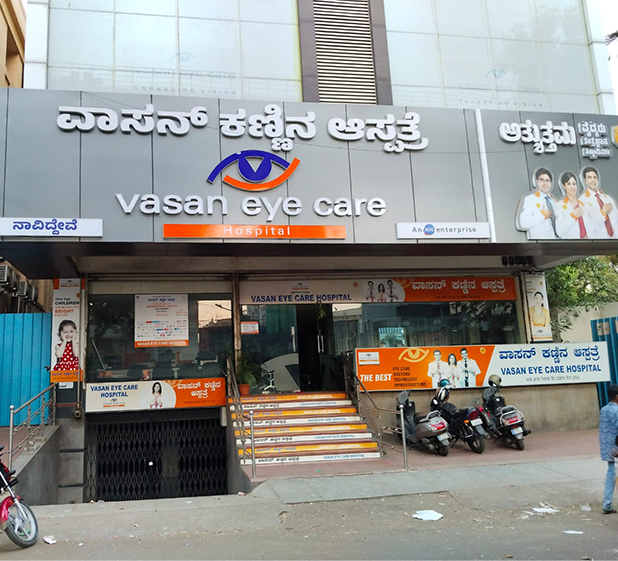
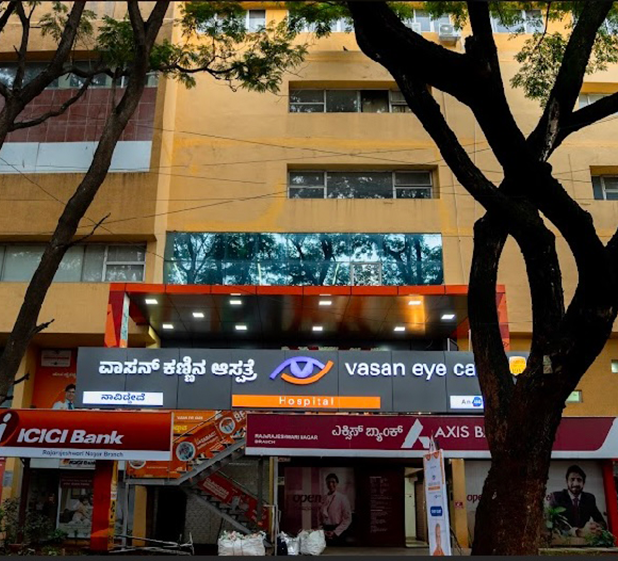
If you’re looking for the best hospital for cataract surgery in Hyderabad, Vasan Eye Care comes up for some practical reasons. With years of experience in eye care, multiple branches across the city, and a team that handles cataract procedures every single day, the hospital has built a steady reputation. Here’s what patients consistently mention:
- Experienced Eye Surgeons in Hyderabad: ophthalmologists trained in both traditional and advanced surgical techniques, with proven track records in both standard and complex cases.
- Advanced Technology: Phacoemulsification, MICS, and Femtosecond Laser-Assisted Cataract Surgery (FLACS), backed by precise diagnostic equipment for accurate lens calculations.
- Customised Lens Options: from Monofocal lenses to Multifocal lenses and Toric lenses, picked based on your lifestyle and eye condition.
- Patient-Centric Care: from the first consultation through to the final follow-up, with clear communication every step of the way.
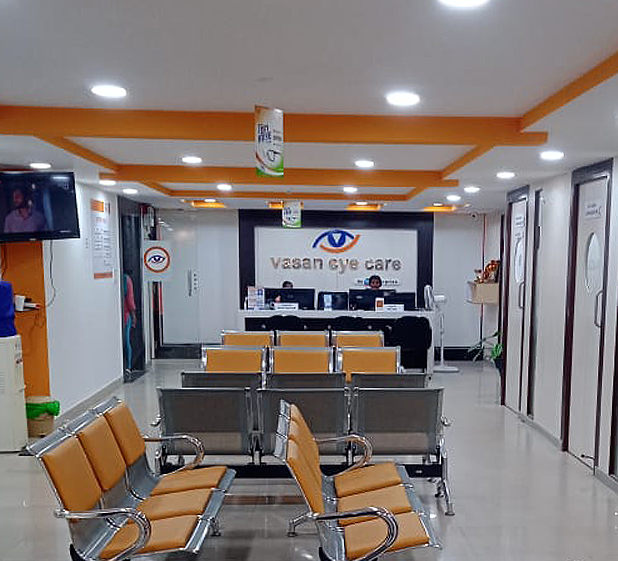
- Modern Infrastructure: advanced operation theatres and well-equipped diagnostic facilities.
- Painless Procedure & Fast Recovery: stitchless techniques that minimise downtime and let you get back to routine quickly.
- Multiple Hyderabad Branches: follow-up visits don’t have to mean a cross-city drive.
Vasan Eye Care Branches Offering Cataract Surgery in Hyderabad
Cataract evaluations and surgeries are available at the following Vasan Eye Care centres in Hyderabad:
- Vasan Eye Care Hyderabad – Dilsukhnagar
- Vasan Eye Care Hyderabad – Himayat Nagar
- Vasan Eye Care Hyderabad – Secunderabad
- Vasan Eye Care Hyderabad – Chanda Nagar
- Vasan Eye Care Hyderabad – Santosh Nagar
- Vasan Eye Care Hyderabad – Kukatpally
Each branch offers comprehensive eye care, including cataract surgery, LASIK, retina services, glaucoma management, and general ophthalmology. To book a consultation or find your nearest branch, call 1800 571 2222.
Cataract Surgery Post-Treatment Care and Recovery
Recovery from cataract surgery is, honestly, easier than most people expect. Most patients head home the same day, no overnight stay needed. Vision after surgery may be slightly blurry for the first day or two, which is completely normal as the eye settles in around the new IOL. Things sharpen up over the next few days.
Standard post-surgery instructions usually include:
- Use the prescribed antibiotic and lubricating eye drops exactly as directed; these prevent infection and reduce inflammation
- Avoid rubbing or pressing on the operated eye, even when it itches
- Keep dust and water out of the eye for the first week
- Wear protective sunglasses outdoors, especially in bright sunlight
- Skip heavy lifting, bending, and strenuous activity for a few days
- Avoid swimming for at least a couple of weeks
Mild discomfort, itching, or a gritty sensation is normal in the first few days. Eye drops handle most of it. If you experience severe pain, sudden vision loss, or constant eye redness, contact your doctor straight away; that’s not the kind of thing to ignore.
Follow-up visits are scheduled at standard intervals to check healing progress and confirm the eye is recovering on track. Don’t skip these; they’re how problems get caught early.
What to Expect After Cataract Surgery in Hyderabad
Knowing what’s coming after surgery makes the whole process feel less stressful. Here’s what most patients experience:
- Better vision: removing the cloudy lens means colours look more vivid and details look sharper, sometimes within hours
- Temporary sensitivity: your eyes may be sensitive to bright light for a few days; sunglasses help
- Gradual stabilisation: vision continues to settle over a few weeks while the eye finishes healing
- Glasses update: you may need a fresh glasses prescription once the eye has fully healed, usually after 3 to 4 weeks
Most people are back to normal activities after two days of rest, although intense physical activities should wait several days. The cataract surgery patients in Hyderabad genuinely benefit from being able to find local doctors easily for any post-op concerns, which makes the whole recovery feel less scary.
Most patients return to normal life within one week. Complete recovery, with the eye fully stabilised, takes about 3 to 4 weeks. A common question that comes up is, “can a cataract come back?” Strictly speaking, no. The natural lens has been removed, so a cataract cannot regrow. The chances of getting a cataract back in the same lens are zero.
Post-Operative Care Tips
Healing tends to go smoothly when the basics are followed properly. The practical things that genuinely matter:
- Don’t touch or put pressure on the operated eye
- Follow the eye drop prescription schedule strictly, on time, every time
- Wear protective glasses according to the doctor’s instructions
- Avoid swimming or letting dust contact the eye for several weeks
- Skip heavy lifting and bending in the first few days after surgery
- Show up to all scheduled follow-up visits, even if everything feels fine
Simple precautions like these make a noticeably bigger difference to recovery than people realise.
Book Your Cataract Consultation in Hyderabad
If you or someone in the family is dealing with blurred vision, glare sensitivity, or trouble managing daily tasks because of cataracts, get an evaluation done sooner rather than later. Early diagnosis usually translates into a simpler procedure and faster recovery. Visit your nearest Vasan Eye Care centre in Hyderabad or call 1800 571 2222 to schedule a consultation.

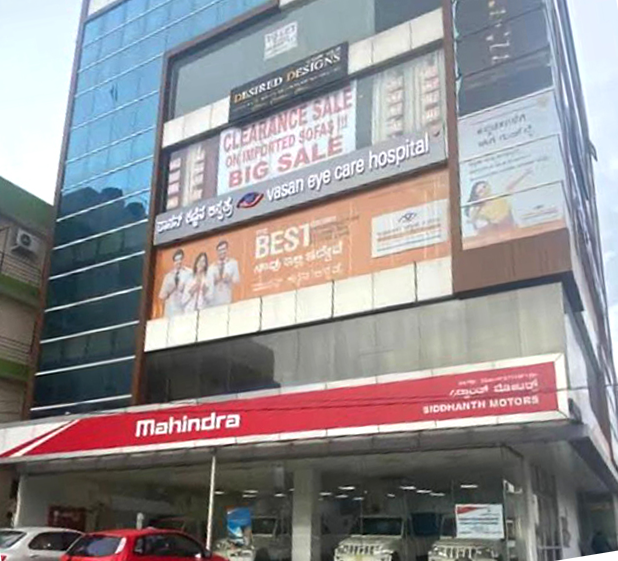
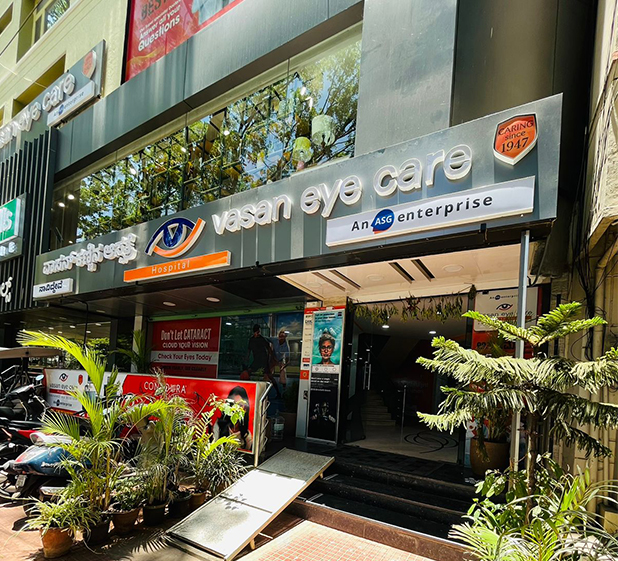
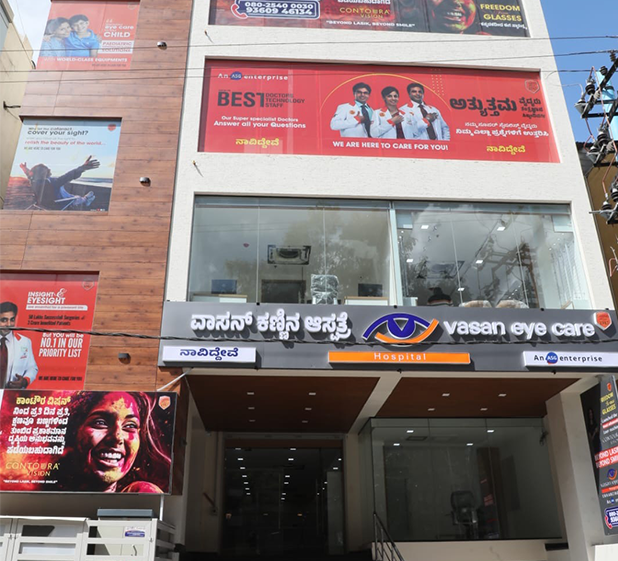
Why Choose Vasan Eye Care

Centres
175 +

Patients treated
5 Cr+

Cataract surgeries
8 L+

LASIKs
5 L+












Frequently Asked Questions (FAQs) – Cataract Surgery in Bangalore
Cataract surgery is a procedure where the surgeon removes the eye’s natural lens, which has clouded over with age, and inserts a clear artificial intraocular lens (IOL) in its place. It’s one of the most performed surgeries in eye care and helps patients regain sharp, clear vision.
The actual procedure takes around 20 to 30 minutes per eye. Almost all patients head home the same day, often within a few hours of surgery.
No. The procedure is done under local anaesthesia, usually just numbing eye drops. Most patients describe feeling mild pressure, but no actual pain. Some mild discomfort may show up afterwards, but it settles quickly.
At Vasan Eye Care, the cataract surgery cost in Hyderabad typically ranges between ₹30,000 and ₹2,15,000 per eye. The final figure depends on the surgical method, the IOL chosen, and the technology used. The medical team gives a complete cost breakdown after the eye examination.
Light activities like reading, walking, and watching TV can usually resume within two to three days. Strenuous exercise, heavy lifting, and swimming should wait a week or so, or until the doctor gives the go-ahead.
Some patients still need glasses depending on their eye condition and the IOL chosen. Monofocal lens patients usually need reading glasses; Multifocal lens patients often don’t. Your vision is reassessed once the eye has fully healed.
Doctors typically operate on one eye at a time. The second eye is scheduled after the first has healed properly, usually a week or two later. This is the safer approach and gives the brain time to adapt to the new IOL.
Most patients regain functional vision within a few days. Full healing, with the eye completely stabilised, takes about 3 to 4 weeks.
Cataract surgery has an excellent safety record, but like any procedure, it carries small risks: infection, swelling, posterior capsule opacification, or pressure changes. These are uncommon and almost always manageable when caught early through follow-up visits.
Surgery becomes necessary when cataracts start interfering with daily activities like reading, driving, or recognising faces, and stronger glasses no longer help. The eye examination at Vasan Eye Care confirms whether surgery is the right next step.
Strictly no. Once the natural lens has been removed, a cataract cannot regrow in the same lens. The chances of getting a cataract back are zero. Some patients later develop posterior capsule opacification (PCO), which is sometimes confused with a returning cataract, but that’s easily fixed with a simple outpatient laser procedure called YAG capsulotomy.
Yes, most health insurance plans and government schemes cover cataract surgery as standard. Coverage for premium lenses like Multifocal or Toric IOLs may vary depending on the policy. The counselling team at Vasan Eye Care helps with insurance approvals and cashless claims.
In most cases, yes. Cataract surgery significantly improves vision by removing the clouded lens and replacing it with a clear IOL. Final outcomes can vary slightly depending on pre-existing conditions like macular degeneration or diabetic retinopathy, which the doctor will discuss upfront.
For most patients, Phacoemulsification or MICS (Micro Incision Cataract Surgery) offer the best balance of safety, recovery speed, and cost. Vasan Eye Care offers both, along with Femtosecond Laser-Assisted Cataract Surgery for patients who want the highest precision.
If you’re considering cataract surgery in Hyderabad, getting a proper medical evaluation early on really does help. Knowing the treatment steps, recovery timeline, and the cataract surgery cost in Hyderabad upfront makes the whole journey feel a lot more manageable.