
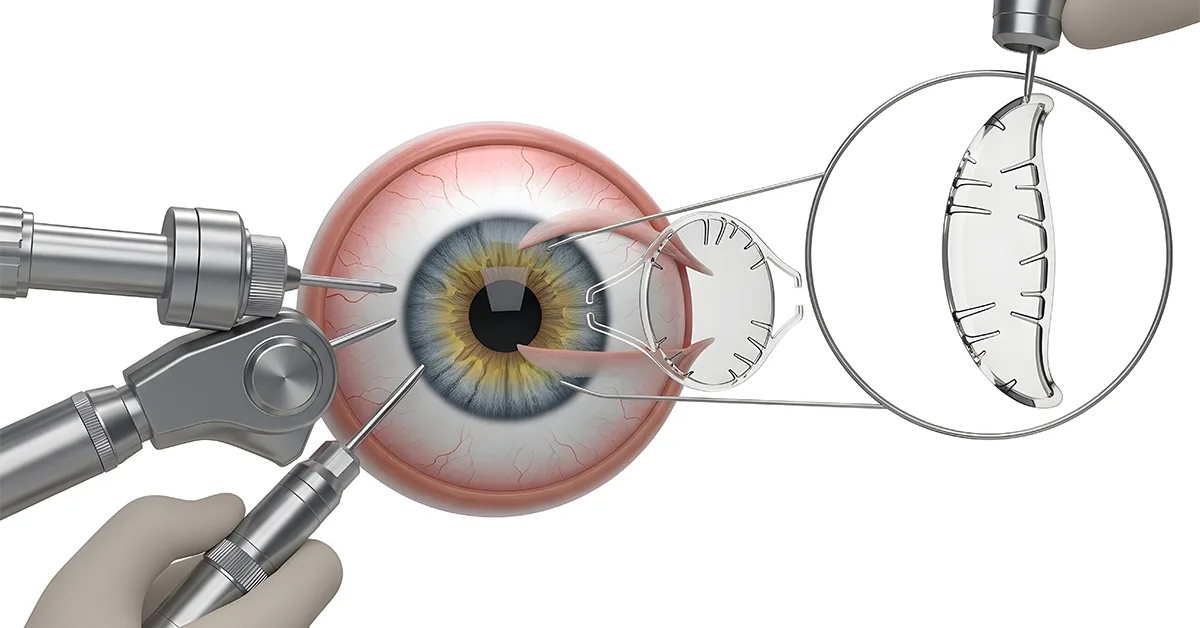
Secondary lens procedures usually come up after something hasn’t gone as planned the first time. In some cases, an iol implant wasn’t placed during cataract surgery. In others, the lens may have shifted over time, affecting vision.
By the time this discussion happens, patients have already experienced one procedure. So the questions tend to be more direct, less about “what is this?” and more about “what happens next?”
What Is Secondary IOL Implant Surgery?
A secondary iol implant surgery refers to placing or repositioning an artificial lens after the initial surgery.
This is usually considered when:
- The natural lens was removed but no artificial lens was placed
- The earlier lens has moved out of position
- The support structure inside the eye is weak
Unlike routine cataract procedures, these cases need a slightly different approach. The lens may be fixed in a different part of the eye depending on what support is available.
A question that often comes up is: Why wasn’t everything done in the first surgery itself? Sometimes the eye conditions at that time don’t allow safe placement.
Why Patients End Up Needing a Second Implant
Not every cataract surgery leads to this situation. But when it does, it’s usually because of stability or positioning issues.
Some patients notice that vision feels uneven or keeps shifting. Others may not have received a lens at all and rely on thick glasses.
There’s also a moment many patients describe, they expected things to settle after the first surgery, but something still feels off. That’s often when this option is discussed.
Benefits of Secondary IOL Implant Eye Procedures
A properly planned iol implant eye procedure can bring noticeable improvement in daily vision.
Some of the expected benefits include:
- Better clarity compared to not having a lens
- Reduced need for high-power glasses
- More stable focus during daily activities
- Improved visual comfort
A common question sounds familiar in clinics: Will this fix everything completely? It usually improves vision significantly, but the final outcome still depends on the health of other parts of the eye.
Possible IOL Implant Complications
Every surgical procedure has its risks, and iol implant complications are part of the conversation.
These may include:
- Slight lens tilt or shift
- Rise in eye pressure
- Inflammation during healing
- Rare retinal issues
What tends to surprise patients is that this surgery can be a bit more detailed than the first one. That doesn’t mean poor outcomes, it just means more planning is involved.
Another concern patients raise is: Is this riskier than my earlier surgery? It can be more technically demanding, but outcomes are often stable when done in experienced hands.
How Doctors Decide the Type of IOL Implant Surgery
The approach for iol implant surgery depends on what structures are still intact inside the eye.
Doctors usually look at:
- Whether the capsular bag is still usable
- Corneal condition
- Depth of the anterior chamber
- Retinal health
Based on this, the lens may be placed in front of the iris, attached to the iris, or fixed to the sclera.
In real consultations, patients often realise that there isn’t a single standard method. Each eye needs its own plan.
What Recovery Feels Like After Surgery
Recovery after secondary implantation tends to be slightly slower than routine cases, but still manageable.
Patients may notice:
- Mild irritation for a few days
- Vision that clears gradually
- Sensitivity to light initially
Follow-up visits help track healing and adjust treatment if needed.
A practical question that comes up often is: How soon can I get back to work? In most cases, within a few days, though it varies from person to person.
Also Read: Latest Advances in Cataract Surgery Technology 2026
Choosing the Right Eye Specialist Hospital
Procedures like this are usually done in centres that handle complex cataract cases regularly. Most eye specialist hospitals have both the imaging equipment and the experience with surgery that you need.
Patients at Vasan Eye Care usually have a thorough evaluation before they decide to have a second lens implanted. This helps choose the safest and best way to do things.
There’s also a noticeable shift in how patients feel once they understand the plan. Clarity tends to reduce anxiety more than anything else.
Frequently Asked Questions (FAQs)
It is a procedure to place or adjust an artificial lens after an earlier surgery.
If the first lens was not placed or has shifted, a second procedure may be needed.
Yes, including pressure changes, inflammation, or lens positioning issues.
Most patients resume normal activities within a few days, with follow-ups.
Vision usually improves, but results depend on overall eye health.
Treatments We Offer
Eye Treatments | Cataract Surgery | LASIK Eye Surgery | Squint Eye Treatment | Retinal Diseases | EPI LASIK | Corneal Services | Refractive Surgery | Oculoplasty Surgery | Dry Eye Treatment | Contoura Vision Surgery | Anti VEGF Agents Treatment | Photorefractive Keratectomy | Vitrectomy Surgery | Epi Contoura Eye Surgery | Customised LASIK Surgery | Retinal Laser Photocoagulation Treatment | Implantable Collamer Lens |Cataract Surgery in Bangalore | Cataract Surgery in Hyderabad | Cataract Surgery Chennai | LASIK Eye Surgery in Hyderabad | LASIK Eye Surgery in Bangalore | LASIK Eye Surgery in Chennai | Retina Services in Hyderabad | Retina Services Chennai | Squint Eye Treatment in Bangalore | Squint Eye Treatment in Hyderabad | Squint Eye Treatment in Chennai | Glaucoma Treatment in Bangalore | Glaucoma Treatment in Chennai | Glaucoma Treatment in Hyderabad
Eye Conditions We Treat
Glaucoma Treatment | Orbital Trauma | Macular Hole | Retinopathy of Prematurity | Uveitis | Traumatic Treatment | Retinal Detachment | Cataract Diseases | Posterior Subcapsular Cataract | Diabetic Retinopathy | Rosette Cataract Surgery | Squint Eye Disease