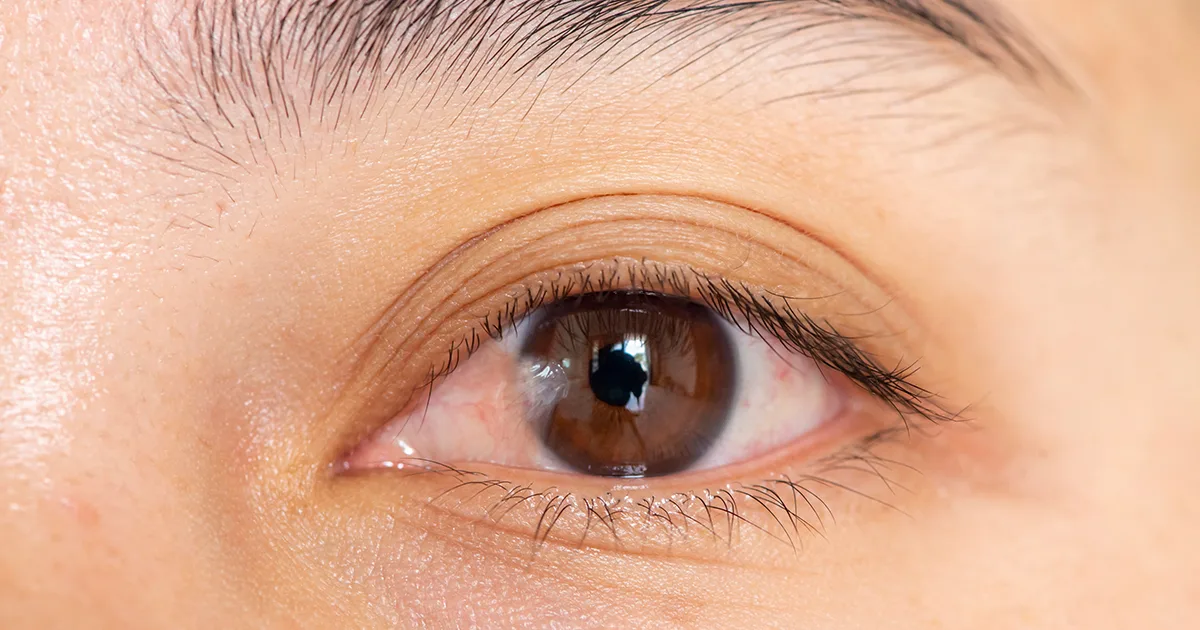
Outdoor workers in sunny, dusty parts of India often notice a small fleshy growth in the corner of the eye, near the nose. It starts slowly, often painless, and grows over months or years. This is nasal pterygium, sometimes called Surfer’s eye, and it is a very common eye condition in India’s climate.
Most small pterygia are harmless and need only simple management. Larger ones can affect vision and comfort, and a few need surgical removal.
This guide walks you through what nasal pterygium is, why it forms, how it is diagnosed, and what treatment options exist.
What Is Nasal Pterygium (Surfer’s eye)?
A pterygium is a benign, slowly growing fibrovascular tissue that extends from the conjunctiva (the thin tissue covering the white of the eye) onto the cornea (the clear front of the eye). When it grows on the nasal side of the eye, it is called a nasal pterygium (Surfer’s eye). It is the most common location because the nose shields the temporal side while the nasal side is more exposed to sunlight.
It is not a cancer and rarely threatens vision in its early stages. With time, it can:
- Grow larger
- Extend further onto the cornea
- Cause astigmatism
- Produce chronic irritation and redness
- Affect appearance
How Is Nasal Pterygium Different From Pinguecula?
Both are sun- and dust-related conjunctival changes. The differences matter for treatment.
| Feature | Pinguecula | Pterygium |
| Location | On the conjunctiva, near the cornea but not on it | Starts on conjunctiva and extends onto the cornea |
| Appearance | Small, raised, yellowish patch | Wing-shaped, fleshy, with blood vessels |
| Vision impact | Usually none | May cause astigmatism and vision disturbance |
| Growth | Usually static | May grow over time |
| Treatment | Mostly observation and lubricants | Observation, lubricants, or surgery |
What Causes Nasal Pterygium?
1. Long-term UV exposure
The most important factor. Outdoor work in bright sunlight, especially in tropical and coastal regions, raises the risk.
2. Dust and wind exposure
Occupational exposure to dust, sand, and wind promotes chronic irritation.
3. Chronic dry eye
A persistently dry eye surface is more prone to pterygium formation.
4. Genetics
A family history raises individual risk.
5. Chronic irritation
Long-term exposure to chemicals, smoke, or allergens.
6. Age
Most cases appear between 20 and 40 years of age and slowly progress.
7. Gender and occupation
More common in men, particularly those in outdoor occupations.
What Are the Symptoms?
Small pterygia often cause no symptoms. As the lesion grows, common symptoms include:
- A visible pink, fleshy triangle in the nasal corner of the eye
- Mild redness and irritation
- Gritty or foreign body sensation
- Watering eyes
- Burning or stinging
- Light sensitivity
- Blurred vision if the pterygium extends onto the cornea
- Astigmatism in moderate to large cases
- Cosmetic concern
How Is Nasal Pterygium Diagnosed?
Diagnosis is usually straightforward at an eye specialist hospital.
- Slit-lamp examination of the conjunctiva and cornea
- Measurement of the pterygium’s extent onto the cornea
- Photograph for size monitoring
- Corneal topography to assess induced astigmatism
- Tear film assessment for associated dry eye
- Rare cases may need a biopsy if the appearance is atypical
What Are the Complications of Nasal Pterygium?
- Astigmatism
- Progressive vision loss if the lesion reaches the central cornea
- Chronic dry eye
- Cosmetic disturbance
- Rare recurrence of aggressive cases after surgery
- Scarring on the cornea if untreated in aggressive forms
Grading of Nasal Pterygium
Clinically, pterygia are often graded by extent:
| Grade | Description |
| 1 | Confined to the conjunctiva, near the cornea |
| 2 | Reaches the edge of the cornea (limbus) |
| 3 | Extends past the limbus but does not cover the pupil |
| 4 | Approaches or covers the pupil |
The grade helps decide whether to observe, use lubricants, or consider surgery.
How Is Nasal Pterygium Treated?
Treatment is tailored to size, symptoms, and rate of growth.
1. Observation
Small, static pterygia with no symptoms usually need only periodic review.
2. Lubricating drops
Preservative-free artificial tears reduce dryness and irritation, and can ease everyday discomfort. Supportive eye treatments such as lubricants, mild anti-inflammatory drops, and lid hygiene can soften the inflamed look.
3. Mild anti-inflammatory drops
Short courses of NSAID or mild steroid drops, under an eye doctor’s supervision, can reduce redness in inflamed pterygia. Long-term steroid use must be avoided due to risks.
4. Sun and dust protection
UV-rated wraparound sunglasses, wide-brimmed hats, and protective goggles for outdoor work are cornerstone measures.
5. Surgical removal
Considered when:
- Vision is affected by astigmatism or encroachment onto the pupil
- The pterygium is growing rapidly
- Cosmesis is significantly affected
- Chronic inflammation does not settle
Common surgical techniques include:
- Bare sclera excision (older technique; higher recurrence)
- Conjunctival autograft (current standard; lower recurrence, uses tissue from the patient’s own eye)
- Amniotic membrane grafting
- Mitomycin C adjunct use in selected cases
Surgery is done under local anaesthetic and usually takes 30 to 45 minutes.
6. Post-operative care
- Antibiotic and steroid drops for several weeks
- Sunglasses for continued UV protection
- Avoiding dusty environments during healing
- Regular follow-up to detect recurrence early
Can Nasal Pterygium Come Back?
Yes, recurrence is possible, particularly with older techniques or aggressive forms. Conjunctival autograft significantly reduces recurrence. Risk is higher in:
- Young patients
- Those with very aggressive pterygium
- Continued sun exposure after surgery
- Inadequate post-operative care
Prevention Tips
- Wear UV-rated wraparound sunglasses outdoors
- Use a wide-brimmed hat or helmet visor
- Avoid long hours in bright midday sun
- Wear protective goggles in dusty, sandy, or windy environments
- Manage dry eye early
- Attend regular eye checks if you work outdoors
- Avoid rubbing the eyes hard
- Treat chronic allergic conjunctivitis properly
Nasal Pterygium in Special Situations
Outdoor workers
Construction workers, farmers, drivers, fishermen, and street vendors are particularly at risk. A pair of UV-rated safety glasses is an easy, high-value protective step.
Contact lens users
Dry, irritated eyes from long lens wear can worsen a small pterygium. Discuss fit, wear time, and lubrication with your eye doctor.
Women in kitchen smoke
Traditional kitchens with smoke exposure can raise risk. Better ventilation and eye protection help.
Athletes and cyclists
Wraparound UV-rated sport glasses protect against both sun and wind.
When Should You See a Doctor?
Book an appointment at an eye hospital if:
- You notice a growth in the corner of your eye
- A known pterygium is growing
- Redness or irritation is persistent
- Vision is blurring
- Glasses prescription is changing quickly
- Cosmesis is affecting confidence
- Previous surgery has shown signs of recurrence
Nasal Pterygium Care at Vasan Eye Care
Vasan Eye Care has been looking after patients across India since 2002, now as part of ASG Enterprises. With more than 150 super-speciality centres, 500+ ophthalmologists, and over 5,000 trained eye care staff, the team manages pterygium cases at all stages, from early lubricant support to advanced surgical techniques such as conjunctival autograft. A typical visit includes careful measurement, photo documentation, and a plan tailored to size and symptoms.
Key Takeaways
- Nasal pterygium is a wing-shaped growth from the conjunctiva onto the cornea, near the nose.
- It is driven by UV exposure, dust, wind, chronic dry eye, and genetic factors.
- Small, stable pterygia need only observation, sun protection, and lubricants.
- Larger or growing ones may need surgery, often with conjunctival autograft.
- UV-rated sunglasses and protective eyewear are the most important prevention measures.
- Recurrence is possible; continued sun protection after surgery matters.
Frequently Asked Questions
Nasal pterygium is a benign, wing-shaped fibrovascular tissue that grows from the conjunctiva on the nose side of the eye onto the cornea. It develops slowly and is closely linked with long-term UV exposure, dust, wind, and chronic dry eye. Early lesions cause no symptoms; larger ones may cause redness, irritation, astigmatism, or blurred vision.
Small pterygia are watched with lubricating drops and sun protection. Symptomatic or inflamed lesions may need short courses of anti-inflammatory drops. Surgical removal is considered when the pterygium affects vision, grows rapidly, or disturbs appearance. Modern techniques such as conjunctival autograft reduce recurrence. Continued sun protection after surgery lowers the chance of return.
Outdoor workers exposed to long hours of sunlight and dust are at the highest risk. Construction workers, farmers, drivers, and fishermen make up a large share of cases in India. Men are more commonly affected than women. Age between 20 and 40, family history, chronic dry eye, and certain allergic eye conditions also raise the risk.
Yes, in moderate to large cases. The growth can induce astigmatism and distort vision. If the pterygium extends onto the central cornea, it can reduce clarity further. Chronic irritation and dryness can also make the eye feel uncomfortable. Regular eye checks catch these changes early and allow sensible decisions about when to operate.
Reviewed by the clinical team at Vasan Eye Care.
References
- American Academy of Ophthalmology. Pterygium. https://www.aao.org/eye-health/diseases/what-is-pterygium
- National Center for Biotechnology Information. Pterygium. https://www.ncbi.nlm.nih.gov/books/NBK459238/
- National Eye Institute. Eye Conditions. https://www.nei.nih.gov/learn-about-eye-health
Treatments We Offer: Eye Treatments | Cataract Surgery | LASIK Eye Surgery | Squint Eye Treatment | Retinal Diseases | EPI LASIK | Corneal Services | Refractive Surgery | Oculoplasty Surgery | Dry Eye Treatment | Contoura Vision Surgery | Anti VEGF Agents Treatment | Photorefractive Keratectomy | Vitrectomy Surgery | Epi Contoura Eye Surgery | Customised LASIK Surgery | Retinal Laser Photocoagulation Treatment | Implantable Collamer Lens |Cataract Surgery in Bangalore | Cataract Surgery in Hyderabad | Cataract Surgery Chennai | LASIK Eye Surgery in Hyderabad | LASIK Eye Surgery in Bangalore | LASIK Eye Surgery in Chennai | Retina Services in Hyderabad | Retina Services Chennai | Squint Eye Treatment in Bangalore | Squint Eye Treatment in Hyderabad | Squint Eye Treatment in Chennai | Glaucoma Treatment in Bangalore | Glaucoma Treatment in Chennai | Glaucoma Treatment in Hyderabad
Eye Conditions We Treat: Glaucoma Treatment | Orbital Trauma | Macular Hole | Retinopathy of Prematurity | Uveitis | Traumatic Treatment | Retinal Detachment | Cataract Diseases | Posterior Subcapsular Cataract | Diabetic Retinopathy | Rosette Cataract Surgery | Squint Eye Disease