
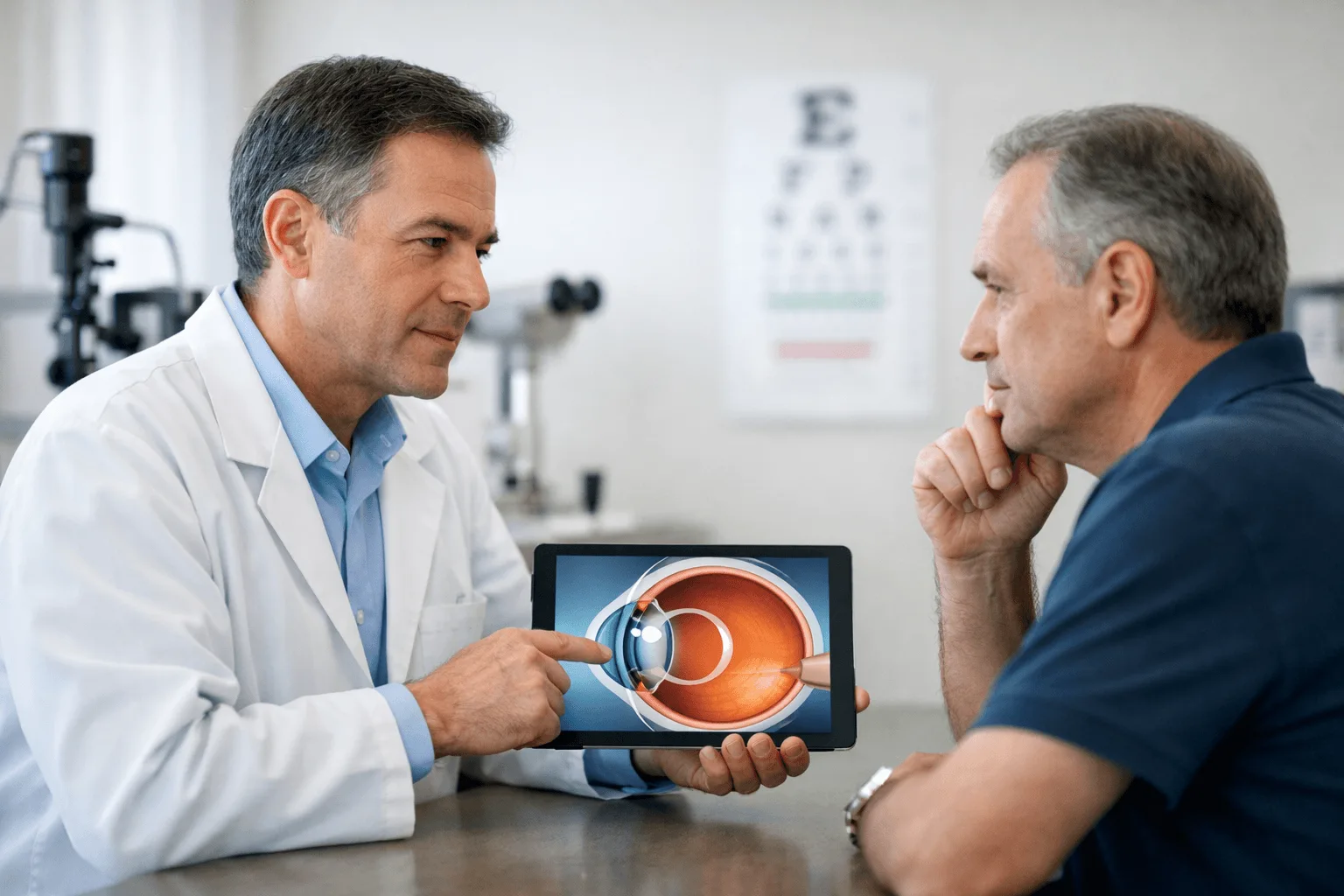
Cataract surgery is now much more accurate than it used to be, but the lens that replaces your natural one is still the most important thing that affects how you see afterward. It’s not just about how clear the intraocular lens is; it also affects how you read, drive, and do everyday tasks without glasses.
Many patients assume all lenses are the same. They’re not. The choice depends on your lifestyle, eye condition, and what kind of vision you expect after surgery.
Understanding Your Options: Which Intraocular Lens Is Best?
The natural lens in your eye is removed during cataract surgery and replaced with an artificial intraocular lens (IOL). These lenses differ in how they focus light.
Here are the common types:
- Monofocal lenses – Provide clear vision at one distance (usually far). Glasses are often needed for reading.
- Multifocal lenses – Designed to help with both near and distance vision, though some patients notice halos at night.
- Toric lenses – Correct astigmatism along with cataracts.
- Extended depth of focus (EDOF) lenses – Offer a smoother range of vision with fewer visual disturbances than multifocal lenses.
So which intraocular lens is best? In most cases, there isn’t a universal answer. A person who spends hours reading may prefer something different from someone who drives frequently at night.
Factors That Decide the Best Intraocular Lens for You
Lens selection usually comes down to a mix of clinical findings and lifestyle preferences.
During evaluation, doctors look at:
- Corneal curvature (measured using keratometry)
- Axial length of the eye (via biometry)
- Presence of astigmatism
- Existing conditions like glaucoma or diabetic retinopathy
But beyond test results, daily habits matter just as much. Someone who uses digital screens all day may prioritise intermediate vision. Others may simply want to reduce dependence on glasses.
A common question comes up here: “Will I completely stop using glasses after surgery?” The honest answer – sometimes yes, often no. It depends on the lens type and your expectations.
How to Identify Best Intraocular US Lens vs Indian Options
Patients often ask about imported lenses. The term “US lens” is commonly used, but it doesn’t automatically mean better performance.
To understand how to identify best intraocular US lens options, look at:
- Optical design and material quality
- Clinical track record
- Surgeon’s familiarity with the lens
- Regulatory approvals (FDA, CE, CDSCO)
India also has access to globally recognised manufacturers. The best intraocular lens company in India often distributes international brands alongside locally manufactured lenses that meet strict standards.
In practice, surgeons tend to recommend lenses they’ve worked with extensively. Familiarity usually leads to more predictable outcomes than simply choosing a lens based on origin.
Choosing Based on Lifestyle, Not Just Technology
This is where conversations in the clinic often become more personal.
A patient who enjoys night driving may find multifocal lenses slightly uncomfortable due to glare or halos. Someone else may barely notice these effects.
Another frequent question: “Is the most expensive lens always the best intraocular lens?” Not necessarily. Higher cost often reflects advanced design, but it doesn’t guarantee it will suit your eyes.
In many cases, a well-chosen monofocal lens provides sharper contrast and fewer side effects than premium options. The “best” choice tends to align with what you actually do every day.
What Surgeons Look For Before Recommending a Lens
Before suggesting the best intraocular lens, ophthalmologists rely on a combination of tests and clinical judgment.
Key pre-surgery assessments:
- Optical biometry (IOL Master test) to calculate lens power
- Topography to map corneal shape
- Tear film evaluation, since dry eye can affect visual outcomes
One thing that becomes clear during consultations—no two eyes behave exactly the same, even within the same person.
That’s why lens selection isn’t rushed. It’s usually discussed after measurements are confirmed and expectations are clearly understood.
Also Read: Monofocal vs Multifocal Lens After Cataract Surgery: Which Is Better, Really?
Role of Experience in Choosing the Best Intraocular Lens
Technology matters, but experience often shapes outcomes just as much.
At centres like Vasan Eye Care, discussions around lens choice tend to be practical. The focus stays on matching the lens to the patient rather than promoting a specific type.
You’ll often notice that recommendations vary slightly between patients, even when their cataracts look similar. That usually reflects differences in lifestyle, corneal shape, or tolerance to visual effects like glare.
Final Thoughts on Making the Right Choice
Choosing the best intraocular lens is less about finding a “top” product and more about finding the right fit for your eyes and routine. A good eye doctor consultation usually answers most doubts before surgery, leaving fewer surprises afterward.
Frequently Asked Questions (FAQs)
1. Which intraocular lens is best for cataract surgery?
There isn’t one best choice. The right lens for you will depend on your vision needs, the health of your eyes, and whether you want to wear glasses less often.
2. How to identify the best intraocular US lens?
Don’t just look at the country of origin. Look at the clinical results, the approvals, and whether your surgeon has worked with that lens before.
3. Is the best intraocular lens company in India comparable to global brands?
Many Indian distributors sell lenses that are approved for use around the world. When you get them from well-known companies, the quality standards are usually the same.
4. Will I need glasses after getting the best intraocular lens?
Often, yes for certain tasks like reading. Premium lenses may reduce this need but may come with trade-offs.
5. How long does an intraocular lens last?
An IOL is designed to last a lifetime and typically does not need replacement.
Treatments we Offer: Cataract Surgery | Cataract Surgery in Bangalore | Cataract Surgery in Hyderabad | Cataract Surgery Chennai
Eye Conditions We Treat: Cataract Diseases | Posterior Subcapsular Cataract | Rosette Cataract Surgery