
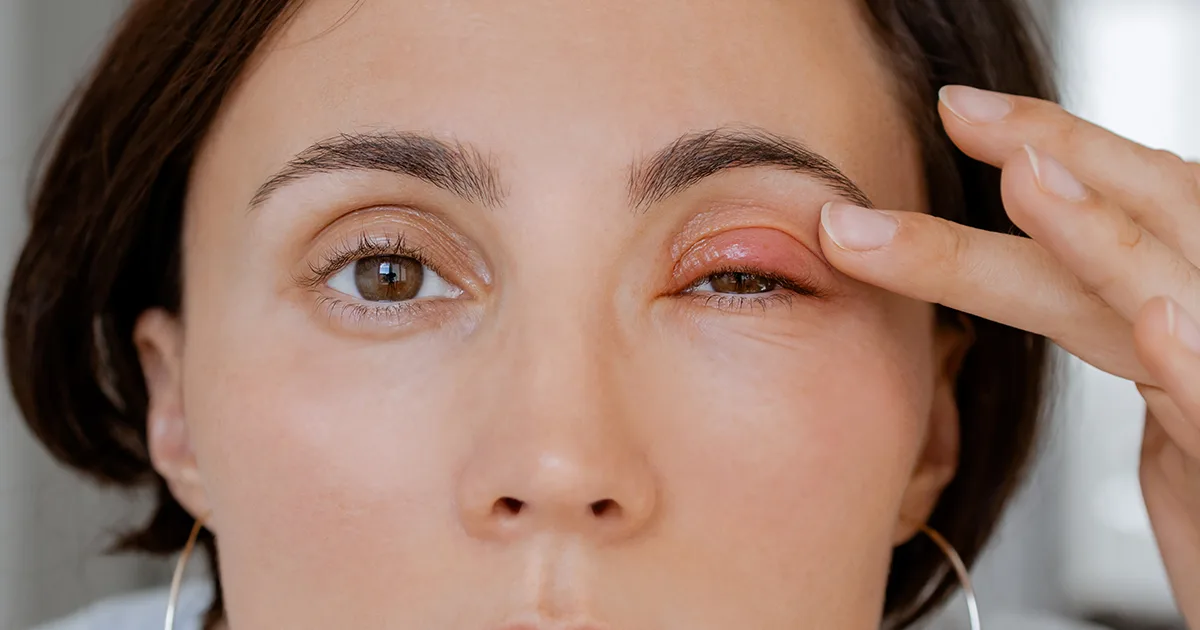
A lump on the eyelid catches your attention fast. Is it hot, tender, and growing over two days? Or firm, painless, and present for weeks? The answer tells you whether you have a stye, a chalazion, or something in between. Both are common, both sit on the eyelid, and both get confused for each other, but their causes and treatments are quite different.
This guide walks you through the key differences, how to tell them apart, and how each one is managed.
What Is a Stye?
A stye, also called a hordeolum, is an acute infection of one of the small oil or sweat glands along the eyelid margin. It usually:
- Develops over a day or two
- Is very tender
- Looks red and pimple-like
- Often has a yellow head
- Sits close to the lash line
- Resolves in 1-2 weeks with warm compresses
What Is a Chalazion?
A chalazion is a blocked meibomian gland (an oil gland deeper inside the eyelid) that has developed into a firm, non-infective cyst. It usually:
- Develops slowly over weeks
- Is painless in most cases
- Looks like a firm bump further up on the lid
- Does not usually have a yellow head
- Can persist for months without treatment
- May need a minor clinic procedure to remove
Chalazion vs Stye at a Glance
| Feature | Stye | Chalazion |
| Cause | Bacterial infection | Blocked oil gland |
| Location | Near the lash line | Further up on the eyelid |
| Pain | Painful, tender | Usually painless |
| Onset | Fast, 1-2 days | Slow, weeks |
| Appearance | Red, pimple-like, often yellow head | Firm, round, smooth |
| Time course | Resolves in 1-2 weeks | May persist for months |
| Usual treatment | Warm compresses, sometimes antibiotics | Warm compresses, sometimes incision |
| Recurrence | Common in some patients | Common with meibomian gland disease |
How Do You Tell a Stye From a Chalazion?
Ask three questions.
1. Is it painful?
- Painful, tender: more likely a stye
- Painless, just a lump: more likely a chalazion
2. How fast did it appear?
- Within a day or two: stye
- Over weeks: chalazion
3. Where is it?
- Right at the lash line: stye
- Further back on the lid: chalazion
If you cannot decide, a short visit to an eye specialist hospital can confirm within minutes.
Symptoms to Watch
Stye symptoms
- Red, painful lump at the lid edge
- Eyelid swelling
- Watery or sticky discharge
- Gritty feeling
- Mild light sensitivity
- Yellow pus head at the tip
- Sometimes both eyes
Chalazion symptoms
- Firm, round bump inside the upper or lower lid
- Usually painless
- Occasional mild blur if pressing on the cornea
- Sometimes cosmetic concern
- Occasionally mildly tender if inflamed
What Causes a Stye?
- Bacterial infection (usually Staphylococcus aureus)
- Poor eyelid hygiene
- Eye makeup left overnight
- Rubbing the eyes with unwashed hands
- Blepharitis as a background condition
- Contact lens misuse
- Skin conditions like acne, rosacea, dandruff
- Diabetes
What Causes a Chalazion?
- Blocked meibomian gland
- Chronic blepharitis
- Meibomian gland dysfunction (MGD)
- Rosacea
- Incomplete resolution of a previous stye
- Chronic dry eye
- Poor lid hygiene
How Are They Diagnosed?
Both are diagnosed on examination. An eye doctor will:
- Look at the lump’s size, position, and firmness
- Check for redness, pus, or drainage
- Examine the lid margins for blepharitis
- Assess the other eye
- Palpate gently to determine tenderness
- Consider other causes if the lump is atypical
How Is a Stye Treated?
1. Warm compresses
A clean warm cloth on the closed eye for 10-15 minutes, three to four times a day, is the first-line approach.
2. Eyelid hygiene
Gentle cleaning with a clean, damp cotton pad or diluted baby shampoo if recommended.
3. Antibiotic ointment or drops
Prescribed when the stye is not settling or appears spreading.
4. Oral antibiotics
For severe or spreading styes with fever.
5. Incision and drainage
For persistent styes that do not respond to conservative care.
6. Avoid squeezing
Squeezing worsens infection and risks spread.
How Is a Chalazion Treated?
1. Warm compresses
Ten to fifteen minutes, three or four times daily, for at least 2 to 4 weeks. Softens the blocked oil and helps drainage.
2. Gentle lid massage
After the warm compress, gentle pressure along the lid margin can encourage drainage.
3. Lid hygiene
Daily cleaning of the lash line.
4. Topical antibiotics
Used if mild inflammation is present.
5. Steroid injection
A small amount of steroid injected into the chalazion can settle inflammation and shrink it in selected cases.
6. Incision and curettage
The most common surgical option. Performed in a clinic under local anaesthetic. The chalazion is opened from inside the lid and the contents removed. Minor, quick, and usually very effective.
7. Biopsy
Recurrent or atypical chalazia may need a biopsy to rule out rare causes.
Supportive eye treatments including lubricating drops and blepharitis care reduce recurrence.
Can a Stye Turn Into a Chalazion?
Yes. If a stye is not fully treated and its contents do not drain completely, it can evolve into a firm, painless chalazion over weeks. Persistent warm compresses often help; if not, minor surgery may be needed.
Prevention Tips
- Wash hands often
- Remove eye makeup every night, especially kajal
- Replace eye makeup every 3 to 6 months
- Clean eyelids daily if you have blepharitis
- Treat rosacea and seborrhoeic dermatitis
- Keep contact lens hygiene strict
- Manage diabetes well
- Avoid sharing towels or cosmetics
Stye and Chalazion in Children
- Warm compresses are safe and effective
- Keep fingernails short to prevent rubbing
- Encourage hand hygiene
- See a doctor for spreading, vision-affecting, or recurrent cases
Stye and Chalazion in Adults with Frequent Recurrences
Recurrent styes or chalazia often signal an underlying condition such as:
- Blepharitis
- Rosacea
- Meibomian gland dysfunction
- Diabetes
Long-term care with warm compresses, lid hygiene, omega-3 rich diet, and sometimes prescription drops helps break the cycle.
When Should You See a Doctor?
Book an eye review if:
- A lump is growing rapidly
- The lump is painful and not settling
- Vision is affected
- Redness and swelling spread
- Fever accompanies the lump
- The lump is recurrent
- A child has a large, painful lid lump
- You have had a stye or chalazion for more than 4-6 weeks
At an eye hospital, a short visit confirms the diagnosis and shapes the plan.
Chalazion and Stye Care at Vasan Eye Care
Vasan Eye Care has been looking after patients across India since 2002, now as part of ASG Enterprises. With more than 150 super-speciality centres, 500+ ophthalmologists, and over 5,000 trained eye care staff, the team handles eyelid lumps every single day. A typical visit includes a careful examination, a clear explanation, and, where needed, minor procedures to drain persistent chalazia. Supportive eye treatment in india for chronic blepharitis complements these procedures.
Key Takeaways
- A stye is a painful, red, pimple-like lump at the eyelid edge from an infected gland.
- A chalazion is a firm, painless lump further up on the lid from a blocked gland.
- Warm compresses are the first-line treatment for both.
- Antibiotics help styes; steroid injections or minor surgery help persistent chalazia.
- Blepharitis, rosacea, and diabetes often drive recurrences.
- Persistent, painful, or vision-affecting lumps need an eye review.
Frequently Asked Questions
A stye is an acute, painful, red lump at the eyelid edge caused by bacterial infection of an oil gland. A chalazion is a firm, usually painless lump further back on the lid caused by a blocked oil gland without active infection. Styes develop quickly and settle in 1-2 weeks; chalazia develop slowly and can persist for months. Treatment for both starts with warm compresses, with different options if they do not settle.
Yes. An untreated or poorly resolved stye can evolve into a firm, painless chalazion over weeks. The infection settles but the gland stays blocked. Continued warm compresses can help; if the lump persists beyond a few weeks, a minor clinic procedure usually removes it.
Most styes resolve in 7 to 14 days with warm compresses and good hygiene. Some settle faster with prescription antibiotic ointment. If a stye does not improve within two weeks, is spreading, or is affecting vision, a doctor’s review is the right step.
A chalazion can persist for several weeks to months if untreated. Regular warm compresses four times a day for 2 to 4 weeks resolve many small chalazia. Persistent or large chalazia often need incision and curettage, a quick clinic procedure that provides reliable relief.
References
- American Academy of Ophthalmology. Chalazion and Stye. https://www.aao.org/eye-health/diseases/what-are-chalazia-styes
- National Center for Biotechnology Information. Hordeolum and Chalazion. https://www.ncbi.nlm.nih.gov/books/NBK459349/
- National Eye Institute. Eye Conditions. https://www.nei.nih.gov/learn-about-eye-health
Treatments We Offer: Eye Treatments | Cataract Surgery | LASIK Eye Surgery | Squint Eye Treatment | Retinal Diseases | EPI LASIK | Corneal Services | Refractive Surgery | Oculoplasty Surgery | Dry Eye Treatment | Contoura Vision Surgery | Anti VEGF Agents Treatment | Photorefractive Keratectomy | Vitrectomy Surgery | Epi Contoura Eye Surgery | Customised LASIK Surgery | Retinal Laser Photocoagulation Treatment | Implantable Collamer Lens |Cataract Surgery in Bangalore | Cataract Surgery in Hyderabad | Cataract Surgery Chennai | LASIK Eye Surgery in Hyderabad | LASIK Eye Surgery in Bangalore | LASIK Eye Surgery in Chennai | Retina Services in Hyderabad | Retina Services Chennai | Squint Eye Treatment in Bangalore | Squint Eye Treatment in Hyderabad | Squint Eye Treatment in Chennai | Glaucoma Treatment in Bangalore | Glaucoma Treatment in Chennai | Glaucoma Treatment in Hyderabad
Eye Conditions We Treat: Glaucoma Treatment | Orbital Trauma | Macular Hole | Retinopathy of Prematurity | Uveitis | Traumatic Treatment | Retinal Detachment | Cataract Diseases | Posterior Subcapsular Cataract | Diabetic Retinopathy | Rosette Cataract Surgery | Squint Eye Disease