
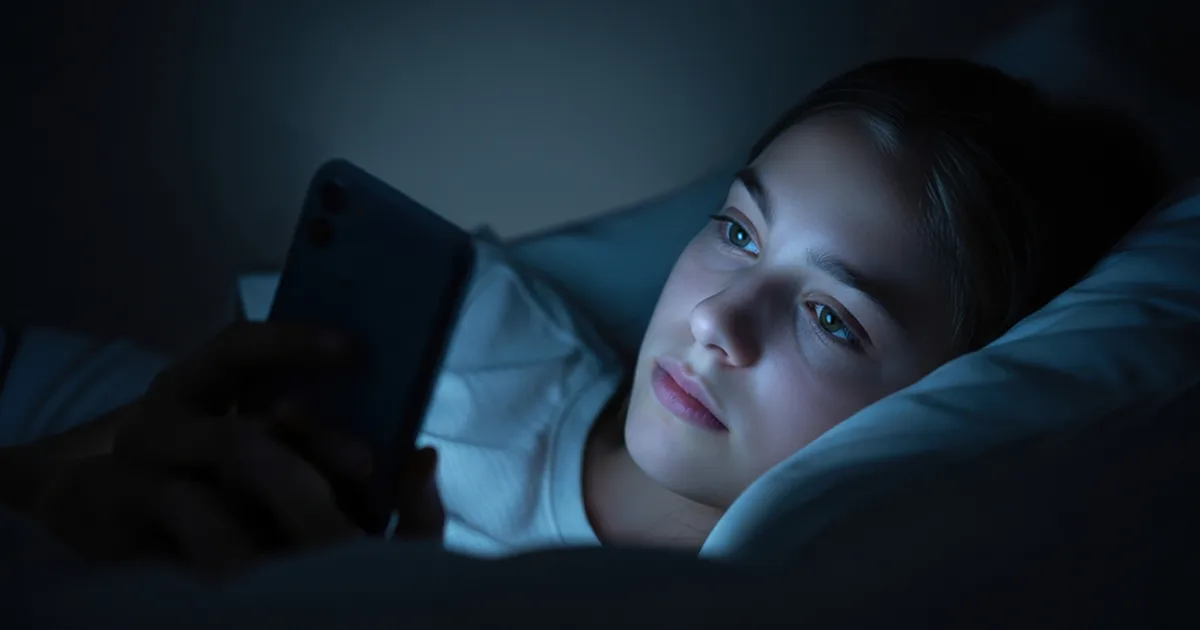
Most people now spend a large part of their day looking at screens, often without realizing how quickly the hours add up. The screen time effects on eyes are subtle at first, but they tend to build gradually with daily habits.
Phones, laptops, and televisions all demand sustained focus. Over time, this can affect how comfortable your eyes feel, especially toward the end of the day.
How Much Screen Time is Too Much?
There isn’t a single number that fits everyone. Still, many eye specialists notice that discomfort usually begins after 2-4 continuous hours without breaks.
So how much screen time is too much? If your eyes start feeling dry, tired, or slightly blurry, that’s often your limit for that session.
In most cases, the problem isn’t just total hours – it’s how long you go without resting your eyes. A person working 8 hours with breaks may feel better than someone scrolling continuously for 3 hours. The screen time effects on eyes become more noticeable when:
- You blink less while staring at screens
- Lighting is too bright or too dim
- Screens are held too close to the face
Recommended Screen Time for Adults
Adults working on digital devices often ask: “Is 8-10 hours unavoidable, or is it harming my eyes?” The answer depends on how you manage that time. There isn’t a strict limit on how much screen time adults should have, but eye care professionals usually recommend taking breaks. The 20-20-20 rule that people often suggest helps:
- Every 20 minutes
- Look at something 20 feet away
- For at least 20 seconds
This easy habit helps you stay focused and reduces eye strain from looking at screens.
Posture is another thing that people often forget about. Screens that are a little lower than eye level tend to be less stressful than screens that are at eye level. The screen time effects on eyes in adults usually show up as:
- Dryness or burning sensation
- Difficulty focusing after long hours
- Mild headaches, especially around the temples
Screen Time for Children Eyes
Children adapt quickly to screens, but their eyes are still developing. This makes screen habits more sensitive.
Screen time for children eyes should be limited based on age:
- Under 2 years: Avoid screen exposure
- 2-5 years: Around 1 hour per day
- School-aged children: Ideally under 2 hours outside study needs
Parents often notice behavioural signs before physical ones. A child may rub their eyes frequently or move closer to the screen.
One common concern is: “Can screen use cause permanent damage in kids?” In most cases, it leads to temporary strain, but prolonged exposure has been linked to increasing cases of myopia (nearsightedness).
The screen time effects on eyes in children may also include reduced outdoor activity, which itself plays a role in vision development.
Eye Strain from Screen Time: What Does It Feel Like?
Eye strain from screen time doesn’t always feel dramatic. It often starts as mild discomfort and gradually becomes harder to ignore.
People describe it in different ways:
- A heavy feeling around the eyes
- Slight blurring that improves after blinking
- Sensitivity to light
Clinically, this is often referred to as digital eye strain or computer vision syndrome.
One detail seen during eye exams is reduced tear film stability. Tests like the Tear Break-Up Time (TBUT) may show faster evaporation of tears in frequent screen users.
That explains why eyes tend to feel dry even in air-conditioned rooms. The screen time effects on eyes are more noticeable toward evening, especially after back-to-back screen exposure.
Practical Ways to Reduce Screen-Related Eye Stress
Small changes usually make a noticeable difference within a few days.
Try adjusting daily habits:
- Keep screens at arm’s length (about 50-70 cm)
- Increase text size instead of leaning closer
- Use proper lighting to avoid glare
- Blink consciously, especially during focused work
Another thing that happens a lot is that people forget to look away. Taking a short break to look out a window can help relax the muscles that help you focus.
Not all of the effects of screen time on the eyes need medicine. In many cases, making small changes to your behavior can help you control your symptoms.
When Should You See an Eye Doctor?
Occasional discomfort is common. But certain signs suggest you should get your eyes checked.
Watch for:
- Persistent blurred vision
- Frequent headaches after screen use
- Redness that doesn’t improve with rest
A basic eye exam can rule out refractive errors or dryness issues.
A Note on Daily Screen Habits
Most people don’t notice how often they switch between devices – phone, laptop, television, without giving their eyes a real break. That constant shift keeps the eyes working continuously.
The screen time effects on eyes tend to reflect these patterns more than just total hours. A routine check once a year at leading eye hospitals is usually enough unless symptoms appear earlier.
Frequently Asked Questions (FAQs)
How much screen time is safe per day?
There’s no fixed number, but most adults tolerate 6-8 hours better when breaks are included. Continuous use without pauses tends to cause discomfort.
Can screen time permanently damage eyesight?
Most of the time, it only causes temporary stress, not permanent damage. But long-lasting habits can cause problems in kids, like myopia.
What is the fastest way to reduce eye strain?
The 20-20-20 rule and changing the brightness of your screen often help right away.
Are blue light glasses necessary?
Some people may find them helpful for comfort, but changes in lifestyle usually work better.
When should I worry about eye strain?
If headaches or blurry vision don’t go away after resting, it’s a good idea to get your eyes checked.
Treatments we Offer: Eye Treatments | Cataract Surgery | LASIK Eye Surgery | Squint Eye Treatment | Retinal Diseases | EPI LASIK | Corneal Services | Refractive Surgery | Oculoplasty Surgery | Dry Eye Treatment | Contoura Vision Surgery | Anti VEGF Agents Treatment | Photorefractive Keratectomy | Vitrectomy Surgery | Epi Contoura Eye Surgery | Customised LASIK Surgery | Retinal Laser Photocoagulation Treatment | Implantable Collamer Lens |Cataract Surgery in Bangalore | Cataract Surgery in Hyderabad | Cataract Surgery Chennai | LASIK Eye Surgery in Hyderabad | LASIK Eye Surgery in Bangalore | LASIK Eye Surgery in Chennai | Retina Services in Hyderabad | Retina Services Chennai | Squint Eye Treatment in Bangalore | Squint Eye Treatment in Hyderabad | Squint Eye Treatment in Chennai | Glaucoma Treatment in Bangalore | Glaucoma Treatment in Chennai | Glaucoma Treatment in Hyderabad