
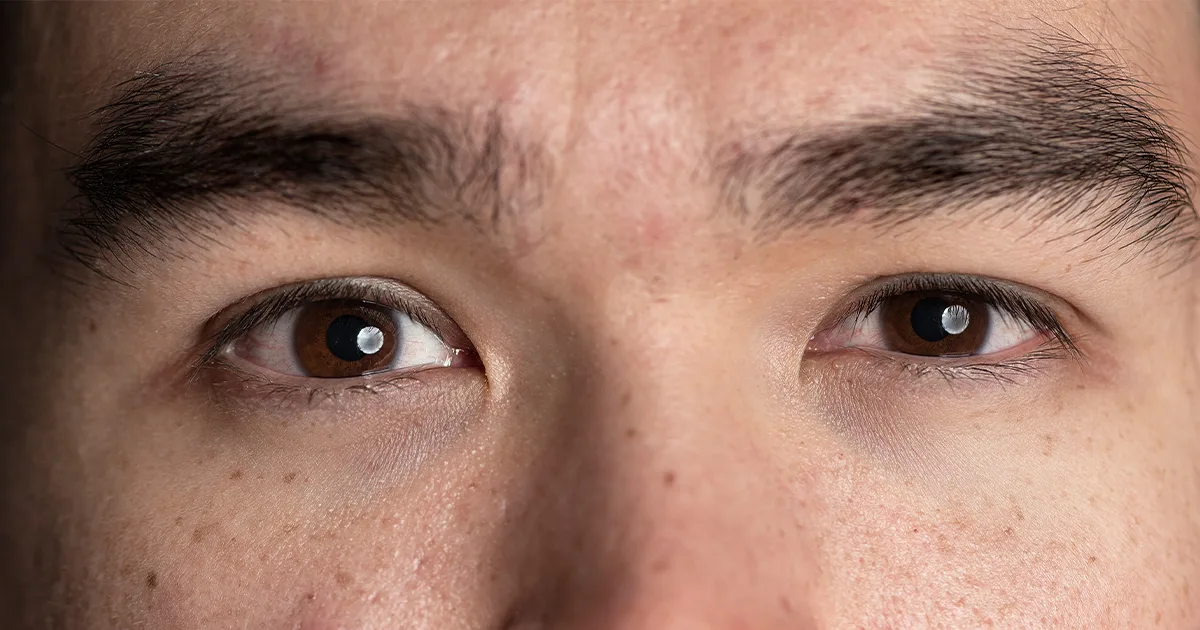
Most human faces are gently asymmetrical. Smile in front of a mirror and one side usually lifts a bit higher than the other. Eyebrows sit at slightly different heights, one nostril is often a shade wider. The eyes often follow the same pattern. A little unevenness is simply part of being human and, in most cases, nothing to worry about.
But when the difference is more noticeable, or when one eye starts to look different from the other, it becomes harder to brush off. This guide walks you through the reasons eyes can look uneven, the difference between cosmetic asymmetry and medical asymmetry, and the treatment options available.
What Are Asymmetrical Eyes?
The term covers a range of subtle and obvious differences, including:
- One eye appearing smaller than the other
- One eyelid sitting lower or higher (ptosis or asymmetrical eyelid crease)
- One eye looking more “sunken” or “protruding” than the other
- Uneven eyebrows above the eyes
- A different pupil size on each side (anisocoria)
- Different iris colours (heterochromia)
- Difference in eye position (squint or strabismus)
Some of these are lifelong and harmless. Others, especially those that appear suddenly, can signal a condition that needs treatment.
Why Are My Eyes Uneven?
1. Natural facial variation
The most common reason. Skull shape, soft tissues, and eye socket anatomy vary slightly from side to side in almost everyone. Photos often highlight what you have not noticed for years.
2. Genetics
Inherited patterns, including differences in eyelid crease, brow shape, and cheekbone prominence, are common. Family photos often show similar asymmetry across generations.
3. Eyelid conditions
- Ptosis (drooping upper eyelid) from age, muscle weakness, or nerve issues
- Dermatochalasis (extra skin of the upper lid)
- Asymmetrical eyelid creases
- Eyelid swelling from allergies or infections
4. Orbital volume changes
- Fat loss around one eye with ageing
- Fat bulging on one side more than the other
- Sinus or orbital bone changes
- Tumours or cysts of the orbit
5. Squint (strabismus)
Eye muscles that do not align correctly make the eyes look uneven. Can be present from childhood or develop later.
6. Proptosis (one eye bulging out)
Causes include thyroid eye disease, orbital inflammation, vascular abnormalities, and tumours.
7. Enophthalmos (one eye sinking in)
Trauma, silent sinus syndrome, and advanced thyroid eye disease can cause sinking.
8. Neurological conditions
- Horner’s syndrome (small pupil, ptosis)
- Third nerve palsy (droopy lid, eye turned down and out)
- Bell’s palsy (weakness of facial muscles)
- Myasthenia gravis (variable eyelid drooping)
9. Trauma or surgery
Old eye injuries, lid surgery, or sinus surgery can leave asymmetrical eyes.
10. Dental and jaw issues
Significant dental or jaw asymmetry can affect the apparent height of the eyes.
Can Asymmetrical Eyes Be Corrected?
Yes, in many cases, though the route depends on the cause.
- Cosmetic asymmetry from genetics or mild ageing responds well to selected cosmetic treatments
- Eyelid drooping can often be corrected with a lid lift (ptosis repair) or blepharoplasty
- Squint can be managed with glasses, prisms, vision therapy, or squint surgery
- Proptosis from thyroid eye disease is addressed by stabilising the thyroid, medical treatment, and, in selected cases, orbital surgery
- Horner’s syndrome and neurological causes need investigation and care of the underlying problem
- Trauma-related changes may need reconstructive orbital surgery
- Tumours or cysts require targeted treatment
Not every asymmetry needs treatment. Many people prefer to leave a mild lifelong difference alone.
How Are Asymmetrical Eyes Diagnosed?
A combination of history and examination is usually enough.
- History of onset, change over time, trauma, or systemic symptoms
- Family history and old photos for comparison
- General physical and facial examination
- Measurement of eyelid height and crease position
- Examination of eye movements and alignment
- Measurement of eye protrusion with an exophthalmometer
- Pupil size, reaction, and eyelid response
- Slit-lamp examination
- Imaging (CT or MRI) of the orbit in selected cases
- Blood tests if thyroid or autoimmune disease is suspected
At an eye specialist hospital, most findings can be mapped in a single visit.
How to Fix Asymmetrical Eyes
Treatment matches the cause.
1. Lifestyle and simple measures
- Good sleep and hydration to reduce transient puffiness
- Allergy control to prevent lid swelling
- Supportive eye treatments such as lubricating drops for dryness
- Skin care for the eye area
- Balanced diet and stopping smoking
2. Glasses and contact lenses
- Correcting refractive errors reduces squinting and subtle asymmetry
- Specialised lenses can help with eye muscle issues in selected cases
3. Botulinum toxin
- Evens out brow height and fine lines
- Can help with mild lid position changes in selected cases
- Results typically last 3 to 4 months
4. Dermal fillers
- Restore lost volume around the eye
- Useful for mild sunken-eye asymmetry
- Results last 9 to 12 months
5. Eyelid surgery (blepharoplasty)
- Removes excess skin or fat
- Corrects significant asymmetry
- Long-lasting results
6. Ptosis repair
- Tightens or adjusts the muscle that lifts the eyelid
- Restores a more even eyelid height
7. Squint surgery
- Adjusts the alignment of the eye muscles
- Can be performed on children and adults
- Often combined with glasses and visual training
8. Orbital surgery
- Addresses structural orbital asymmetry, including post-trauma cases and certain tumours
- Performed by specialised oculoplastic or ophthalmic surgeons
9. Medical treatment of underlying conditions
- Thyroid eye disease
- Myasthenia gravis
- Autoimmune or inflammatory conditions
- Neurological disorders
How Much Does It Cost to Fix Asymmetrical Eyes?
Costs in India vary widely depending on the cause, procedure, and hospital.
- Fillers and botulinum toxin are usually the lower end
- Ptosis repair and blepharoplasty are mid-range
- Squint surgery and orbital surgery are higher and may be covered partly by insurance
- Medical treatment of an underlying cause depends on the disease
A short consultation at an eye hospital can give you an accurate quote based on your specific case, along with realistic expectations and recovery timelines.
What Medical Conditions Cause Asymmetrical Eyes?
- Thyroid eye disease
- Myasthenia gravis
- Horner’s syndrome
- Third nerve palsy
- Orbital tumours and cysts
- Silent sinus syndrome
- Neurofibromatosis
- Craniofacial syndromes in children
- Sinus disease
- Orbital trauma or fractures
- Severe allergies causing marked unilateral swelling
Any sudden or rapidly progressing asymmetry deserves urgent review.
Living With Mild Asymmetry
Most mild, lifelong asymmetry does not need treatment. A few practical tips:
- Try different hairstyles and eyebrow shapes to frame the eyes evenly
- Use soft makeup techniques to balance the look of the eyes if desired
- Choose spectacle frames that balance the face
- Keep up with yearly eye examinations
- Take good face-on photographs in consistent lighting for future comparison
- Focus on features you enjoy in the mirror rather than tiny differences
When Should You See a Doctor?
Book a same-day or early appointment if you notice:
- Sudden drooping of one eyelid
- Sudden bulging of one eye
- Sudden sinking of one eye
- Double vision or new squint
- Pain or redness of one eye
- Headache with asymmetry
- Vision changes in one eye
- Loss of facial muscle movement on one side
For mild, long-standing asymmetry without other symptoms, a routine eye review is enough.
Asymmetrical Eye Care at Vasan Eye Care
Vasan Eye Care has been looking after patients across India since 2002, now as part of ASG Enterprises. With more than 150 super-speciality centres, 500+ ophthalmologists, and over 5,000 trained eye care staff, the team regularly manages asymmetrical eyes across all causes, from simple refractive issues to specialist oculoplastic and squint surgery. A typical visit includes a detailed examination, honest discussion of options, and a practical plan that fits your goals.
Key Takeaways
- Most human faces have gentle asymmetry between the two eyes.
- Noticeable or sudden asymmetry deserves medical review.
- Causes range from lifestyle factors to eyelid, orbital, and neurological conditions.
- Treatments include lifestyle measures, glasses, botulinum toxin, fillers, and various surgical options.
- Ptosis repair, squint surgery, and orbital surgery all have well-established outcomes.
- Costs vary widely; a specialist consultation is the right first step for any procedure.
Frequently Asked Questions
Yes, in many cases. Mild asymmetry from lifestyle or ageing responds to healthy habits, fillers, or botulinum toxin. Eyelid drooping can be corrected with ptosis repair or blepharoplasty. Squint can be managed with glasses, prisms, or squint surgery. Orbital asymmetry from trauma or disease may need reconstructive surgery. The route depends entirely on the cause, which is why a thorough eye examination is always the first step.
Long-lasting correction usually involves surgical or medical solutions rather than cosmetics alone. Ptosis repair, blepharoplasty, and squint surgery offer durable results for eyelid and alignment issues. Medical treatment of underlying conditions such as thyroid eye disease or myasthenia gravis addresses the root cause. A detailed consultation will outline what “permanent” means in your specific case, since some conditions respond differently from others and natural aging can continue to change the face over time.
Cost depends on the procedure and the cause. Non-surgical options like fillers and botulinum toxin sit at the lower end. Eyelid surgery, ptosis repair, and squint surgery are in the mid range. Orbital reconstruction and cancer-related surgery are typically higher. A short consultation at an eye hospital gives you an accurate quote based on your specific needs, including tests, surgery fees, anaesthesia, and follow-up.
Several medical conditions can cause asymmetrical eyes. Thyroid eye disease may make one eye bulge out. Myasthenia gravis causes variable drooping of the upper lid. Horner’s syndrome produces a small pupil, droopy lid, and sometimes decreased sweating on one side of the face. Third nerve palsy causes a droopy lid and an eye turned down and out. Orbital tumours, trauma, and rare syndromes are other possibilities. Any sudden or progressive asymmetry deserves a full medical review.
References
- American Academy of Ophthalmology. Asymmetric Eyes. https://www.aao.org/eye-health/diseases
- National Center for Biotechnology Information. Eyelid Asymmetry. https://www.ncbi.nlm.nih.gov/books/NBK482190/
- WebMD. Ptosis. https://www.webmd.com/eye-health/ptosis
Treatments We Offer: Eye Treatments | Cataract Surgery | LASIK Eye Surgery | Squint Eye Treatment | Retinal Diseases | EPI LASIK | Corneal Services | Refractive Surgery | Oculoplasty Surgery | Dry Eye Treatment | Contoura Vision Surgery | Anti VEGF Agents Treatment | Photorefractive Keratectomy | Vitrectomy Surgery | Epi Contoura Eye Surgery | Customised LASIK Surgery | Retinal Laser Photocoagulation Treatment | Implantable Collamer Lens |Cataract Surgery in Bangalore | Cataract Surgery in Hyderabad | Cataract Surgery Chennai | LASIK Eye Surgery in Hyderabad | LASIK Eye Surgery in Bangalore | LASIK Eye Surgery in Chennai | Retina Services in Hyderabad | Retina Services Chennai | Squint Eye Treatment in Bangalore | Squint Eye Treatment in Hyderabad | Squint Eye Treatment in Chennai | Glaucoma Treatment in Bangalore | Glaucoma Treatment in Chennai | Glaucoma Treatment in Hyderabad
Eye Conditions We Treat: Glaucoma Treatment | Orbital Trauma | Macular Hole | Retinopathy of Prematurity | Uveitis | Traumatic Treatment | Retinal Detachment | Cataract Diseases | Posterior Subcapsular Cataract | Diabetic Retinopathy | Rosette Cataract Surgery | Squint Eye Disease