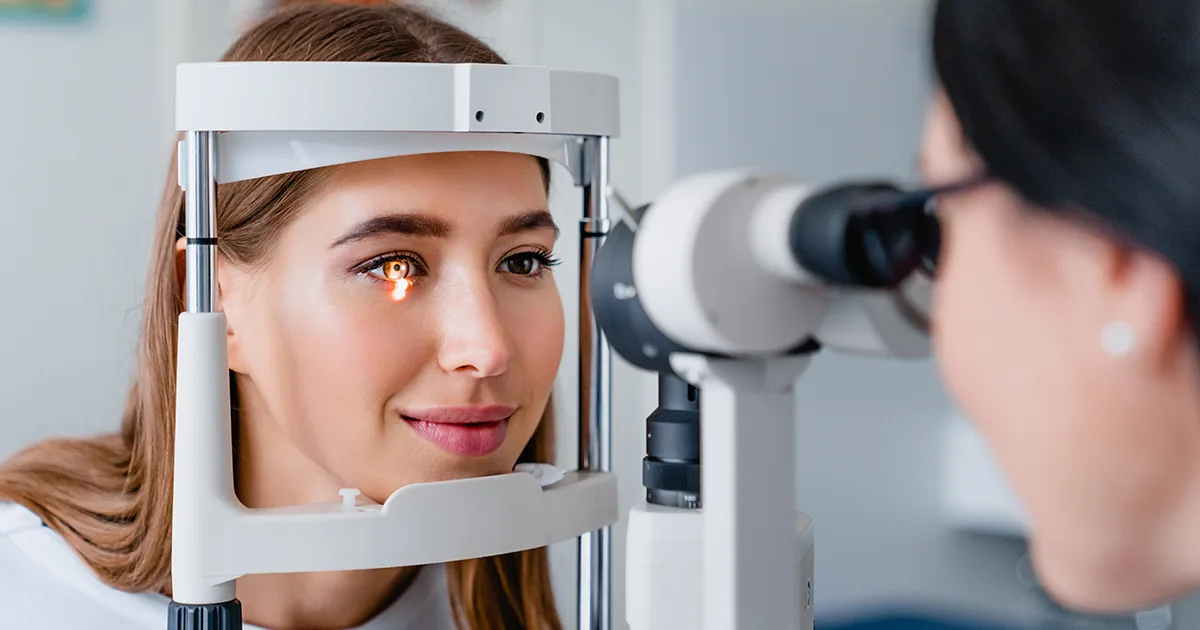
Most of us have sat on that chair before: a chart on the wall, a phoropter in front of us, and a doctor quietly asking, “Better with one, or two?” What looks like a straightforward eye test is actually a carefully structured set of checks. Together they cover your sight, the health of the front and back of the eye, your eye pressure, and the ability of the two eyes to work together.
This guide walks you through what a full eye exam includes, what each test measures, and why a regular visit matters.
Why Do You Need an Eye Exam?
- Update your prescription
- Detect silent conditions like glaucoma early
- Monitor chronic eye diseases
- Screen for diabetic retinopathy
- Identify dry eye and surface conditions
- Check children’s vision and eye teaming
- Support career medicals
- Pick up systemic conditions with eye findings
- Advise on sunglasses and lens choices
Routine eye exams are recommended at least every one to two years for healthy adults, and more often in the presence of known conditions.
What Happens in a Full Eye Exam?
A full exam may include some or all of the following.
1. Medical and visual history
The doctor asks about:
- Current symptoms
- Family history of eye disease
- Systemic conditions (diabetes, hypertension, thyroid, autoimmune)
- Medicines
- Allergies
- Previous eye surgery
- Work and lifestyle factors
2. Visual acuity test
- Snellen chart for distance vision
- Near vision chart for reading tasks
- Pinhole test to distinguish refractive issues from other causes
- Each eye tested separately
3. Refraction
- Autorefractor for an objective prescription
- Manual refraction with trial lenses
- Cycloplegic refraction in children, using dilating drops
4. Slit-lamp examination
A detailed look at the front of the eye.
- Eyelids and lashes
- Conjunctiva
- Cornea
- Iris
- Lens
- Anterior chamber
5. Tear film assessment
- Schirmer test
- Tear break-up time
- Fluorescein staining
6. Eye pressure measurement (tonometry)
- Applanation tonometry
- Non-contact tonometry
- Rebound tonometry
- Pachymetry to correct for corneal thickness
7. Eye muscle and alignment
- Cover test
- Movement check in different directions
- Pupil reactions
- Convergence and accommodation
8. Colour vision test
- Ishihara plates or other screening tool
9. Dilated fundus examination
- Dilating drops widen the pupil
- Doctor looks at the optic disc, macula, retina, and blood vessels
10. Imaging
- Fundus photography
- Optical coherence tomography (OCT)
- Corneal topography
- Visual field testing
- Fluorescein angiography in selected cases
- Ultrasound when the view is unclear
11. Discussion
Results are explained, a prescription is written where needed, and next steps are planned.
Specialised Tests Within an Exam
For children
- Age-appropriate vision testing with pictures or matching
- Eye muscle balance
- Cycloplegic refraction
- Screening for amblyopia
For glaucoma risk
- Careful optic nerve exam
- OCT of the retinal nerve fibre layer
- Visual field testing
- Pachymetry
For diabetic patients
- Dilated retinal examination
- OCT of the macula
- Fundus photography
- Fluorescein angiography if required
For cataract planning
- Biometry for intraocular lens calculation
- Corneal topography
- Endothelial cell count
For refractive surgery planning
- Corneal topography and tomography
- Pachymetry
- Aberrometry
- Tear film assessment
For dry eye
- Detailed tear film evaluation
- Lid margin examination
- Meibography in specialist centres
A typical visit to an eye hospital may take 30 to 90 minutes, depending on how many of these tests are needed.
How Often Should You Have an Eye Exam?
General guidance for healthy adults:
- First full exam around age 20
- Every 1-2 years between 20 and 40
- Yearly from 40 to 60
- Every 6-12 months over 60
- Every 6 months or more often if diabetic, glaucoma, high myopia, or other conditions
- Pre-operative checks before any eye or general surgery
- Career medicals as required
Children usually need a first eye check by age 3-4, then yearly through school.
Preparing for an Eye Exam
- Bring your current glasses and any previous reports
- List your medicines, especially eye drops
- Note any symptoms, triggers, or duration
- Ask family about any inherited eye conditions
- Remove contact lenses for the time recommended before the visit
- Arrange transport home if dilation is planned
- Carry sunglasses for bright light after dilation
- Plan for an hour or more at the clinic
Tips for Accurate Results
- Get adequate rest the night before
- Avoid heavy caffeine just before the exam
- Be honest about any guessing on the chart
- Mention any stress, fatigue, or recent illness
- Inform about screen use patterns
- Share any concerns, no matter how small
Digital and Teleophthalmology Options
Many eye services now offer:
- Online appointment booking
- Tele-consultations for basic queries
- Digital reports shared by email
- Remote monitoring for known patients
- Supportive eye treatments delivered in person after digital triage
These complement in-clinic visits but do not replace them for comprehensive exams.
Children and Eye Exams
Children often do not complain about blurry vision because they have nothing to compare with. Watch for:
- Squinting
- Tilting the head
- Sitting very close to the TV or board
- Poor school performance
- Rubbing eyes
- Complaining of headaches
- Difficulty reading or copying from the board
A full paediatric eye exam picks up common problems early, when correction works most effectively.
Older Adults and Eye Exams
After 60, the risks of cataract, glaucoma, macular degeneration, and diabetic retinopathy all rise. Regular exams help:
- Update glasses
- Plan cataract surgery
- Monitor glaucoma
- Detect AMD early
- Track diabetic changes
Support at an eye specialist hospital with experience in geriatric eye care can make a significant difference.
Warning Signs That Need Urgent Review
- Sudden vision loss
- Severe eye pain
- Flashes and new floaters
- A curtain or shadow across vision
- Blurring after head injury
- Red, painful eye with haloes
- Chemical splash
- Severe light sensitivity
Routine appointments can wait; these cannot.
Common Misconceptions
- “I see well, so I do not need an exam.” Many serious conditions are silent.
- “Reading glasses online are enough.” They miss underlying eye conditions.
- “Eye exams are only for people who wear glasses.” Not true; everyone benefits.
- “Once glasses are fitted, no follow-up is needed.” Prescriptions and eye health can change.
- “Dilation is dangerous.” It is safe for most people, with brief blur that settles over a few hours.
When Should You See a Doctor?
Book an appointment if:
- You have not had an eye check in over one to two years
- You are 40 or older
- You have diabetes, hypertension, or thyroid disease
- You notice changes in vision
- You have frequent headaches or eye strain
- You are planning to start contact lenses
- You are considering refractive surgery
- You are on medicines that can affect the eye
Eye Exam Care at Vasan Eye Care
Vasan Eye Care has been looking after patients across India since 2002, now as part of ASG Enterprises. With more than 150 super-speciality centres, 500+ ophthalmologists, and over 5,000 trained eye care staff, the team provides comprehensive eye exams every day. A typical visit includes a structured assessment tailored to your age, history, and symptoms, with specialised imaging and tests where needed.
Key Takeaways
- A full eye exam covers much more than reading a chart.
- Common tests include vision acuity, refraction, slit-lamp, pressure, and retinal examination.
- Specialist tests handle glaucoma, diabetes, cataract, refractive surgery, and dry eye.
- Frequency depends on age, general health, and existing eye conditions.
- Children, older adults, and patients with chronic diseases benefit most from regular exams.
- Urgent symptoms need prompt review rather than a routine appointment.
Frequently Asked Questions
A comprehensive eye exam is a structured evaluation that includes medical history, visual acuity and refraction, slit-lamp examination, eye pressure measurement, eye muscle and pupil assessment, dilated fundus examination, and often imaging such as OCT, fundus photography, or visual field testing. It identifies refractive errors and detects silent conditions like glaucoma, cataract, and retinal disease.
A typical visit at a specialist eye centre takes 30 to 90 minutes, depending on how many tests are needed. Simple prescription updates are quicker; comprehensive work-ups with dilation, imaging, and visual field testing take longer. Arriving a little early, bringing previous reports, and planning transport home (if dilation is expected) helps the visit flow smoothly.
Healthy adults benefit from a full eye exam every one to two years, with yearly checks after age 40 and more frequent visits after 60. Patients with diabetes, glaucoma, high myopia, or other chronic conditions may need more frequent reviews. Children usually need a first exam by age 3-4 and yearly checks through school. Specific medicines or career needs may require additional assessments.
Many comprehensive exams include dilation to give a clear view of the retina, optic nerve, and macula. Dilating drops widen the pupil over 20-30 minutes. Near vision will be blurred and bright light will feel dazzling for two to four hours afterwards. Driving is safer avoided until dilation wears off. Not every visit requires dilation; your doctor decides based on findings and risk factors.
References
- American Academy of Ophthalmology. Comprehensive Eye Exams. https://www.aao.org/eye-health/tips-prevention/eye-exam-101
- National Eye Institute. Getting a Dilated Eye Exam. https://www.nei.nih.gov/learn-about-eye-health/healthy-vision/get-dilated-eye-exam
- National Center for Biotechnology Information. Ophthalmic Examination. https://www.ncbi.nlm.nih.gov/books/NBK585068/
Treatments We Offer: Eye Treatments | Cataract Surgery | LASIK Eye Surgery | Squint Eye Treatment | Retinal Diseases | EPI LASIK | Corneal Services | Refractive Surgery | Oculoplasty Surgery | Dry Eye Treatment | Contoura Vision Surgery | Anti VEGF Agents Treatment | Photorefractive Keratectomy | Vitrectomy Surgery | Epi Contoura Eye Surgery | Customised LASIK Surgery | Retinal Laser Photocoagulation Treatment | Implantable Collamer Lens |Cataract Surgery in Bangalore | Cataract Surgery in Hyderabad | Cataract Surgery Chennai | LASIK Eye Surgery in Hyderabad | LASIK Eye Surgery in Bangalore | LASIK Eye Surgery in Chennai | Retina Services in Hyderabad | Retina Services Chennai | Squint Eye Treatment in Bangalore | Squint Eye Treatment in Hyderabad | Squint Eye Treatment in Chennai | Glaucoma Treatment in Bangalore | Glaucoma Treatment in Chennai | Glaucoma Treatment in Hyderabad
Eye Conditions We Treat: Glaucoma Treatment | Orbital Trauma | Macular Hole | Retinopathy of Prematurity | Uveitis | Traumatic Treatment | Retinal Detachment | Cataract Diseases | Posterior Subcapsular Cataract | Diabetic Retinopathy | Rosette Cataract Surgery | Squint Eye Disease