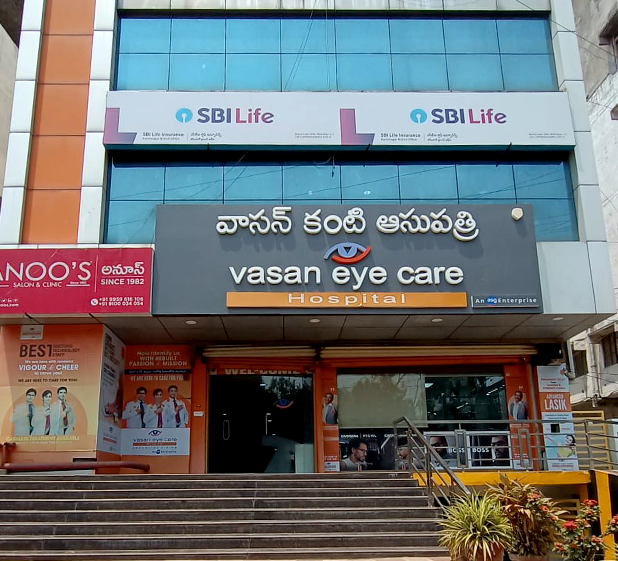

What is CAIRS Eye Surgery?
CAIRS (Corneal Allogenic Intrastromal Ring Segments) Eye Surgery is an advanced procedure used to treat keratoconus by implanting donor corneal tissue segments into the cornea. It helps strengthen and reshape the cornea, improving vision while reducing the need for synthetic implants.

CAIRS Eye Surgery in India: Understanding the Procedure and Treatment
Keratoconus has long been one of the more frustrating conditions in eye care. It tends to appear in young people, progresses through the years when stable vision matters most, and eventually pushes patients toward either a full corneal transplant or a life of difficult contact lens fitting. For a long time, the options in between were limited. CAIRS changed that.
CAIRS stands for Corneal Allogenic Intrastromal Ring Segments. The procedure involves implanting small arc-shaped segments of donor corneal tissue into the mid-layer of the patient’s cornea. These segments add volume to the corneal periphery, which causes the cone-shaped bulge at the centre to flatten out and become more regular. The result, for many patients, is noticeably improved vision and a cornea that behaves more like a cornea should.
What makes CAIRS genuinely different from older ring segment options is the material. Earlier intrastromal ring procedures used synthetic polymer implants, trade names like INTACS or Keraring. CAIRS replaces those with actual human donor corneal tissue. The stroma is immunologically quiet tissue, meaning the body is far less likely to react to it than to a foreign material. The procedure was pioneered in India, which is fitting given how common keratoconus is here, and has been drawing attention internationally ever since.
Keratoconus is not rare in India. Estimates suggest it affects somewhere between 1 in 375 and 1 in 2,000 people globally, but the numbers in South Asian populations appear to sit at the higher end of that range. Part of the reason is genetic. Part is behavioural: vigorous eye rubbing, which is genuinely common in India and linked to allergic eye disease, is one of the strongest modifiable risk factors for keratoconus progression. Many patients who come in for a contact lens check leave with a keratoconus diagnosis they were not expecting.
The condition almost always appears in the late teens or early twenties. For a while, glasses work. Then the prescription becomes too irregular for glasses to handle well, and contact lenses become necessary. Rigid gas-permeable or scleral lenses can give good vision for years, but as the cornea continues to thin and distort, even those become hard to fit. That is the point where surgical intervention becomes worth a serious conversation.
CAIRS sits usefully in the middle of the keratoconus treatment spectrum. It is less invasive than a full corneal transplant, it preserves the patient’s own tissue, and crucially it does not close the door on future options. If the cornea eventually deteriorates to the point where a transplant is needed, that surgery can still be performed. The combination of CAIRS with corneal cross-linking in a single sitting has become increasingly popular because it addresses both problems at once: the shape and the stability.
Types of CAIRS Available in India
The core procedure can be performed in several configurations depending on the patient’s stage of keratoconus and what is being targeted:
| Variant | Description | Main Advantage |
|---|---|---|
| CAIRS Alone | Donor ring segments implanted without cross-linking | Improves corneal shape in patients who do not need CXL |
| CAIRS + Corneal Cross-Linking (CXL) | Ring segments implanted followed by CXL in the same sitting | Halts progression and improves corneal shape together |
| Femto CAIRS | Femtosecond laser used to create the corneal tunnels before segment placement | More precise and reproducible tunnels, better segment positioning |
| CAIRS + Contact Lens Fitting | Post-surgical fitting of scleral or RGP contact lenses for further visual improvement | Maximises vision when spectacles alone are insufficient after surgery |
CAIRS Eye Surgery: How the Procedure Works
The basic concept is straightforward, even if the execution requires considerable surgical skill. The cornea has multiple layers, and CAIRS works within the stroma, the thick middle layer. A tunnel is created within this layer, running in an arc around the visual axis. Donor corneal tissue, shaped into a matching arc, is threaded into the tunnel. The added tissue volume at the periphery mechanically pushes the corneal cone back towards a flatter, more regular shape.
The donor tissue comes from a deceased donor cornea obtained through a licensed eye bank. Only the stromal layer is used, not the full-thickness cornea. Before surgery, the ring segments are dissected to the required arc length and thickness based on the patient’s pre-operative measurements. Every donor cornea goes through serological testing under eye bank protocols before the tissue is released for use.
Tunnel creation is now done almost exclusively with a femtosecond laser, which allows the surgeon to specify depth, diameter, and arc length with a precision that a manual dissection knife cannot match. Once the tunnels are formed, the segments are inserted with fine microsurgical instruments and their position is confirmed under the slit lamp.
When cross-linking is added to the procedure, riboflavin drops are applied to the cornea after segment placement, and ultraviolet light is then used for a set duration to strengthen the corneal collagen. This stiffens the cornea and slows or stops further cone progression.
When is CAIRS Eye Surgery Necessary? Signs You May Need It
Not every keratoconus patient needs CAIRS. The procedure is generally considered when glasses and contact lenses are no longer doing an adequate job, but the cornea is not yet thin enough to require a transplant. More specifically, a surgeon will consider CAIRS when:
- Spectacles cannot correct vision to a functional level because the corneal surface is too irregular
- Contact lenses have become intolerable or simply cannot be fitted well due to the cone shape
- The keratoconus is progressing, particularly in a younger patient who needs both stabilisation and optical improvement
- Central corneal thickness is still above roughly 350 to 400 microns, which is the minimum needed to implant the segments safely
- The patient would prefer a biologically compatible option over synthetic ring implants
Corneal topography, pachymetry, and Scheimpflug imaging are all part of the assessment.
CAIRS Eye Surgery: Step-by-Step Procedure
- Pre-operative evaluation: Corneal topography, Scheimpflug tomography, pachymetry, and slit-lamp examination are used to plan segment arc length, thickness, and implantation depth.
- Donor tissue preparation: Ring segments are prepared from donor corneal stroma supplied by a licensed eye bank.
- Anaesthesia: Topical or peribulbar anaesthetic drops are instilled.
- Femtosecond laser tunnel creation: The laser forms intrastromal tunnels at the specified depth and diameter based on pre-operative planning.
- Segment insertion: Donor ring segments are threaded carefully into the tunnels using fine microsurgical instruments.
- Intraoperative assessment: Segment position is checked under the slit lamp before closing.
- Cross-linking phase (if combined): Riboflavin drops are applied and UVA light treatment is administered for the required duration.
- Post-operative care: Antibiotic and anti-inflammatory drops are prescribed. A bandage contact lens may be placed if the corneal surface was disturbed.
How Much Does CAIRS Eye Surgery Cost in India?
Costs vary depending on whether the procedure is combined with cross-linking, the femtosecond laser platform used, and the hospital. Donor tissue availability can also affect pricing:
| Procedure | Approximate Cost (INR, per eye) |
|---|---|
| CAIRS alone | ₹50,000 – ₹90,000 |
| CAIRS + Corneal Cross-Linking | ₹80,000 – ₹1,30,000 |
| Femto CAIRS | ₹70,000 – ₹1,10,000 |
These figures are indicative. Contact eye hospitals after your suitability evaluation for an accurate estimate based on your specific corneal measurements and chosen procedure.
CAIRS Eye Surgery: Post-Surgery Care and Recovery
What to Expect After CAIRS?
The first few days after surgery tend to look worse than they feel. The eye is uncomfortable rather than painful, with tearing, redness, and light sensitivity that gradually settle over the first week. Vision in the early post-operative period is often blurrier than it was before surgery. This alarms some patients, but it is expected. The cornea is adjusting to the new segments, and that takes time.
Improvement comes gradually, not all at once. Most patients notice meaningful change between four and twelve weeks after surgery. If cross-linking was also performed, there may be an additional dip in vision in the first few weeks while the CXL-related healing is underway. Three months is the point at which a proper assessment of the final outcome is usually made.
Many patients will still need contact lenses or glasses after CAIRS. The goal of the surgery is not to eliminate that need but to make the cornea regular enough that glasses or lenses actually work well again. For patients who previously could not be fitted with any lens comfortably, that alone is a significant gain.
Post-Operative Care Tips
- Use antibiotic and steroid drops exactly as prescribed and complete the full course without stopping early
- Do not rub your eyes. Rubbing is one of the main drivers of keratoconus progression and can physically dislodge the implanted segments
- Avoid contact sports, swimming, and dusty or smoky environments for at least four weeks
- Wear UV-protective sunglasses when outside, especially in the first few months
- Attend all follow-up visits so the surgeon can monitor corneal stability and check that the segments remain well positioned
- Contact your surgeon promptly if you notice sudden pain, a sharp drop in vision, or any visible change in the appearance of the eye
References
EyeWiki, American Academy of Ophthalmology. Corneal Tissue Addition Techniques: CAIRS and CTAK. https://eyewiki.org/Corneal_Tissue_Addition_Techniques:_CAIRS_and_CTAK
American Academy of Ophthalmology. Corneal Allogenic Intrastromal Ring Segments (CAIRS). https://www.aao.org/education/clinical-video/corneal-allogenic-intrastromal-ring-segments-cairs
PMC, NCBI. CAIRS for Keratoconus. 2024. https://pmc.ncbi.nlm.nih.gov/articles/PMC10788746/















Frequently Asked Questions
The idea is similar: arc-shaped segments placed within the corneal stroma to flatten and regularise the cone. The critical difference is the material. INTACS, Keraring, and similar products are made from medical-grade polymers. CAIRS uses actual human donor corneal tissue. Because the stroma is immunologically quiet tissue, the body is far less likely to treat CAIRS segments as foreign material. That translates to a lower risk of long-term inflammatory reactions.
Yes. Reversibility is one of the genuine practical advantages of CAIRS. If the result is not what was hoped for, or if the patient’s cornea changes significantly over time, the segments can be removed. The patient’s own cornea is preserved throughout, and future procedures including a full corneal transplant remain possible.
Probably not entirely, and it is worth being realistic about that upfront. CAIRS regularises the cornea and reduces the distortion, which often means that glasses or contact lenses become much more effective than they were before. Patients who previously could not tolerate any lens frequently find that scleral or RGP lenses become manageable again after CAIRS. Complete spectacle independence is not usually the goal of this procedure.
Much lower than with a full corneal transplant. Only the stromal layer of the donor cornea is used in CAIRS, not the full-thickness tissue with its endothelial cells. The stroma is considered an immunologically privileged tissue, meaning the immune system is relatively tolerant of it. Rejection reactions of the type seen after full keratoplasty are uncommon with CAIRS.
On its own, no. CAIRS reshapes the cornea but does not halt the underlying progressive thinning. That is what corneal cross-linking does. The combination of CAIRS with CXL in one procedure addresses both issues together, which is why this combined approach has become the more commonly recommended option for patients with progressive keratoconus.
CAIRS alone typically takes 30 to 60 minutes per eye. When combined with cross-linking, add another 30 to 45 minutes for the riboflavin soak and UVA treatment. Most patients go home the same day.
CAIRS is generally recommended for moderate to advanced keratoconus, roughly Amsler-Krumeich stages II to III, where contact lens management has become inadequate but the cornea is still thick enough for safe implantation. Patients at the very early stages often manage well with contact lenses. Patients at the most severe end may need to proceed directly to corneal transplantation.
It is available at specialist corneal centres that have both femtosecond laser facilities and reliable access to donor tissue through registered eye banks. The procedure is not yet available at every eye hospital in the country, but the number of centres offering it has grown.
Infection is managed with antibiotic drops and is uncommon when the procedure is performed under proper surgical conditions. Segment displacement or extrusion can occur but is rare with femtosecond laser tunnel creation. Not all patients achieve the visual improvement they were hoping for, and some will still need a contact lens post-operatively. Serious vision-threatening complications are uncommon when the surgery is performed by experienced corneal surgeons.
Yes. Combination with CXL is the most common pairing, done together in a single sitting. After recovery, scleral or rigid gas-permeable contact lens fitting is often arranged for patients who need further visual improvement. In selected cases, some surgeons have added topography-guided laser ablation to the picture as well, though this is less standard.
[FAQ section ends here]
References
EyeWiki, American Academy of Ophthalmology. Corneal Tissue Addition Techniques: CAIRS and CTAK. https://eyewiki.org/Corneal_Tissue_Addition_Techniques:_CAIRS_and_CTAK
American Academy of Ophthalmology. Corneal Allogenic Intrastromal Ring Segments (CAIRS). https://www.aao.org/education/clinical-video/corneal-allogenic-intrastromal-ring-segments-cairs
PMC, NCBI. CAIRS for Keratoconus. 2024. https://pmc.ncbi.nlm.nih.gov/articles/PMC10788746/